
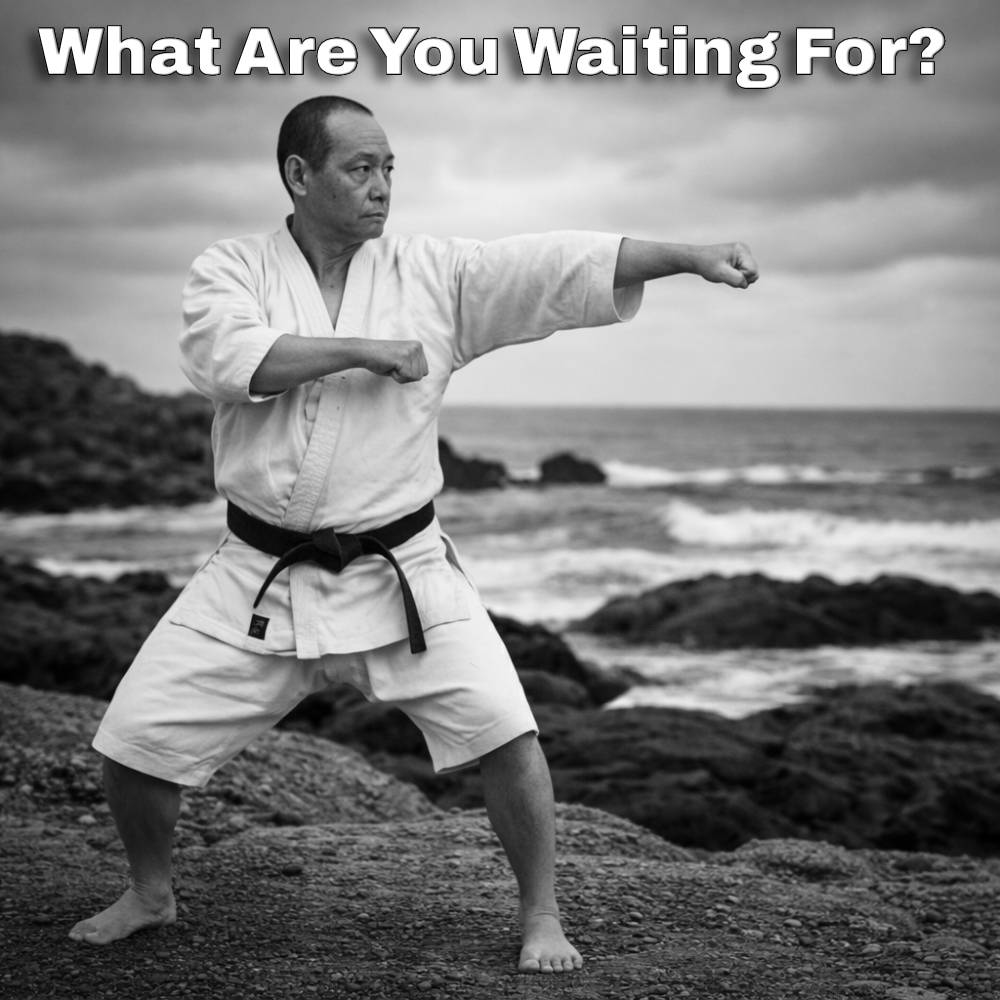
Karate has changed – we all know that. The karate created by the pioneers on Okinawa looks very different from much of what we see today. And of course, those later pioneers were part of that shift themselves. Change didn’t happen by accident.
When I watch students from other dojo trying to work out bunkai from kata, I often notice the same pattern. They block, then they counter. That rhythm is ingrained. It’s what they’ve been shown from the beginning – block first, respond second.
And when you ask why, the phrase often comes out:
“Karate ni sente nashi.”
There is no first attack in karate.
But what does that really mean? Was the intention truly that karate practitioners should always wait? That they must allow an aggressor to strike first in order to remain faithful to tradition?
Nearly a century ago, Choki Motobu addressed that exact issue in his 1932 book Watashi no Karate-jutsu. He wrote:
“There is an expression, ‘karate ni sente nashi’. Apparently some people interpret this literally and often profess that ‘one must not attack first’, but I think that they are seriously mistaken.”
Motobu wasn’t writing from theory. He was known as one of the most formidable fighters of his time. So if he believed the literal interpretation was mistaken, perhaps the problem isn’t the phrase – but what we’ve chosen to do with it.
There is a difference between initiating aggression and seizing the initiative. Those are not the same thing, even though people often blur them together.
Karate was never meant to encourage violence. But it was not meant to train passivity either.
In a real confrontation – not sparring, not a demonstration, but a genuinely non-consensual assault – what exactly are you waiting for? The first punch? The moment it lands so that you can finally perform the block you’ve rehearsed a thousand times? Does that actually make sense when someone is determined to harm you?
I was once attacked with a crowbar. If I had waited to block before responding, I would not be writing this. In that moment, hesitation would not have been discipline. It would have been a mistake I couldn’t correct.
Experiences like that change how you view drills.
Because drills are not neutral. They build habits.
And under pressure, people do not rise to philosophical ideals – they default to what they have repeated.
So if what we repeat is “block, then counter”, what are we embedding? When adrenaline spikes, what response are we actually conditioning?
Karate ni sente nashi does not mean standing politely in the face of violence. It speaks to character and restraint. It reminds us not to initiate harm without cause. But once intent is clear – once the threat is real – survival may require decisiveness.
Pre-emption is not aggression. It is not ego. It is not anger.
It is the recognition that action, taken at the right moment, can prevent something far worse.
So perhaps the real question is not whether we respect tradition, but whether the way we rehearse karate today genuinely prepares people for what they claim to be training for.
That’s a question I had to ask myself many years ago.
It may be worth asking it again.