
Where does a beginner turn when they want to learn self-defense? What draws them to a particular martial art or school?
For me in the early 1970s, it was Bruce Lee movies and the TV series Kung Fu. Today, it’s social media. Every time I open my phone or switch on my computer, there’s another video of someone demonstrating how to handle a “street attack” – usually with flashy techniques that look great on camera but have little to do with reality.
Does that matter if it gets people interested in martial arts?
I think it does.
I knew Bruce Lee movies weren’t real, just like I knew Bond films weren’t real. But these social media videos are presented as actual self-defense instruction.
This morning I watched a Kyokushin practitioner demonstrate how “useful” a soto uke is in a real confrontation, followed by a mawashi geri to the head and a sweep to the leg. It looked impressive. It also wasn’t real – not in any meaningful sense. His opponent simply stood there and took it.
You can demonstrate techniques without pretending they work against an actual threat. When you cross that line, it becomes fantasy marketed as preparation.
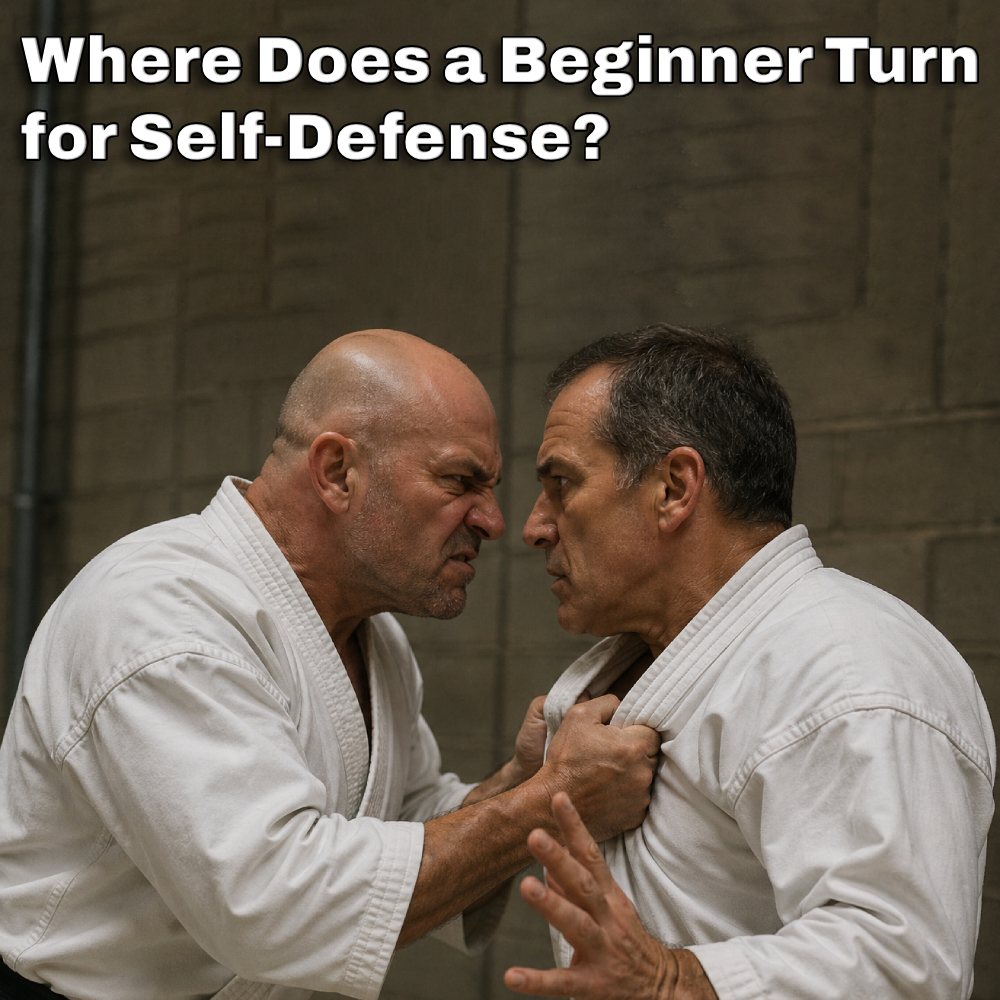
What many practitioners disregard – or simply don’t train for – is someone being right in your face. Close enough to feel their breath. Shouting, swearing, spitting. Grabbing, biting, head-butting. Or stabbing and slashing at close range.
This is the reality of violence.
Most karate training today starts from outside striking range. Protective equipment, hands high, controlled distance. You move in gradually, exchanging techniques within an agreed framework.
That’s fine – if you understand what it is.
It’s not preparation for a violent attacker who won’t give you distance, won’t fight one-on-one, and won’t follow dojo rules.
Competition has value. Sparring has value. Controlled environments have value – if you know what you’re training for.
The goal determines the strategy. The strategy determines the tactics. The tactics determine the techniques.
Sport is not self-defense. Dojo sparring is not self-defense. You must understand the difference.
Take high kicks as an example. They can be devastatingly effective – in the right context, with the right training, against the right opponent. But teaching them as a primary self-defense tool without addressing the realities of clothing, footwear, terrain, or multiple attackers? That’s irresponsible. Have you considered what happens when someone tries that technique in jeans, dress shoes, or a tight skirt?
The martial arts offer a great deal – discipline, fitness, community, confidence. But we have to be honest about what we’re teaching and why.
I understand the pressure to get clicks, views, and students. But we’re not in the movies.
Life hits hard.
If you train people in the wrong context for their goals, one day you may be responsible when it all goes wrong.