Bunkai

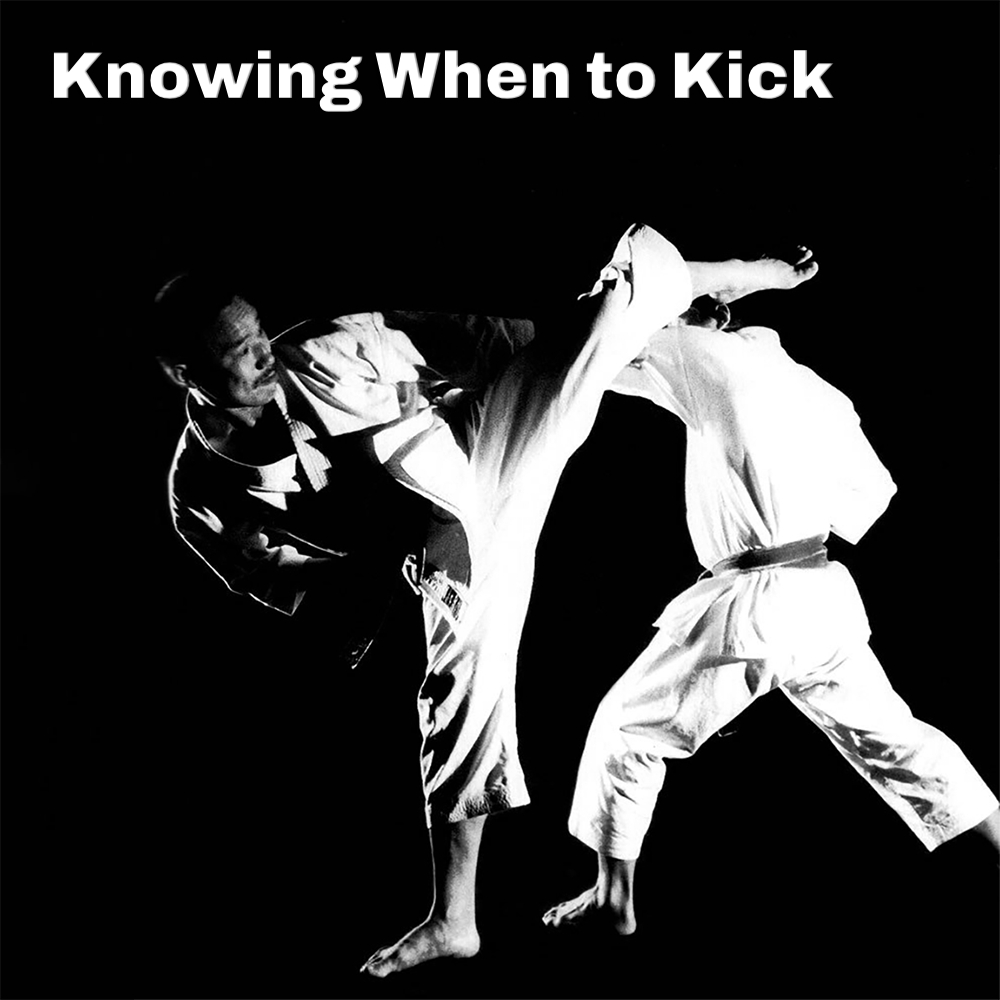
Knowing When to Kick

Kicks can be among the most powerful tools available in karate. A well-timed kick can disrupt balance, cause damage, create space, or give someone the opportunity to escape. But the usefulness of a kick depends on more than whether we are capable of performing it. Distance, balance, timing, environment, and the person using the kick […]

Knowing When to Kick Read More »
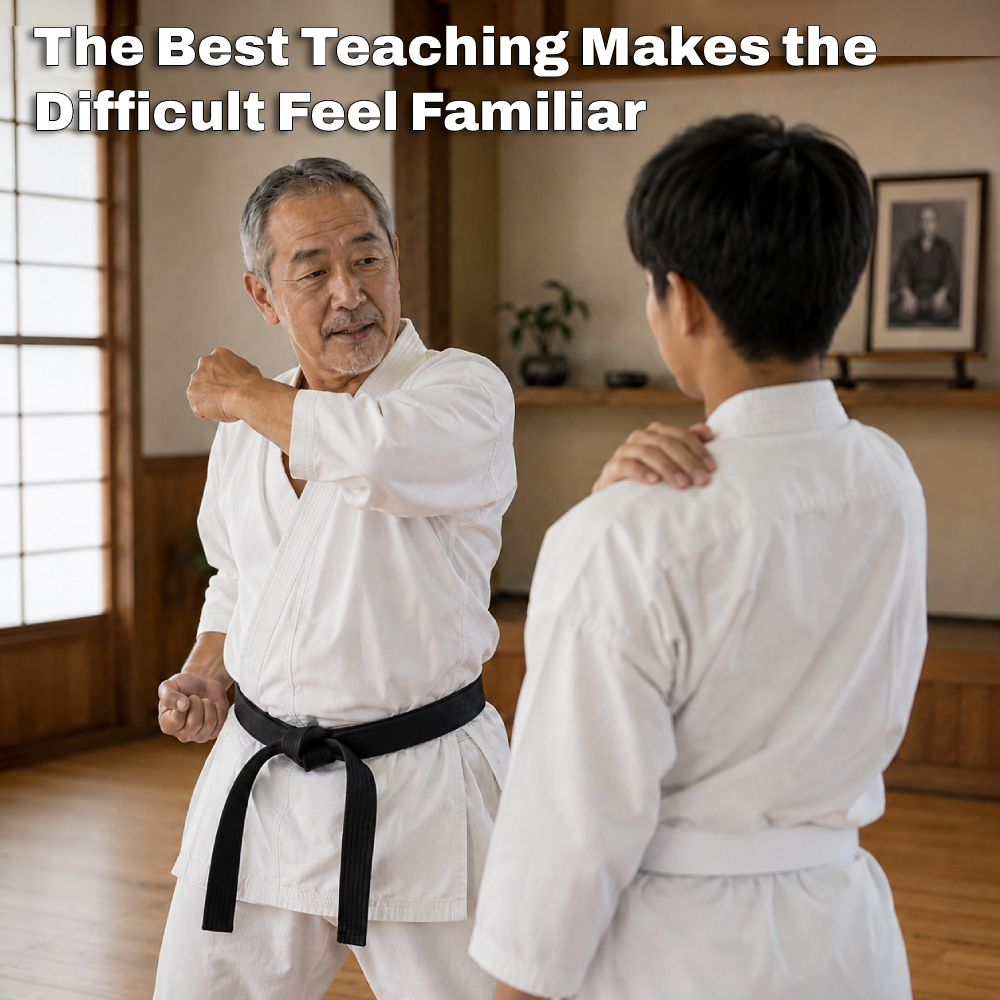
The Best Teaching Makes the Difficult Feel Familiar

When people begin learning karate, almost everything feels unfamiliar. The language and movements are unfamiliar. Even the way they are expected to stand, breathe, and hold their hands may feel different from anything they have done before. An instructor can make that unfamiliarity seem even greater by beginning with technical terminology and detailed explanations. Or

The Best Teaching Makes the Difficult Feel Familiar Read More »

Teaching the Fight First

Self-defense. Everyone teaches it, right? It’s written on the flyers, displayed on the dojo door, printed on the business cards, and included in the advertising. It is one of the main reasons many people walk into a martial arts school in the first place. But what if I told you that you might not be

Teaching the Fight First Read More »

What Is the Art in Martial Art?

Someone recently told me that karate could not be viewed only through the lens of self-defense. Karate, he said, is also an art. I am not entirely sure that he trains his own karate for self-defense, but that is perhaps beside the point. His comment raises a question that is rarely asked. What does “art”

What Is the Art in Martial Art? Read More »

If It Doesn’t Serve the Purpose

Kata, kihon, and two-person drills are all part of the language of karate. Each has value. Each has a place. But none of them should exist in isolation, and none of them should be kept simply because they have always been there. Karate has changed over time. It has been taught for physical education, discipline,

If It Doesn’t Serve the Purpose Read More »

You Want the Reward? Do the Work.

We have become used to quick answers. Short clips. Instant reactions. Everything reduced until it asks almost nothing of us. But some things cannot be reduced without losing their value. Karate is one of them. You see the same mindset in the dojo. Some students show up consistently. They train. They listen. They repeat the

You Want the Reward? Do the Work. Read More »

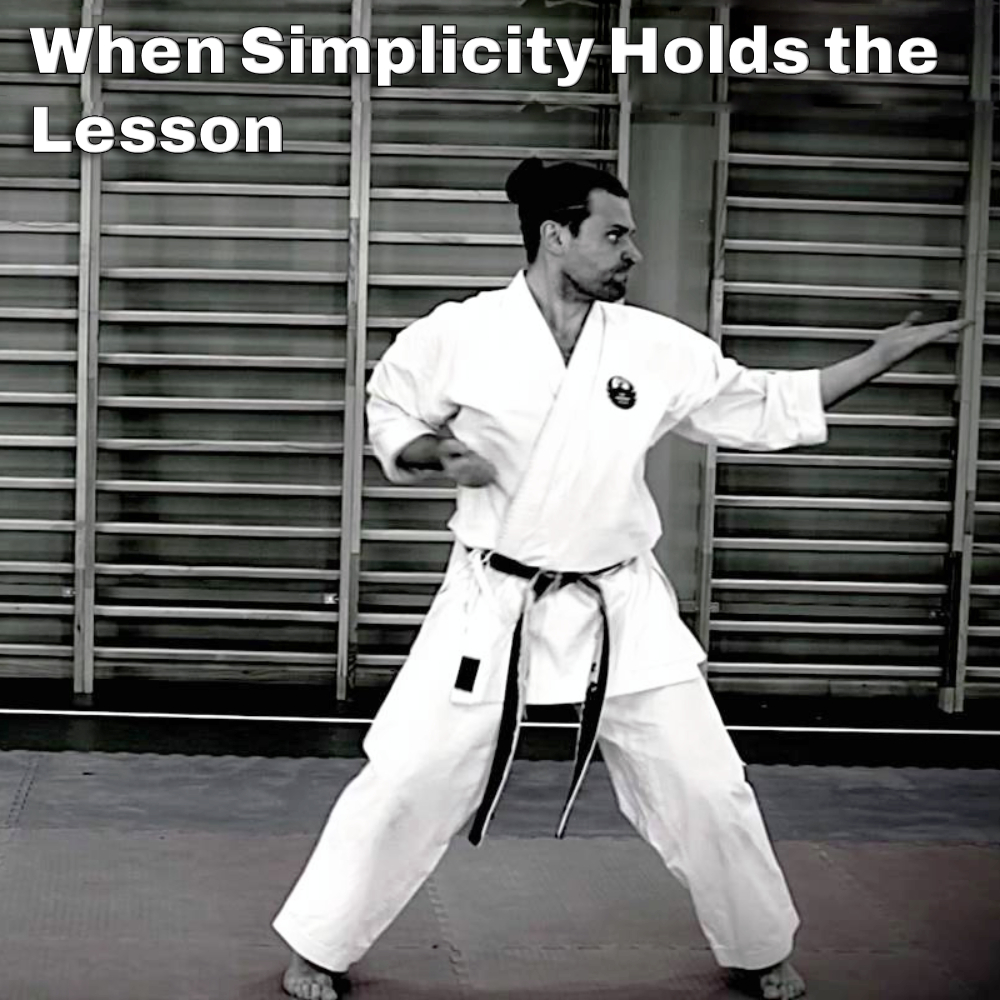
When Simplicity Holds the Lesson

I’m sure many of you have a favorite kata. I know I do. Several, actually. There are certain kata we keep going back to, sometimes because they feel good to perform, sometimes because they keep revealing something new, and sometimes because they simply stay with us. For me, Naihanchi is one of those kata. Simple

When Simplicity Holds the Lesson Read More »

When the Label Says Self-Defense

Social media algorithms are a strange phenomenon. Lately, mine seem to be filled with video clips of karate students, including black belts, spending an extraordinary amount of time perfecting stances, hand positions, hip alignment, and body posture. The hikite hand placed just so. The open front hand measured, corrected, and adjusted until it matches someone’s

When the Label Says Self-Defense Read More »

Empty Hands, Armed Assumptions

Karate is translated as “empty hand”. Karate-do, the way of the empty hand. Most karateka know, at least in general terms, that the older characters for karate referred to “China hand”, and that the later change to “empty hand” helped reshape the art for a different time, a different audience, and a different cultural setting.

Empty Hands, Armed Assumptions Read More »