
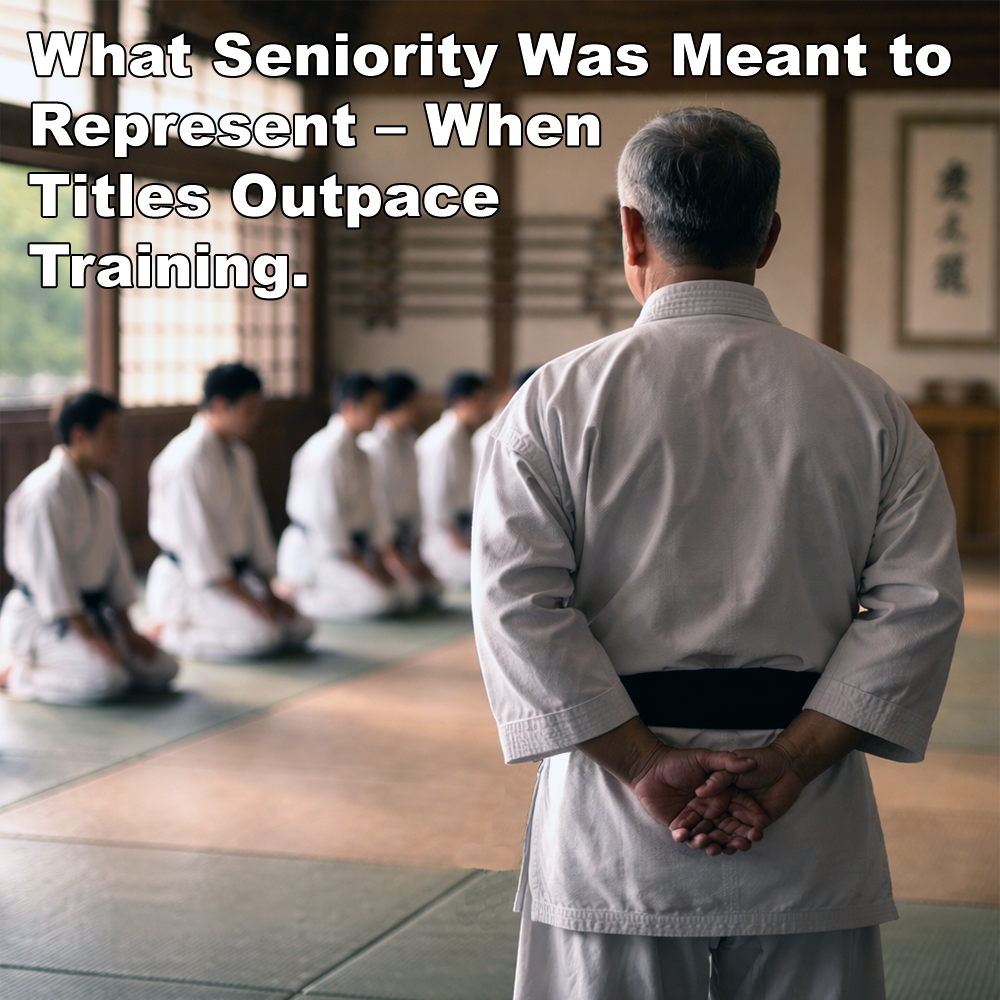
Karate has always been a long road. It was never meant to be a collection of certificates to gather, but a lifetime of practice that slowly shapes the person who walks it.
.
The early grades mark progress, but they are only the beginning. Shodan literally means “first step”, the point at which you finally understand enough to start learning properly, in depth.
.
Dan grades were never intended to be quick achievements. They reflected maturity, depth, and the ability to shoulder responsibility. A senior grade was not a reward for enthusiasm but a recognition of years of refinement, teaching, and contribution. None of this can be compressed into a handful of years, because depth itself cannot be rushed.
.
As an example, the title “shihan”. It is not a rank but a teaching designation, traditionally reserved for instructors who have demonstrated long-term commitment, technical depth, stability, and a history of guiding others.
.
It’s something bestowed by teachers who trust you, not something you can request, purchase, or award to yourself. When titles like this are handed out casually, their meaning erodes, and with it part of the art’s integrity.
.
Progression in karate takes time because the body needs years to adapt, kata must be understood rather than memorized, and application requires testing, and correction. A senior title implies that application has been tested, corrected, and understood under pressure.
.
In recent years, however, there has been fertile ground for shortcuts. Diploma mills, breakaway groups with no oversight, self-promotion disguised as independence, and organizations that award senior grades after a year or two have become increasingly common. The real problem is not that these things exist, but that students often lack the experience to tell the difference between genuine seniority and manufactured status.
.
There is another issue that is quietly troubling, though it’s rarely spoken aloud. Every style has its own expectations. Senior grades traditionally reflect years of conditioning, pressure testing, and physical resilience.
.
Age changes all of us, and no one expects instructors to remain in fighting shape forever.
.
Bodies evolve, injuries accumulate, and life leaves its marks. But even with those realities, a senior instructor is still expected to embody the principles of the style in some recognizable way. Not perfection, not athletic peak, but evidence of understanding shaped by years of honest training.
.
When rank and embodiment drift too far apart in any system, students are left without a clear reference for what the art is meant to look like. It is not about body shape or age. It’s about authenticity.
.
A senior title carries an implied responsibility to model the discipline and spirit of the art you practice. When the outward reality contradicts the claimed rank, it becomes disheartening for those who look to their instructors for guidance and inspiration. This contradiction ultimately undermines the credibility of those instructors who uphold the standards the right way.
.
Rank inflation is not a cosmetic issue. It misleads students about what skill looks like, erodes standards, dilutes the meaning of titles, and shifts the culture from depth to ego. Karate survives through honesty – honesty in training, honesty in teaching, and honesty in how we represent ourselves.
.
Karate practice should not offer quick rewards. It should produce something far more valuable: stability, clarity, humility, real skill, and a deep understanding of the art.
.
Those who take shortcuts reveal themselves quickly. Those who walk the path honestly do not need to defend it. Their movement, their teaching, and their character speak for them.
.
In the end, rank is temporary. Character is permanent.
.
.
Written by Adam Carter – Shuri Dojo