
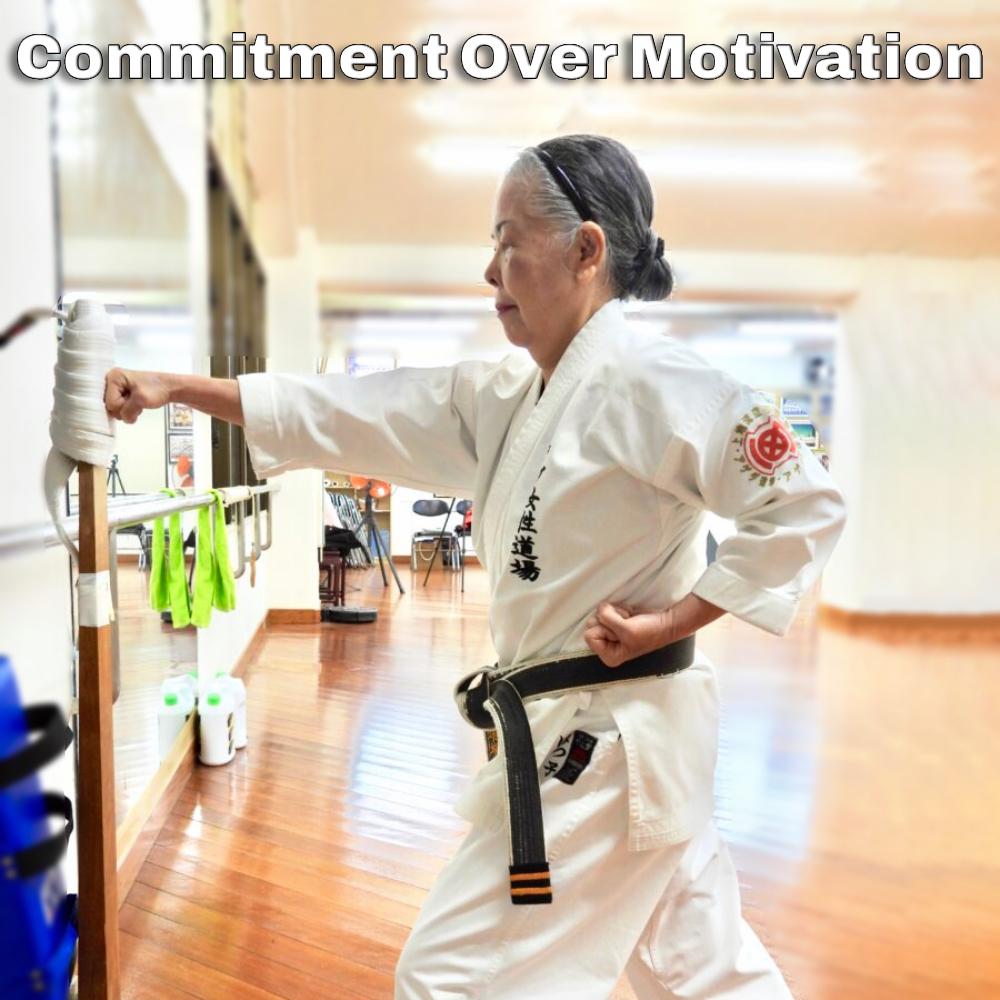
I have never understood the half-hearted approach to things. Anything. I will try my best, even if it’s not as perfect or as well executed as the next person, I will still try my best.
What I don’t understand is how easily people step away when things become difficult, or how many settle for doing the minimum just to get through what they said they would do. It seems very commonplace, and that in itself should say something.
I’ve seen it in the dojo – people start with intent, then slowly stop showing up when it stops being easy.
Some people commit their lives to a goal; others quit the moment it becomes uncomfortable. That difference is decided long before the difficulty appears.
Being only moderately committed won’t help you reach your goals. Not because the goal is out of reach, but because you never fully arrive. You hold something back, you leave yourself an exit, and when things become uncomfortable, you take it.
If you’re going to do something, then do it properly, or be honest about where it sits in your priorities. Most people already know the answer to that, they just don’t like what it says.
What successful practitioners tend to have in common is that their training is important to them, and they are committed to being the best they can be within the scope of their limitations – other life commitments, finances, time, and their natural ability. They set realistic goals for themselves and they train.
Not perfectly, not endlessly, but consistently.
They continue because they’ve decided it matters. Their participation enriches their lives, and they believe that what they get back is worth what they put in. That belief isn’t accidental – it’s built through doing the work, not thinking about it.
Every decision you make is a decision between priorities. You elevate one and lower another. What is more important right now? What is more important long-term? Nobody can answer that for you, but your actions answer it anyway.
I don’t like leaving things unfinished. Too many open tasks dilute the work. I prefer to get them done, as someone keeps reminding me. Half-finished things tend to stay that way unless you decide otherwise.
Persistence, and what we often call an “indomitable spirit”, is an important characteristic – not just of a martial artist, but of anyone who wants to see something through. Most people commit to things they are passionate about, or things that benefit them. That’s normal.
What’s less common is continuing when the initial interest fades, when progress slows, or when the outcome is no longer immediate.
People make time for the things that are important to them.
The truth is that martial arts does require a commitment on your part, and that commitment shows itself in what you do, not what you intend to do.
Motivation is often talked about as one of the foundations of progress, both in martial arts and in life. But performers in every area struggle with maintaining motivation over long periods of training, or during difficult times. Motivation is unreliable.
Commitment is not.
Motivation is based on feelings, while commitment is based on values. Whether you feel motivated or not is just that – a feeling. It may get you started, but it won’t carry you very far, because feelings change, sometimes by the hour.
You can’t rely on motivation.
What you can rely on is the decision you made when you were clear about what mattered.
Feelings don’t change your circumstances, but your actions can. And commitment is what drives those actions.
The martial arts require this. Even highly motivated practitioners struggle at times. When you are only interested in doing something, you do it when circumstances allow. When you are committed to something, you accept that you will have to do it regardless.
That’s the difference.
One depends on how you feel. The other depends on what you’ve decided. You make the commitment first. Then you do the work.
And over time, the work gives you the answers.
Photo Credit: Hatsuko Machida courtesy of Daniel Mardon