
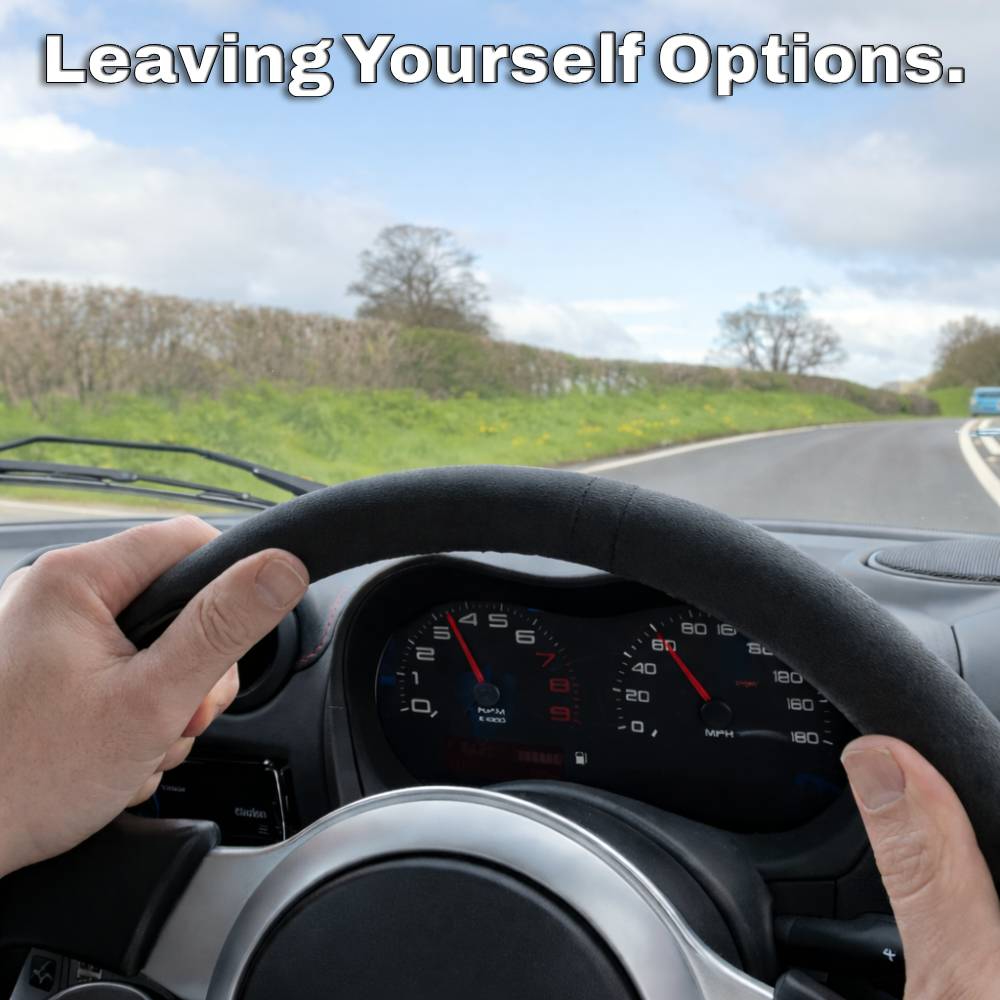
In any form of martial art, action is always faster than reaction. There’s a difference between anticipating something and reacting to it. If your interest is in self-protection, anticipation is what keeps you safe.
One of those principles is simple – ask yourself “what if?”
When I used to teach advanced driving, we taught it all the time.
What if that car pulls out? What’s around that blind corner? What if someone jumps the lights? You don’t imagine catastrophe. You adjust your positioning, your speed, your options. That isn’t fear. It’s disciplined anticipation.
But there’s another kind of response. Something small shifts, something out of the ordinary happens, and the mind immediately jumps ahead. No assessment. No positioning. Just conclusion. That’s not anticipation. That’s reaction. And reaction, if it runs unchecked, often leads to a freeze.
In driving, reacting too quickly tightens your inputs. Steering becomes jerky. Braking becomes heavy. Smooth control disappears. You begin to over-anticipate. The solution isn’t to stop thinking ahead. It’s to stay steady enough to leave yourself options.
The same thing happens in self-defense. When something unexpected occurs, the first task isn’t to decide how bad it is. It’s to see what it actually is. Where am I? What has actually changed? What is the threat? What do I still control?
Prepared anticipation gives you space. Unmanaged reaction narrows it.
Asking “what if” helps keep you safe. The discipline is not believing it before the evidence arrives.
Create a solution to what you actually see, not what you think you see.
Preparation keeps you safe. Composure keeps you capable.
Without composure, preparation is wasted.