
Communication can sometimes be surprisingly ambiguous, especially online.
A single word, used casually in one place, can carry very different meanings somewhere else.
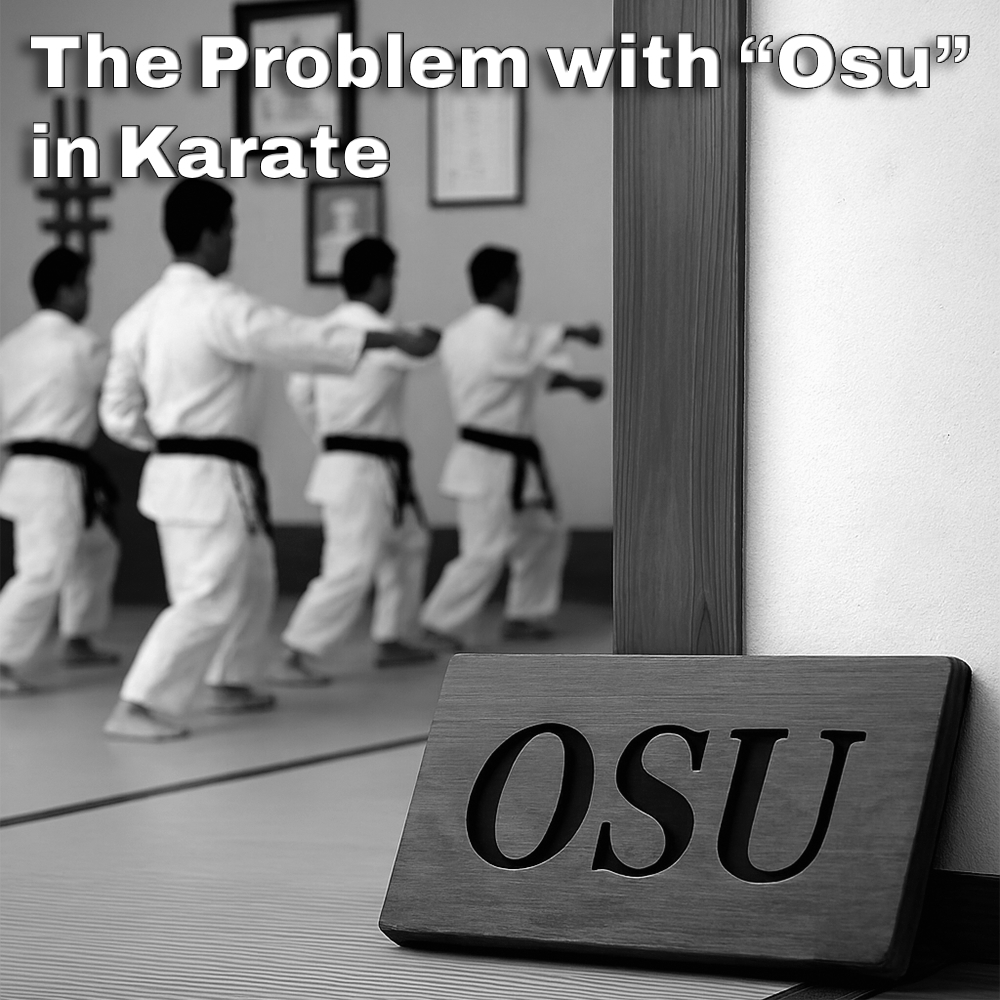
The term “Osu” is a familiar sound in karate circles. In many instances it’s meant to convey perseverance, respect, or commitment to training. In some Japanese karate styles it holds a strong place in dojo etiquette.
However, karate is not a single culture. There are many traditions within it, and etiquette differs between them.
In Okinawan karate, the term is generally not used.
And in my own dojo we don’t use it either.
That in itself is not a problem. If your dojo uses it, that is part of your training environment and your choice. But the way the word is now used online has created a different issue entirely.
I regularly receive comments or private messages that contain nothing but the word “Osu”.
Just the word.
No context, no explanation, no actual communication.
Is it a greeting? Agreement? A question? Enthusiasm?
Without context it’s impossible to know what the person intends to say.
If someone has a question about an article or wants to start a conversation, it’s far clearer simply to write what they mean.
One of the reasons the word creates confusion is that it has accumulated so many interpretations over time. Depending on who you ask it can mean “yes”, “I understand”, “push”, “endure”, “greetings”, “respect”, or simply act as a filler word.
At that point it becomes a catch-all expression that ends up meaning very little.
Part of the misunderstanding comes from where the word originated.
The exact origin of “Osu” is still debated, but most evidence suggests it developed in mainland Japan during the early twentieth century. It appeared in Japanese university karate clubs connected with the students of Gichin Funakoshi, and its tone was influenced by the military and school culture of that era.
The commonly repeated explanation that the word means “push and endure” is a later interpretation that became widely promoted within Kyokushin karate. While that meaning fits the spirit of those systems, it was not the original source of the term.
What is clear, however, is that “Osu” did not originate in Okinawan karate and was never part of traditional Okinawan dojo etiquette.
Some Okinawan instructors have commented that the word sounds overly harsh or unnecessarily macho in tone. The clipped sound reflects the militarized atmosphere of mainland Japan during the early twentieth century rather than the more conversational culture traditionally found in Okinawan dojo.
But Okinawan dojo culture is different.
In my own experience training with Okinawan teachers in the early 1980s, the atmosphere was far more conversational and personal. Teachers encouraged questions once they knew you. The relationship between teacher and student was less rigid and far less formal than many Western students expect.
That difference in culture matters.
When practices are copied from one environment into another without understanding where they came from, they can quickly become habits rather than traditions.
I understand how easily that happens because I did it myself.
When I began training in 1974 under a Japanese instructor, I used the word because that was what my teacher used. Respect meant following instructions and I did exactly that. I didn’t question it.
Later, when I trained under an Okinawan teacher, I realized that the culture was different and the word simply didn’t belong there.
Today I still see it constantly in comments and messages. People use it because they believe it is “the karate thing to say”. In some circles it has almost become a meme.
People are not trying to be disrespectful. Most simply don’t know any better. They are repeating something they absorbed from a different branch of karate culture.
And that is really the larger issue.
Respect for teachers is important in any dojo. But sometimes that culture of respect can lead to habits being copied without thought. Words, rituals, and behaviors are repeated simply because others do.
Karate deserves better than that.
Practitioners should understand the art they are practicing. They should know what belongs to their tradition, and the traditions of others, and what does not.
Habits are easy to repeat. Understanding takes effort.
If “Osu” belongs to the system you practice, then use it in that context. But if it does not belong to the culture of your dojo or your lineage, there is no reason to adopt it simply because others do.
Karate should encourage thinking, not automatic behavior.
That begins with asking a simple question:
Why am I doing this?
If you value these insights, you can support my work here: buymeacoffee.com/shuridojo – Thank you – every contribution is appreciated.