
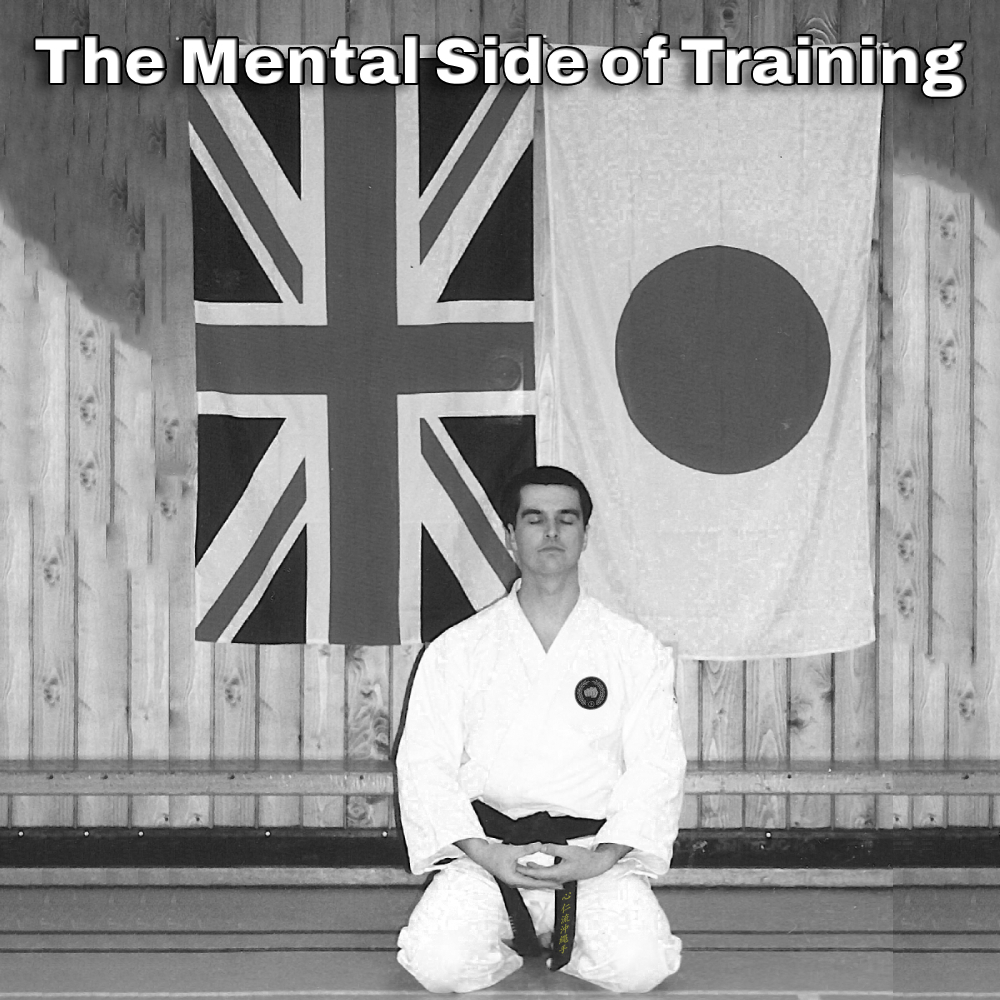
Training the Mind
Most people think of martial arts training as physical. Techniques. Speed. Power. Conditioning.
Those things matter, of course. But over time many practitioners begin to realize that martial arts training involves something more as well.
The training of the mind.
Anyone who has watched sport long enough has seen how quickly psychology can change the outcome. A moment of hesitation, doubt, or frustration can shift the entire direction of a game, a match, or an event.
Yet much of modern training culture focuses heavily on the external aspects of performance – strength, conditioning, and technical ability. The mental side is often discussed, but not always deliberately trained.
Did the traditional martial arts approach this differently?
Historical martial writings suggest that many practitioners understood that skill alone was not enough. In situations where violence was real, fear, confusion, fatigue, and chaos were constant companions. The ability to remain composed, decisive, and committed often mattered as much as technical ability.
Writings such as Miyamoto Musashi’s Book of Five Rings emphasize the importance of clarity of mind and composure under pressure. In that sense, the mental side of training has long been recognized as part of martial development.
Training therefore evolved in ways that shaped the practitioner internally as well as externally.
Many martial traditions gradually transformed into what are now called the “do” arts – paths of practice aimed at personal development as much as combat ability. Systems such as kendo, aikido, iaido, and karatedo all reflect this idea of training as a lifelong path rather than simply a method of fighting.
Even today you can see traces of that approach in the way many martial arts are practiced.
Etiquette in the dojo, for example, is not simply about politeness. It encourages humility and reminds the practitioner that training is larger than any individual’s ego.
Repetition serves a similar purpose. Endless basics can feel tedious, but they teach patience and focus while gradually embedding movement until it becomes natural.
There is also the simple act of continuing when something becomes uncomfortable.
Completing another round of training when you would rather stop. Repeating a drill again when fatigue has already set in. Going that extra mile when running and your legs are already screaming, enough.
These moments develop something beyond technique.
Kata-based sparring or free practice introduces another element. Even in a controlled environment students must deal with hesitation, pressure, and uncertainty. Learning to function calmly in that environment is part of the training.
Through repetition the body begins to move automatically while the mind observes, refines, and adjusts. Ideally this produces a quiet awareness rather than constant conscious effort.
And as I have mentioned already, the traditional martial arts often place emphasis on shaping the practitioner over a long period of time.
Technique can be learned relatively quickly.
Mental steadiness takes much longer.
Over years of practice many people eventually realize that the most valuable things they gained from training were not specific techniques at all.
They were patience.
Resilience.
The ability to stay calm under pressure.
And perhaps most importantly, the willingness to continue when something becomes difficult.
Technique can be learned relatively quickly.
Mental steadiness takes much longer.