
Some of the messages I receive are incredibly short-sighted. “You would fail if you were taken to the ground.”
.
Firstly – fail at what?
.
I don’t compete anymore. The karate I teach, and have taught for several decades, is practical and pragmatic in approach. Yes, we occasionally have fun and do competition-style sparring, but it’s not our focus.
.
Everything you practice depends on context.
.
The idea that self-defense boils down to taking someone to the ground and finishing them ignores some uncomfortable realities.
.
The ground, in a life-threatening civilian encounter, is the last place you want to be. There are no rules, no judges, no referee, and no guarantee the other person is alone or unarmed. In real-world violence, weapons are common – far more common than many people want to admit.
.
Highly trained fighters are just as vulnerable to being stabbed as anyone else.
.
Ask yourself honestly: how quickly can you incapacitate one person while their associates are attacking you? How many blows can you absorb before a blade appears? What happens when you cannot disengage, cannot move, and cannot see what is happening around you?
.
Assuming an attacker is unarmed is a fatal mistake. Assuming they might be armed gives you a chance to go home alive.
.
Sport violence and real violence are not the same thing. There is no signal to start, no signal to stop, and no authority stepping in when things escalate.
.
Weapons are often dismissed in these discussions, but they should not be. If your self-defense training does not realistically address weapons, it fails. Even if it does, escape should always remain the priority – survival is the objective, not dominance.
.
Multiple attackers are also a reality. Unpleasant, inconvenient, but real. Training should address how to create space and get away – not how to “win”.
.
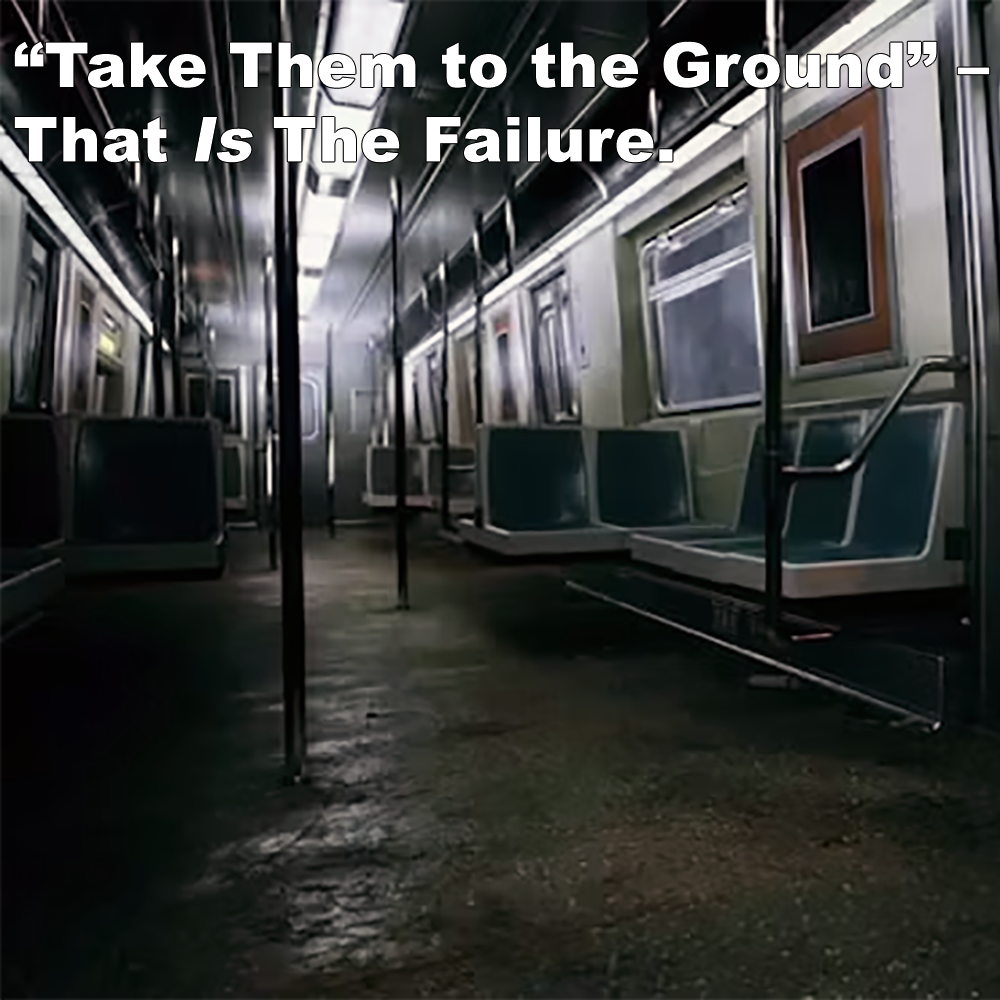
And space itself cannot be taken for granted. Many assaults occur in confined environments: alleyways, cars, doorways, and public transport. Trains, especially late at night or early in the morning, remove mobility, limit awareness, and trap people in close proximity.
.
Your favorite technique may not even be physically possible there.
.
There is a tendency to treat technical solutions as universal answers. But technique without context is assumption dressed as confidence.
.
A referee is not reality. Rules are not reality. A mat is not a train carriage in the early hours of the morning.
.
Context matters. Ignore it, and no amount of technical excellence will save you.
.
.
– Adam Carter