
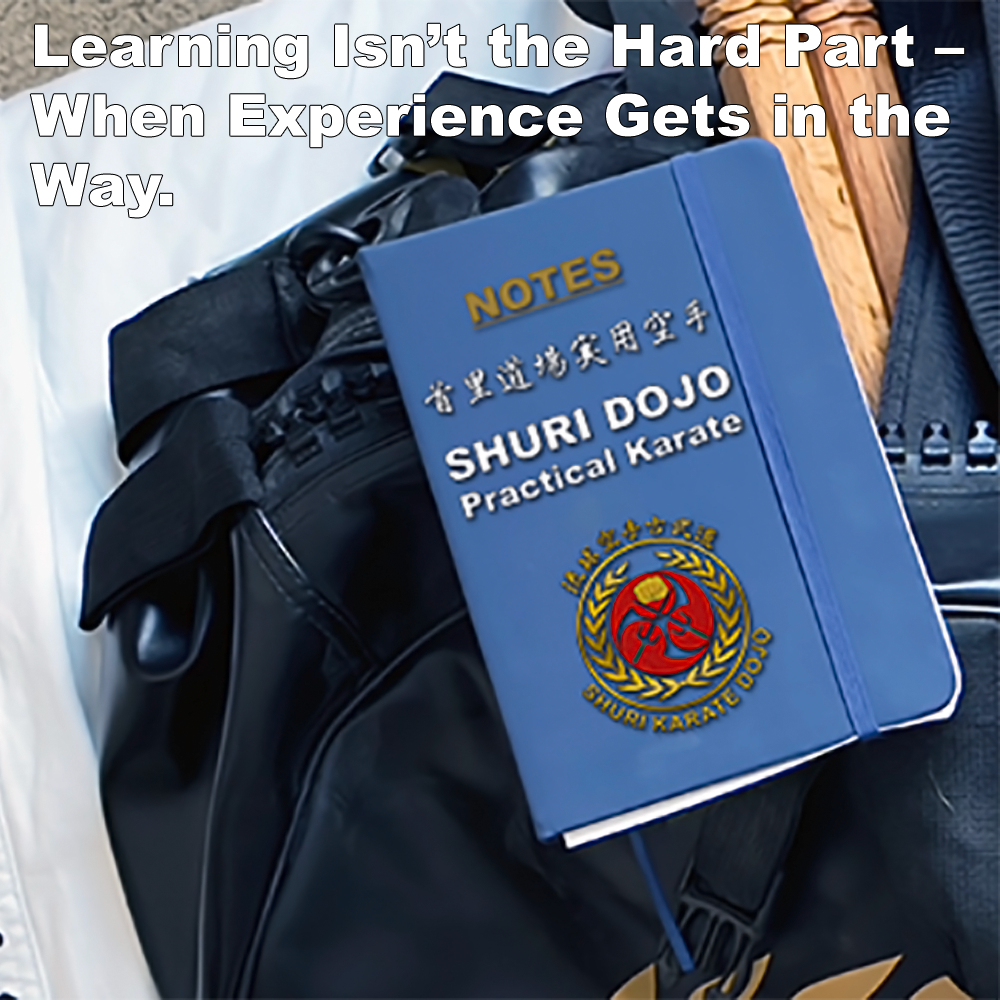
We all want to be acknowledged for our work, our performance, our dedication. It’s a natural human desire to know that we are doing a good job.
.
Praise is one of those small things that can mean a great deal. Positive reinforcement feels good, and there’s nothing wrong with that. But it can also create blind spots if we’re not paying attention.
.
“I hear and I forget. I see and I remember. I do and I understand.” That old Chinese proverb captures something essential about learning. It also hints at a deeper truth – understanding is not fixed.
.
When we take on a new skill, even one that resembles something we already know, it’s tempting to lean on familiar patterns. Repeating what worked in the past isn’t always wrong, but when the new thing is meaningfully different, the old approach can quietly hold us back.
.
Alvin Toffler (1928-2016) was an American writer and futurist who spent his career examining how rapid change affects society and human behavior. His work often explored what happens when old ways of thinking no longer match new realities.
.
His well-known line – “Learn, unlearn, and relearn” – captures that struggle clearly.
.
Unlearning something can be uncomfortable. It isn’t about erasing knowledge or denying past experience. It’s about recognizing when an old assumption no longer fits, setting it aside, and making space for something different, perhaps more accurate.
.
Doing this doesn’t ask you to discard your experience. It asks you to stop clinging to it. It’s an invitation to stay open, to loosen your grip on the belief that your previous way is the one and only way.
.
Once you believe you already know, everything else can seem wrong by default, and that belief becomes a cage. In the martial arts this shows up everywhere, in technique, in training habits, in how kata is interpreted, and in how practitioners engage with one another. Certainty can feel comfortable, but it can also quietly narrow vision.
.
“This is how we always did it” is one of the most effective ways to stop learning. It protects familiarity at the expense of perhaps a deeper understanding.
.
But when a new skill, a different idea, is approached with curiosity, by looking at how it works rather than how it compares, something changes. Old patterns begin to fade simply because they are no longer being reinforced. New understanding takes their place. You prepare yourself for what comes next.
.
I believe that this is at the heart of Toffler’s message. Learn what is in front of you. Unlearn what no longer serves. Relearn with clarity, humility, and updated understanding.
.
It’s a mindset. And in the martial arts, it may be one of the most important disciplines we ever practice.
.
.
– Adam Carter