
(Approx 1 minute 10 second read)
There are always those who want conflict, who want to fight.
.
We’re told, again and again, that the sensible response is to de-escalate, walk away, disengage, and not react. And most of the time, that is good advice.
.
But that advice quietly assumes something important.
.
It assumes the situation ends when you leave.
.
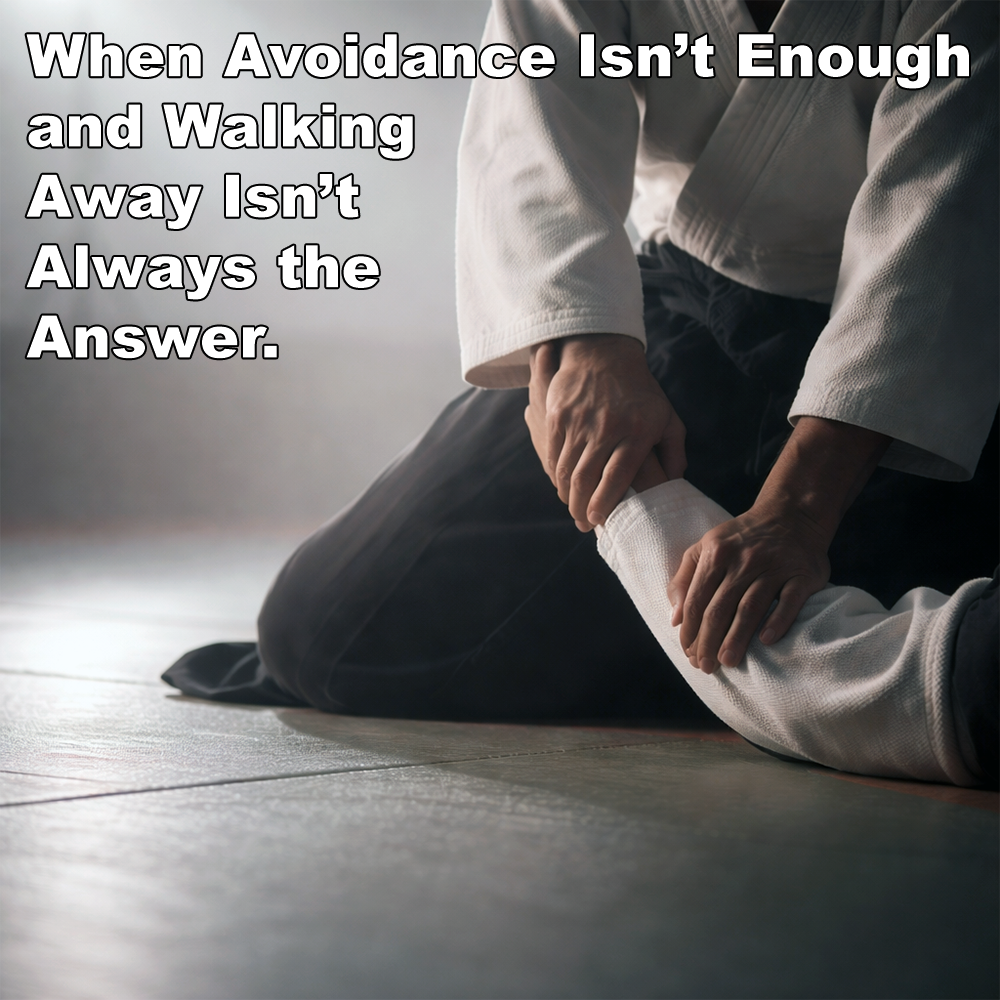
We are constantly told that avoidance is the answer, walk away, disengage, don’t react, but that advice quietly assumes the situation ends when you leave.
.
And sometimes it doesn’t.
.
Some people don’t want resolution. They want engagement. They want a reaction.
.
In any self-defense context, avoidance and de-escalation are taught as first principles. Not because we fear conflict, but because unnecessary conflict carries risk. But training has never stopped there. We also prepare for the moments when avoidance fails. Not out of aggression, but out of realism.
.
Avoidance works when it removes you from the problem.
.
It fails when the problem follows you.
.
That doesn’t mean seeking conflict. It means recognizing the limits of advice that only works under ideal conditions. Knowing when to step away is wisdom. Knowing when that step won’t resolve anything is realism.
.
And sometimes those moments arrive when you are least prepared. When you’re tired. When your patience is thin. When the space you would normally create simply isn’t there.
.
That’s why training has always been about preparation, not just good intentions.
.
Peace isn’t found by pretending conflict doesn’t exist, but by understanding when it can be avoided, and when it must simply be acknowledged.
.
Avoidance is a skill. So is knowing when avoidance is no longer possible.
.
.
Written by Adam Carter – Shuri Dojo