
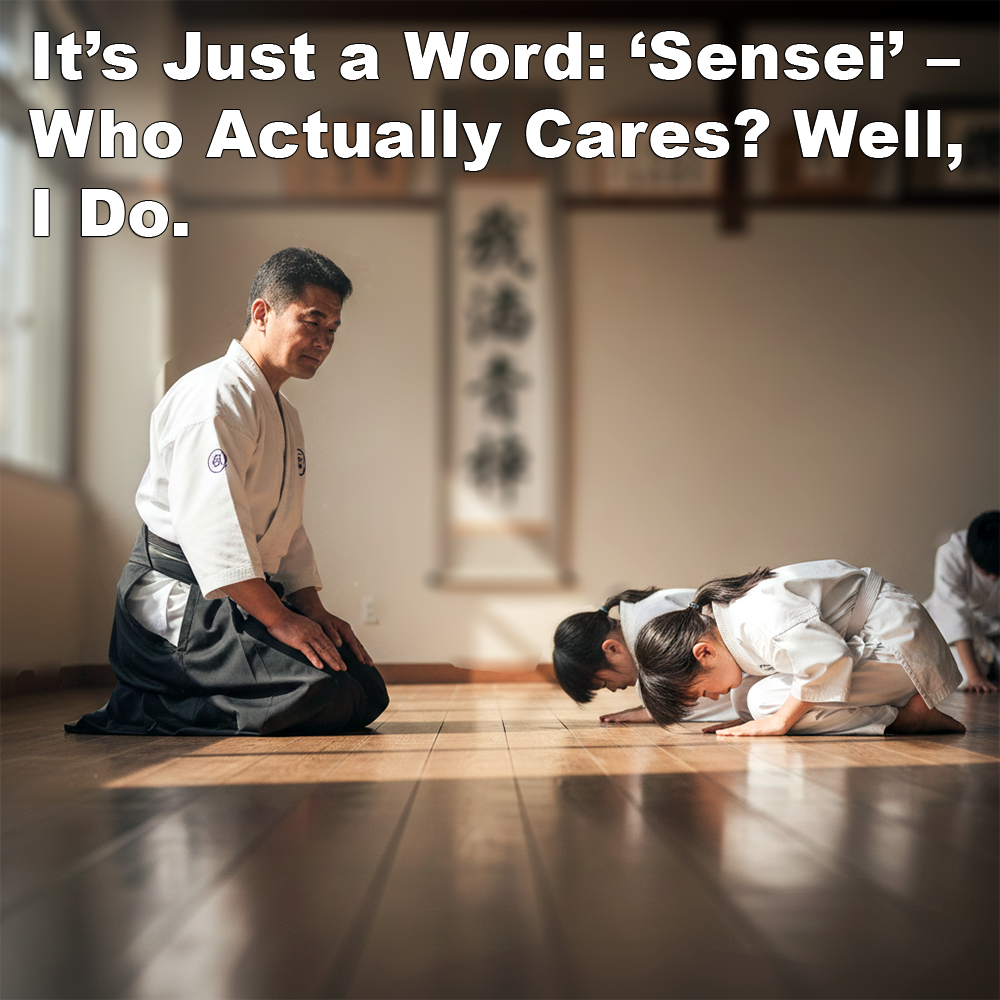
(Approx 1 minute 45 second read)
I watched an advertisement for a dojo recently. It was a video reel, and although I understand the need for marketing, if you own a dojo and you teach karate, you should at least know how to use the term “sensei”.
.
If you’re using Japanese terminology in your dojo, then surely you should know what the words actually mean. I’ve written about this before, and many people responded with, “So what? We can call ourselves whatever we like.”
.
I disagree. If we choose to follow an art with cultural significance, the least we can do is use its terms correctly.
.
In the West, anyone who runs a dojo is usually called sensei. Some instructors even tell students, “In the dojo, you call me sensei”, sometimes without explaining what the word means. Students naturally assume it’s a title the instructor gives themself. It isn’t.
.
In the video I watched, the instructor said several times, “Give sensei [name] a call and I’ll help you get started.” That’s exactly the issue.
.
Sensei is an honorific. An honorific is what other people call you. You don’t refer to yourself with them. Just like you wouldn’t introduce yourself by saying, “My name is Mr. Smith”, the same applies in Japanese. Saying, “My name is Sensei [name]”, is incorrect.
.
If you want your students to call you sensei, that’s fine. You simply say, “Please call me [name] sensei.”
.
Your name is ‘your name’. The honorific is something others attach to it, not something you declare or sign yourself.
.
Outside Japan, sensei has become synonymous with “martial arts instructor”. In Japan, it’s used for many respected professions – doctors, teachers, lawyers, politicians. It’s not a personal label you choose for yourself; it’s a mark of respect given by others.
.
As someone said, “who cares?”. Well, I do. You see, if you can’t really be bothered by getting something this simple right, what does that say about the rest of your teaching? If you have the choice to do things right, the best you can, then do them that way. It shows integrity and good practices.
.
I doubt someone who prints “Sensei” on their business cards, front door, or social media profile will change because of my article. But some people genuinely want to get these things right, so this is for them. So, stop introducing yourself as sensei [name].
.
And for the rest? Perhaps they’ve simply missed the point of respecting the culture they draw their livelihood from.
.
Well… it’s just marketing, I suppose.
.
.
Written by Adam Carter – Shuri Dojo