Student

It’s all about priorities, right?

Martial arts training is about training both the body and the mind. Part of training the mind is discipline. The discipline to do what is necessary. . It’s all about priorities, right? After all, you only practice a couple of times a week. . When I started karate almost five decades ago, I decided to […]

It’s all about priorities, right? Read More »
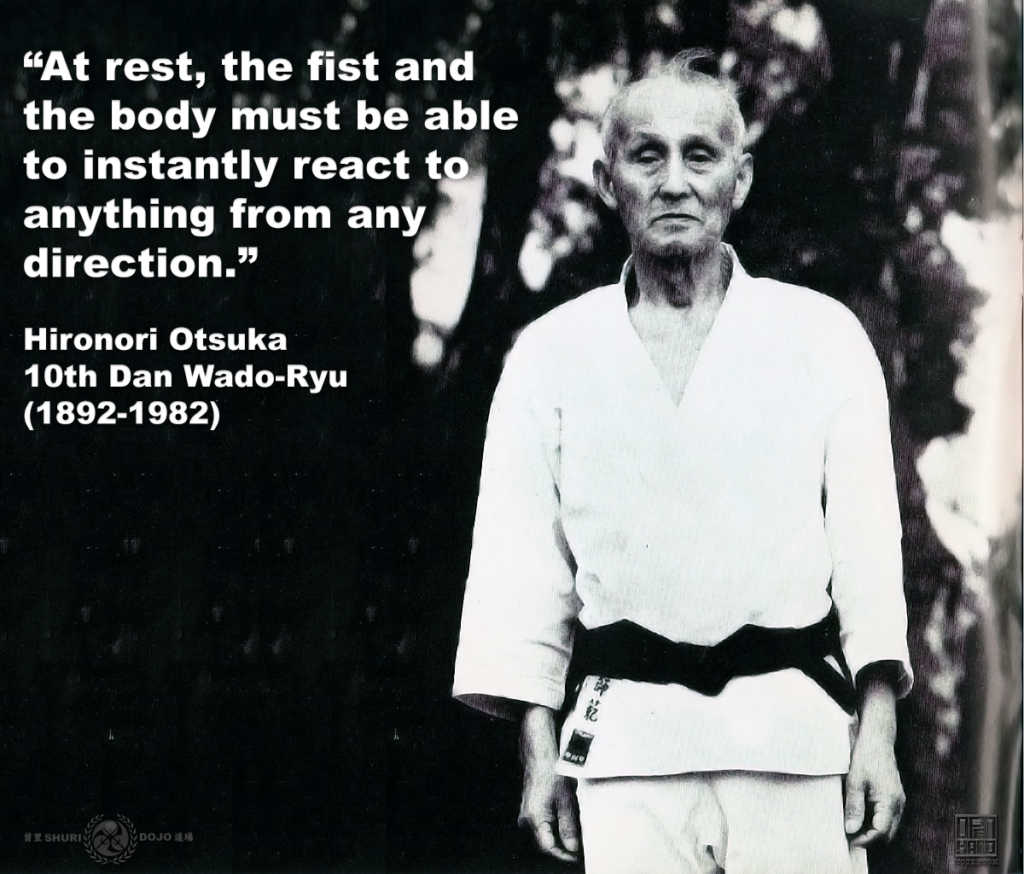
Moving to an angle is a key principle in karate.

“At rest, the fist and the body must be able to instantly react to anything from any direction. The same applies to one’s heels — the heels must be prepared to shift the body in any direction without hesitation.” – Hironori Otsuka 10th Dan Wado-Ryu (1892-1982) from the book ‘Wado Ryu Karate’ . In actual

Moving to an angle is a key principle in karate. Read More »

“Those who are unaware they are walking in darkness will never seek the light.”

The people who argue about kata not being relevant to real fighting or self-defense totally miss the point – in addition to being ’libraries’ of combative principles, techniques and movements, when practiced correctly they reinforce the fundamentals necessary to fight or defend oneself as effectively as possible in a civilian exchange. . People who question

“Those who are unaware they are walking in darkness will never seek the light.” Read More »

Just Relax!

Many martial artists don’t know (or can’t admit) that they’re wasting energy. They make excuses like; “Oh I just need to relax more.” or “I need to work on my cardio.” No..… you’re getting tired because you have poor technique. . And they blame poor conditioning, but the reality is, that conditioning will never compensate

Just Relax! Read More »

Kata, the management of failure.

“We learned karate that was to be used in real-life situations. If you don’t continue to train with that sense of there being a real opponent, you won’t be able to respond in that kind of situation.” – Takeshi Tamaki 10th dan Shorin-ryu . Kata, the management of failure. . What does this mean?…… In

Kata, the management of failure. Read More »

“Don’t think. FEEL.”

When I was a kid Bruce Lee was the one who inspired me to start the martial arts at fourteen years of age, while still at school. “Emotional content”. A small scene in his classic film ‘Enter the Dragon’. . It all starts when Bruce discovers a young student walking around the temple. Upon seeing

“Don’t think. FEEL.” Read More »

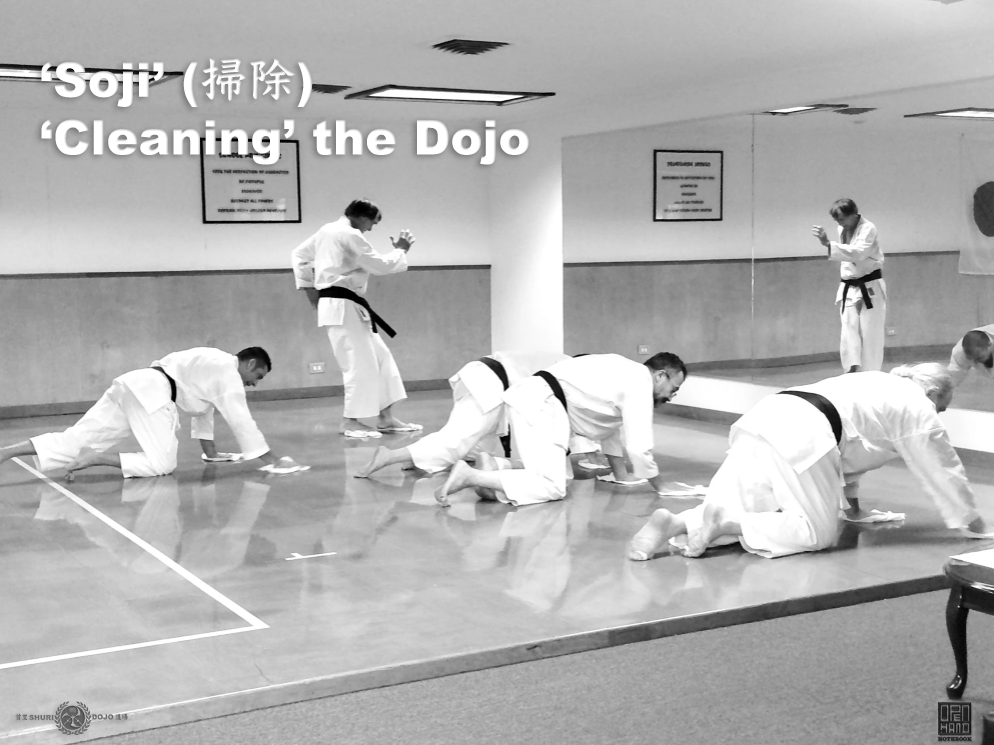
‘Soji’ (掃除) ‘Cleaning’ the Dojo

In Japan, cleaning is called ‘Soji’ (掃除) and apart from obviously ‘cleaning’ it is valued as a way to cultivate our minds. In fact, ‘Soji ‘is beyond mere cleaning. Buddhist monks when attending a monastery or shrine, put a great deal of time into practicing ‘Soji’. A monk’s day begins with cleaning, and cleanliness and

‘Soji’ (掃除) ‘Cleaning’ the Dojo Read More »

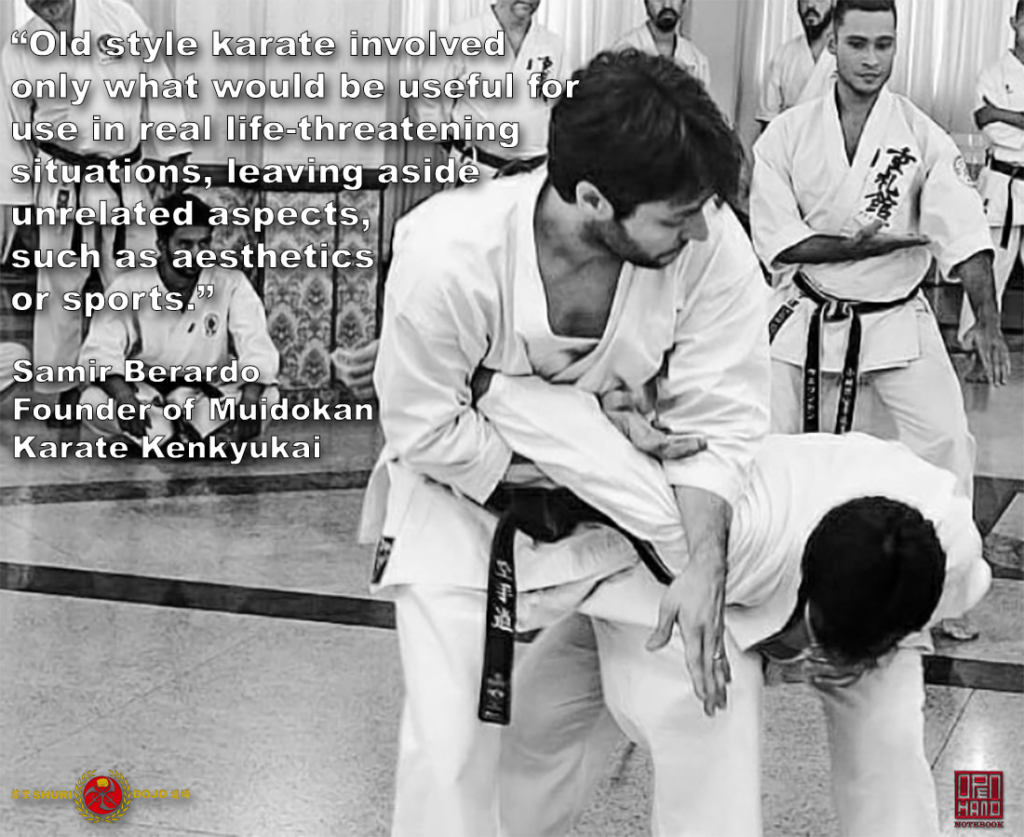
“Old style karate involved only what would be useful.”

Here is a comment posted on a recent YouTube video. (I won’t mention any names)…… “I post this as a person who has trained many years in karate, then to judo and jujitsu, and then to boxing. I would also say, I have spent many years in law enforcement roles and I know what works.

“Old style karate involved only what would be useful.” Read More »

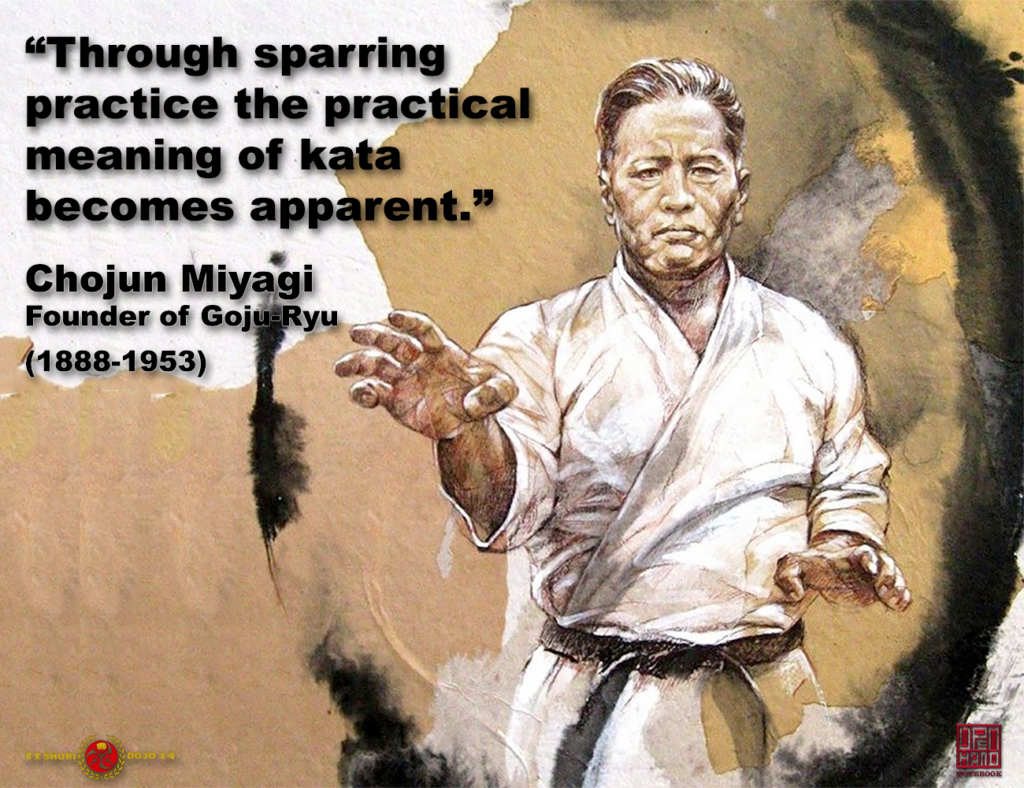
“Through sparring practice the practical meaning of kata becomes apparent.”

Many practitioners talk about kata interpretation, or bunkai as an element of their karate practice. And many of these practitioners say the movements aren’t practical, they wouldn’t work for real, kata is useless, no-one comes to my dojo to learn kata, etc, etc……. and you know what? That’s true, for the way most people practice

“Through sparring practice the practical meaning of kata becomes apparent.” Read More »

How important is lineage to you?

We all have a martial arts lineage of sorts, some remain faithful to one, others perhaps through no fault of their own, have several. There are those that believe who you follow is of the utmost importance, and there are others who couldn’t care less. . Anyone who has an interest in the history of

How important is lineage to you? Read More »

“Learning is not simply about acquiring knowledge.”

Students develop an interest in a subject for reasons that have meaning for them. They may be motivated by their interest in a topic, their prior success, a desire to please parents or their instructors, or simply by their own drive to succeed. . There are two main types of motivation: intrinsic and extrinsic. Intrinsically

“Learning is not simply about acquiring knowledge.” Read More »