Martial Arts

What’s the difference between history and tradition?

“Karate has been present in Okinawa since the time of the Ryukyu Kingdom. That is why it is our mission to protect this tradition.” – Yoshitsune Senaga 10th-dan Uechi Ryu . What’s the difference between history and tradition? . In our fast paced and ever changing lives and a world that appears to be in […]

What’s the difference between history and tradition? Read More »

“There is only one opponent and he is in front of you.”

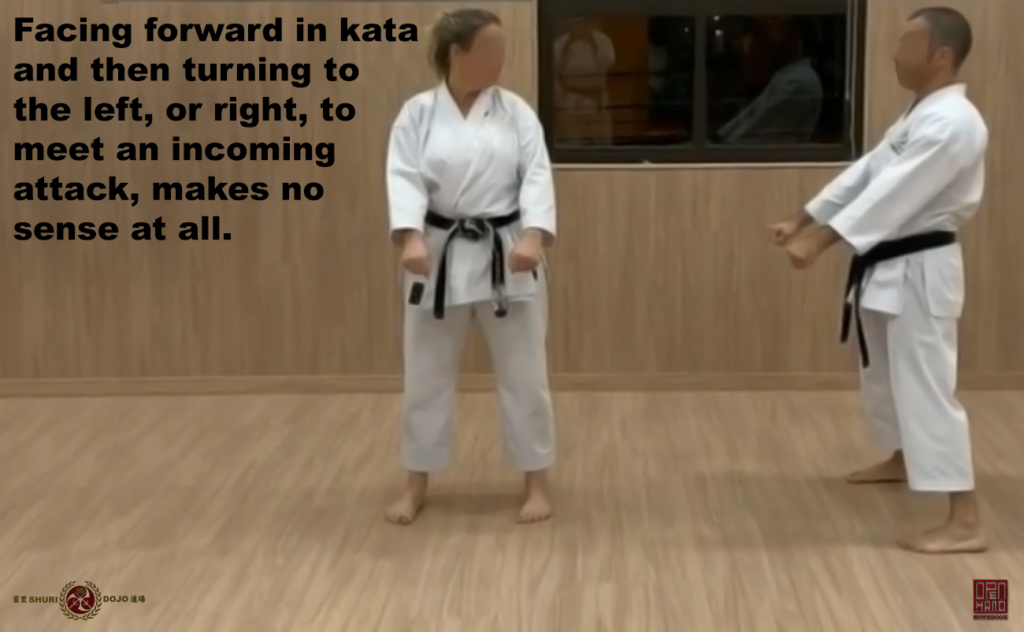
“There is only one opponent and he is in front of you. Turning to face a new direction while performing the kata does not mean you are turning to face a new opponent.” ~ Seikichi Toguchi (1917-1998) . (Begin Mabuni quote) – “The meaning of the directions in kata is not well understood, and frequently

“There is only one opponent and he is in front of you.” Read More »

Kata, the management of failure.

“We learned karate that was to be used in real-life situations. If you don’t continue to train with that sense of there being a real opponent, you won’t be able to respond in that kind of situation.” – Takeshi Tamaki 10th dan Shorin-ryu . Kata, the management of failure. . What does this mean?…… In

Kata, the management of failure. Read More »

“Don’t think. FEEL.”

When I was a kid Bruce Lee was the one who inspired me to start the martial arts at fourteen years of age, while still at school. “Emotional content”. A small scene in his classic film ‘Enter the Dragon’. . It all starts when Bruce discovers a young student walking around the temple. Upon seeing

“Don’t think. FEEL.” Read More »

‘Soji’ (掃除) ‘Cleaning’ the Dojo

In Japan, cleaning is called ‘Soji’ (掃除) and apart from obviously ‘cleaning’ it is valued as a way to cultivate our minds. In fact, ‘Soji ‘is beyond mere cleaning. Buddhist monks when attending a monastery or shrine, put a great deal of time into practicing ‘Soji’. A monk’s day begins with cleaning, and cleanliness and

‘Soji’ (掃除) ‘Cleaning’ the Dojo Read More »

Criticism for the sake of criticism does nothing.

Criticism for the sake of criticism does nothing. . Criticism has become a common tendency in present times. Once someone writes about their feelings or observations in the martial arts, they have to confront criticism. Although their writings are reflections of the martial arts in general, there are still critics to highlight the positive and

Criticism for the sake of criticism does nothing. Read More »

“Karate ni sente nashi” (空手に先手なし)

“Karate ni sente nashi” (空手に先手なし), typically translated as, “There is no first attack in karate.” . Gichin Funakoshi made this principle the second of his “Niju Kun” (Twenty Precepts), reminding us that “karate begins and ends with courtesy”. . Karate and particularly kata, often suffers a bad name for being outdated and unrealistic. In my

“Karate ni sente nashi” (空手に先手なし) Read More »

“Kata without bunkai is like a shamisen (3 string Okinawan guitar); Nice sound, but empty on the inside.”

A comment on one of my recent articles stated; “I don’t believe in bunkai.” . To comment that; “I don’t believe in bunkai” is an extraordinary thing to say. Someone who really doesn’t understand their martial arts. But unfortunately, they really believe in their statement. And this is all too common. . What does “bunkai”

“Kata without bunkai is like a shamisen (3 string Okinawan guitar); Nice sound, but empty on the inside.” Read More »

“Old style karate involved only what would be useful.”

Here is a comment posted on a recent YouTube video. (I won’t mention any names)…… “I post this as a person who has trained many years in karate, then to judo and jujitsu, and then to boxing. I would also say, I have spent many years in law enforcement roles and I know what works.

“Old style karate involved only what would be useful.” Read More »

“Through sparring practice the practical meaning of kata becomes apparent.”

Many practitioners talk about kata interpretation, or bunkai as an element of their karate practice. And many of these practitioners say the movements aren’t practical, they wouldn’t work for real, kata is useless, no-one comes to my dojo to learn kata, etc, etc……. and you know what? That’s true, for the way most people practice

“Through sparring practice the practical meaning of kata becomes apparent.” Read More »

The journey is the destination.

Is there a decline in what it means to be a ‘Martial Artist’, rather than just train in the martial arts? . Traditional philosophies in the martial arts have been watered down, and have become difficult to practice due to changes in society. . We don’t the have the time, the attitudes, the common interest,

The journey is the destination. Read More »