Zen

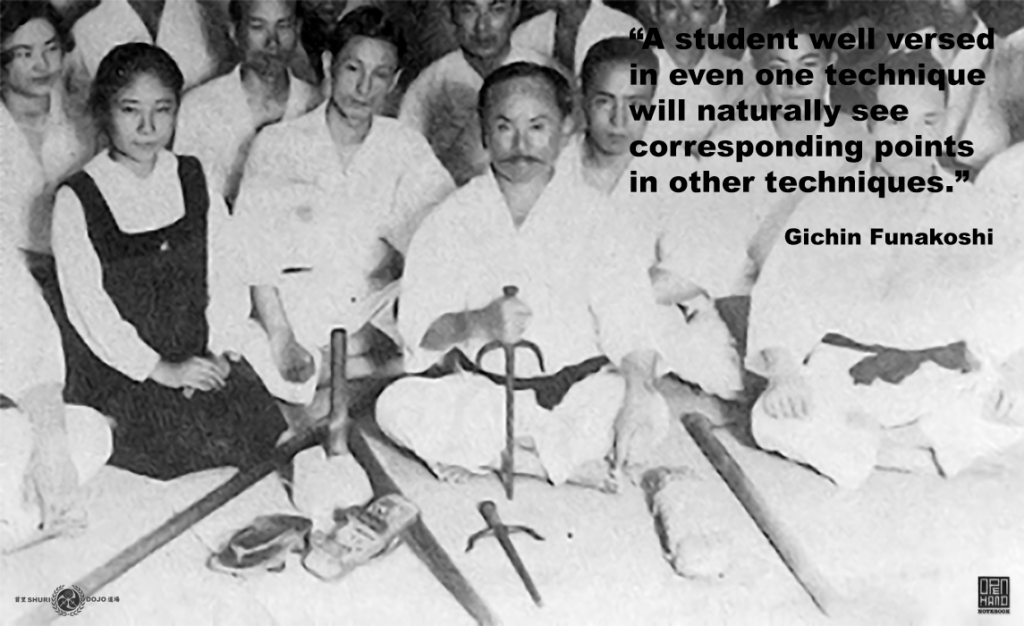
Martial arts and Mathematics…. Connected art forms.

“A student well versed in even one technique will naturally see corresponding points in other techniques. A upper level punch, a lower punch, a front punch and a reverse punch are all essentially the same. Looking over thirty-odd kata, he should be able to see that they are essentially variations on just a handful.” – […]

Martial arts and Mathematics…. Connected art forms. Read More »
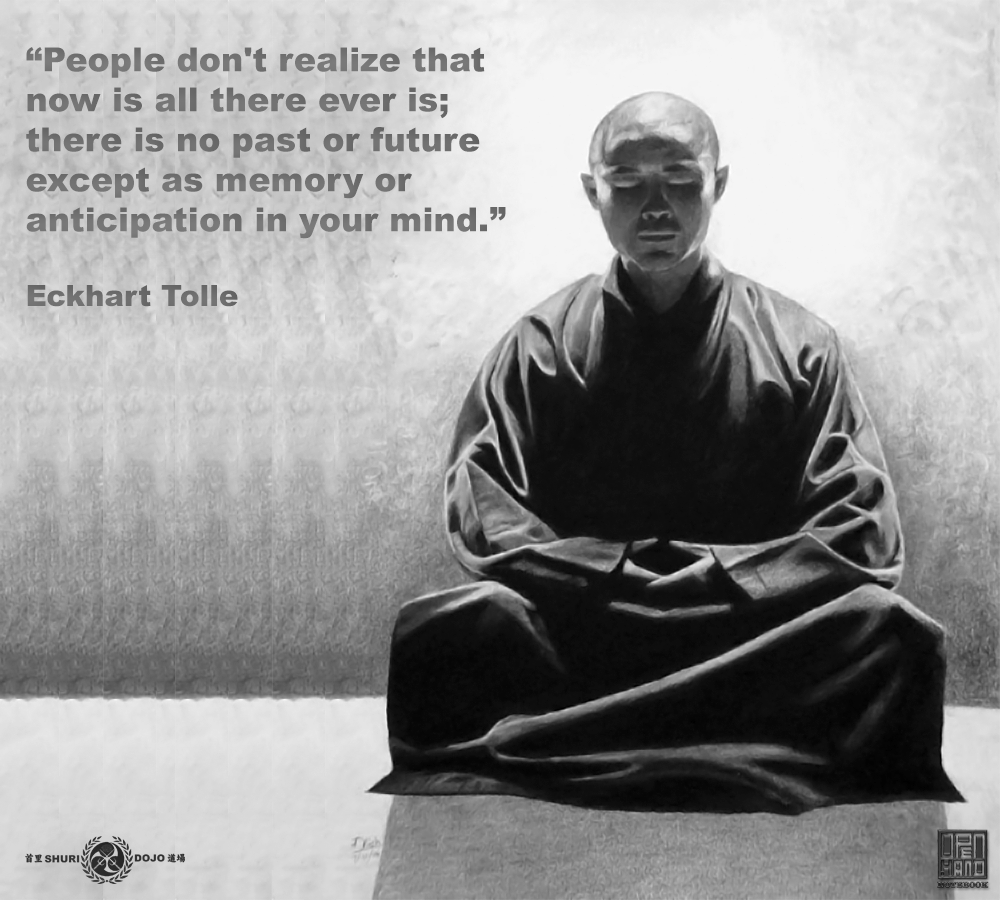
People don’t realize that now is all there ever is.

You don’t have to “bring“ yourself into the present moment, because you are already there. What is required is to become still. And you don’t have to sit down in some difficult yoga position to be still. You don’t have to repeatedly recite a chant to be still. All you need to do are three

People don’t realize that now is all there ever is. Read More »

What is tradition, or traditional, in the martial arts?

  What is tradition, or traditional, in the martial arts? Who decides what it is? . Tradition can be described as; “an inherited, established or customary pattern of thought, action or behavior”. But what we refer to as “traditional” in the martial arts often isn’t traditional at all. . All of the past masters were

What is tradition, or traditional, in the martial arts? Read More »

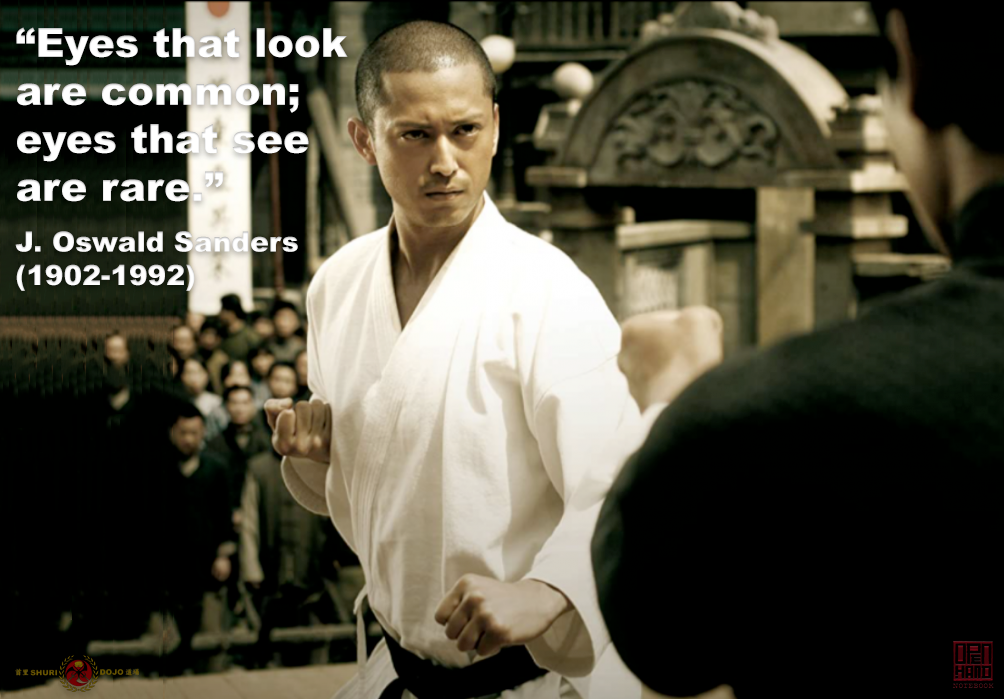
“Eyes that look are common; eyes that see are rare.”

If you have seen The Karate Kid movie, you will undoubtedly remember the wise old karate master, Mr. Miyagi, telling his student Daniel-san to; “Look eye! Always look eye”. . Well, not necessarily. At least not in the martial arts. . In fact, in Japanese culture, excessive eye contact is considered rude. And being rude

“Eyes that look are common; eyes that see are rare.” Read More »

So don’t cheat. Don’t pretend you did it. Don’t lie….. WORK FOR IT.

I am often asked for answers to questions from people online that I have never met, without knowing who these people are, or what they are doing, or where they come from. There are no introductions, or any form of politeness, it’s just…. “I want information, give it to me NOW!” . Sharing knowledge is

So don’t cheat. Don’t pretend you did it. Don’t lie….. WORK FOR IT. Read More »

Sometimes its good to practice to “slow” down

Just like learning to play a musical instrument, muscle memory is built by repetition, and doing something wrong during that repetition ingrains it into your mind. It is much more beneficial to do it right the first time, than training the bad information out later on. . In the martial arts, faster is usually considered

Sometimes its good to practice to “slow” down Read More »

It’s all about priorities, right?

Martial arts training is about training both the body and the mind. Part of training the mind is discipline. The discipline to do what is necessary. . It’s all about priorities, right? After all, you only practice a couple of times a week. . When I started karate almost five decades ago, I decided to

It’s all about priorities, right? Read More »

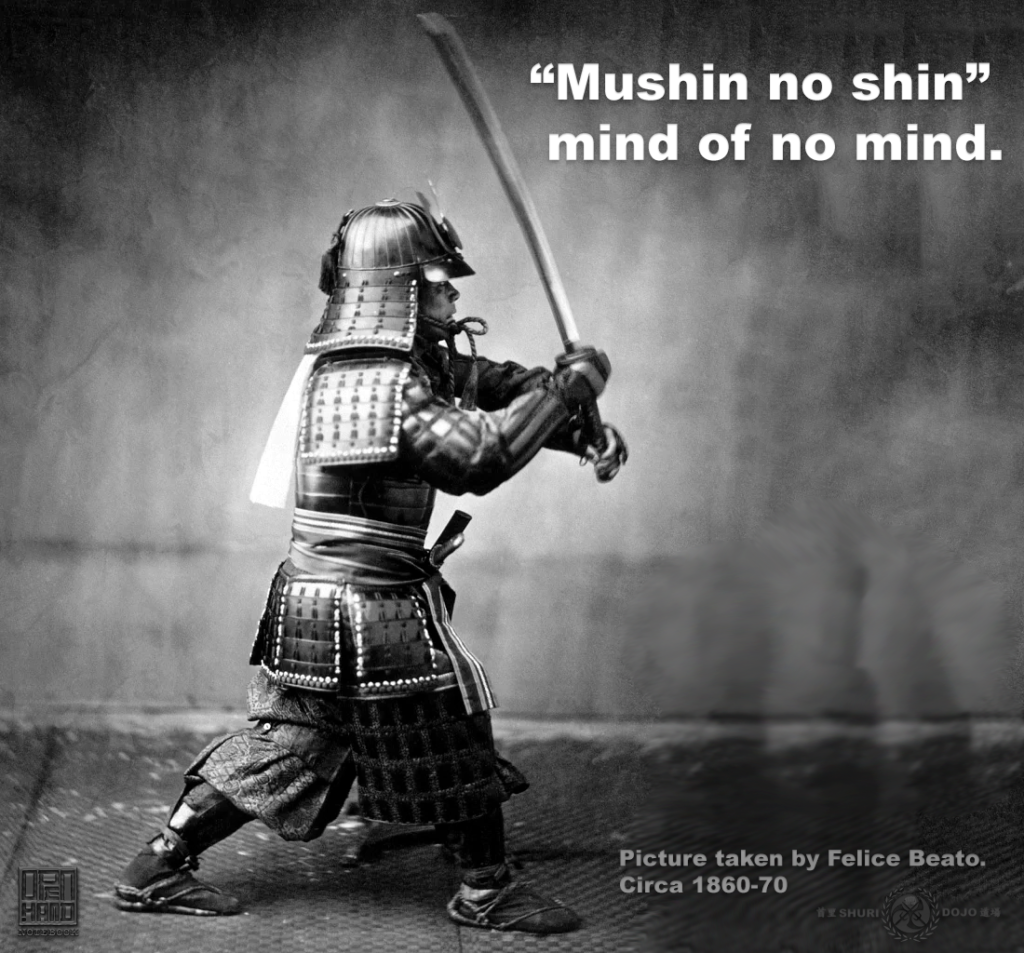
Mushin no shin

The word ‘mushin’ is comprised of two kanji characters: 無 (mu), meaning ‘nothingness’, and 心 (shin), meaning ‘heart’, ‘spirit’, or, in this case, ‘mind’. In this way, mushin can be roughly translated to ‘nothing mind’ or ‘no mind’. It comes from a longer phrase used in Zen Buddhism, ‘無心の心’ (mushin no shin), or ‘mind of

Mushin no shin Read More »

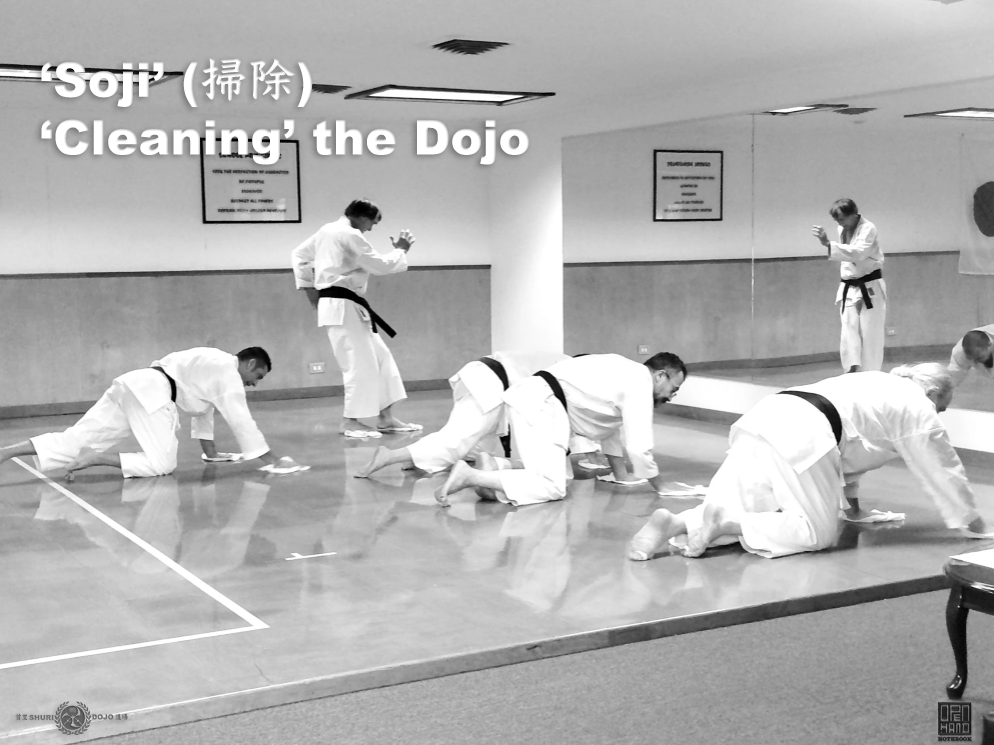
‘Soji’ (掃除) ‘Cleaning’ the Dojo

In Japan, cleaning is called ‘Soji’ (掃除) and apart from obviously ‘cleaning’ it is valued as a way to cultivate our minds. In fact, ‘Soji ‘is beyond mere cleaning. Buddhist monks when attending a monastery or shrine, put a great deal of time into practicing ‘Soji’. A monk’s day begins with cleaning, and cleanliness and

‘Soji’ (掃除) ‘Cleaning’ the Dojo Read More »

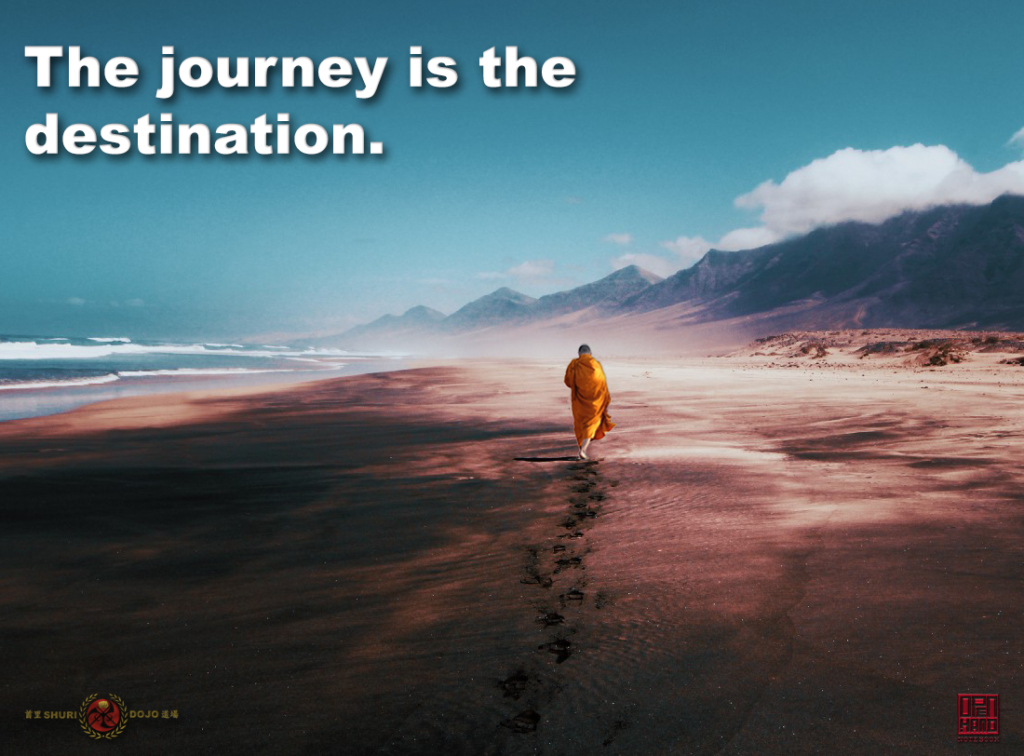
The journey is the destination.

Is there a decline in what it means to be a ‘Martial Artist’, rather than just train in the martial arts? . Traditional philosophies in the martial arts have been watered down, and have become difficult to practice due to changes in society. . We don’t the have the time, the attitudes, the common interest,

The journey is the destination. Read More »