Tradition

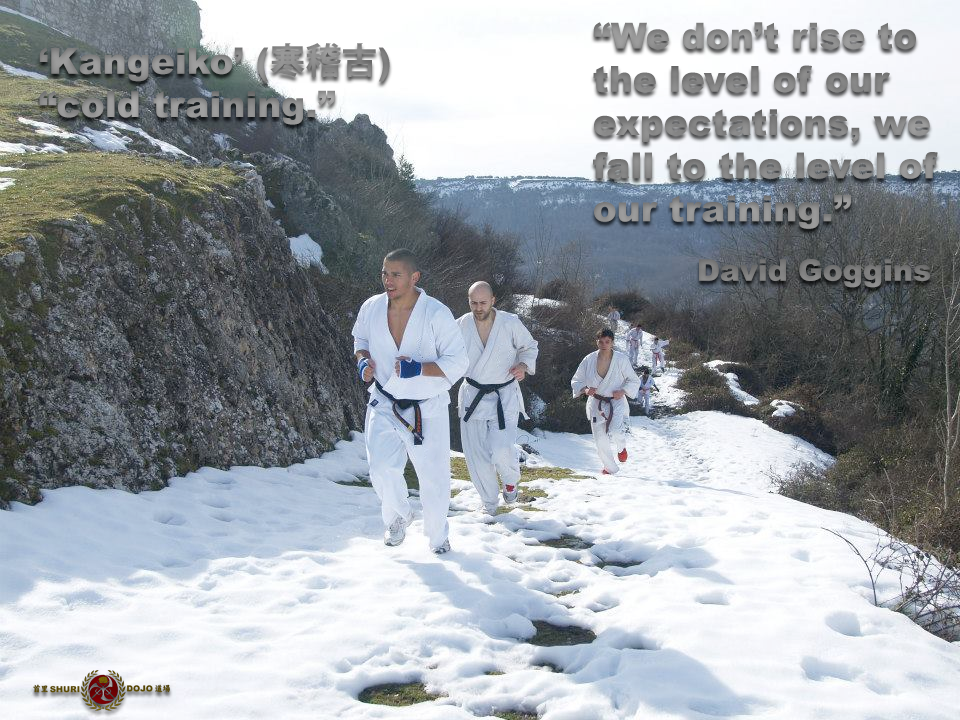
‘Kangeiko’ – Cold Training

‘Kangeiko’ (寒稽古) a Japanese word meaning; “cold training.” It is special training, in various forms of budo/bujutsu, in which practitioners endure training in the cold. This mid-winter practice is meant to strengthen not only the body, but the mind. . This concept is a special test of endurance training – forcing oneself to perform under […]

‘Kangeiko’ – Cold Training Read More »
“Ichariba chode”

‘Ichariba chode’ (行逢りば兄弟) is a Okinawan phrase meaning “though we meet but once, even by chance, we are friends for life”. . The Okinawan people live by the principle of ‘ichariba chode’, a local expression that means “treat everyone like a brother (or sister), even if you’ve never met them before”. . Many dojo promote

“Ichariba chode” Read More »

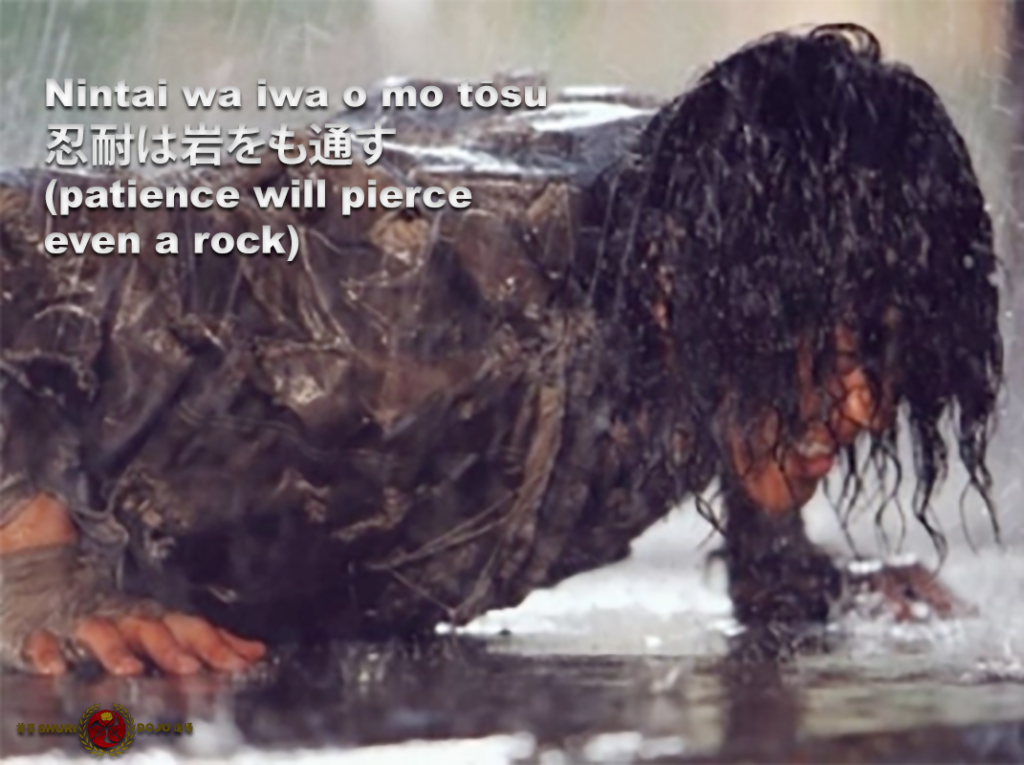
Live by “Nintai”.

“Nintai” (忍耐) is a dynamic Japanese term that the dictionary simply describes as; “to persevere”. But it is more than that. . Nintai is an adherence to a course of action, belief, or purpose without giving way. Perseverance, persistence, tenacity, steadfastness and patience all define Nintai. Each of these conveys a sense of endurance in

Live by “Nintai”. Read More »

Why do you practice martial arts?

Why do you practice martial arts? . Historically, teachers taught the martial arts only to those students they believed deemed worthy. To endear themselves to the teacher, prospective students would often have to perform menial labor or perform the most basic techniques for hours–showing that they were humble, patient, and honest. . Today, most students

Why do you practice martial arts? Read More »

Traditional Karate’s forgotten training methods: “Hojo Undo”

Traditional Karate’s forgotten training methods: “Hojo Undo” (補助運動) – supplemental training. . “Hojo Undo” are supplementary exercises where one uses various implements and aids to encourage and develop physical strength, stamina, muscle co-ordination, speed and posture. . Many of the older and more traditional forms of training have slipped from use. But in the dojo

Traditional Karate’s forgotten training methods: “Hojo Undo” Read More »

“You are good at some things not because you were born with it.”

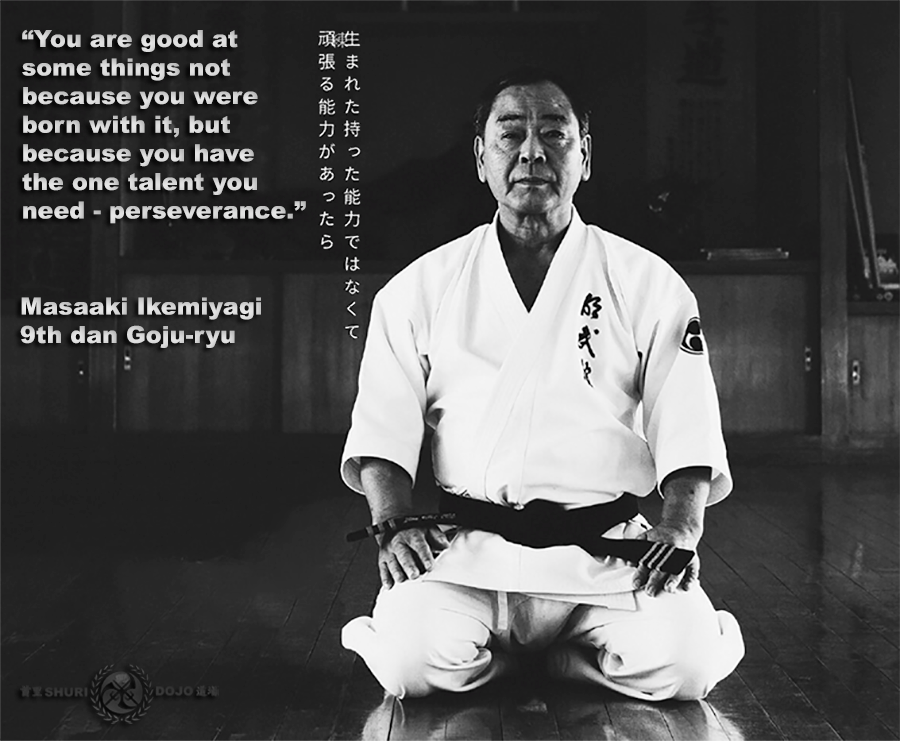
“You are good at some things not because you were born with it, but because you have the one talent you need – perseverance.” – Masaaki Ikemiyagi 9th dan Goju-ryu . Do you agree with Ikemiyagi sensei? Are we born with talents or do we have to develop them? . The short answer, in my

“You are good at some things not because you were born with it.” Read More »

“In budo karate we all train to make ourselves a better person.”

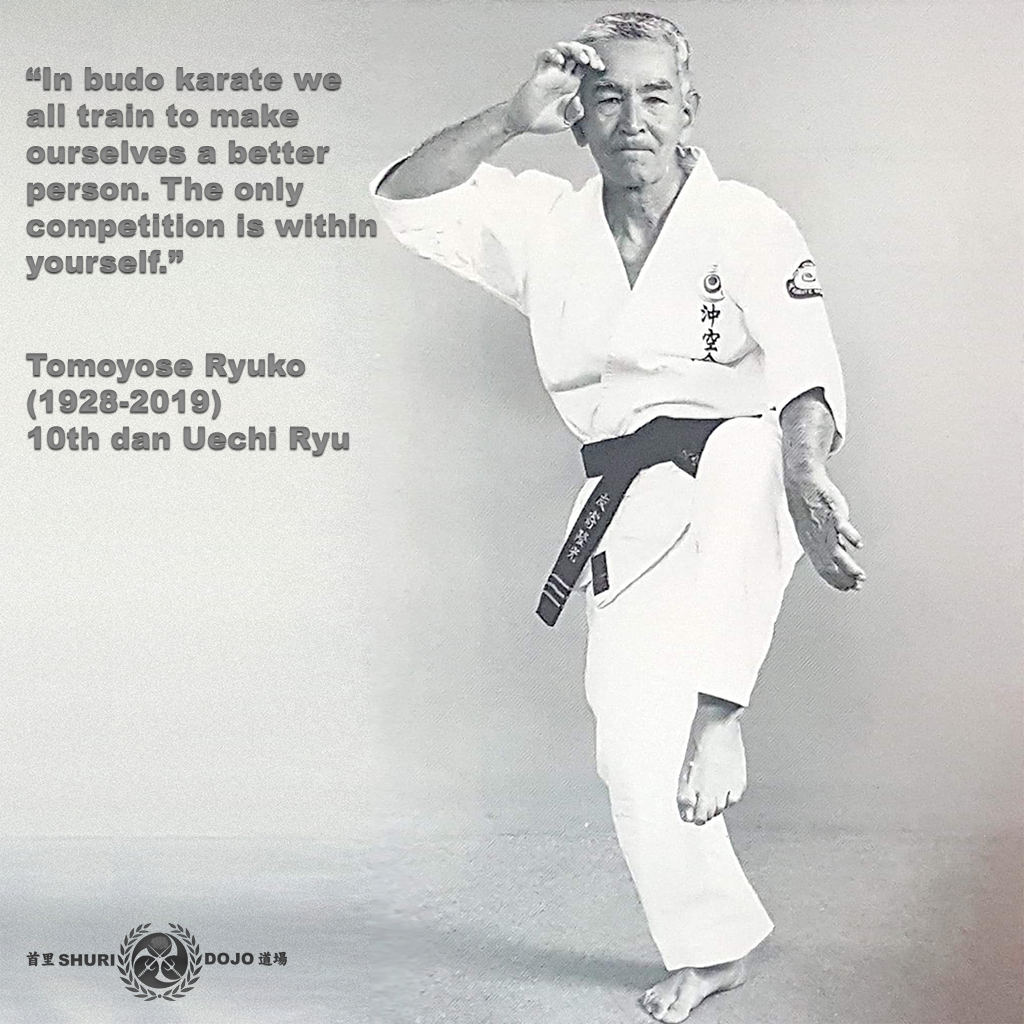
“In budo karate we all train to make ourselves a better person. The only competition is within yourself.” – Tomoyose Ryuko (1928-2019) 10th dan Uechi Ryu . Masters of the martial arts believe that a strong body and mind go together: you can’t improve one without working on the other. Martial arts are just as

“In budo karate we all train to make ourselves a better person.” Read More »

“Friendship and cooperation are the most important part of karate.”

  “Friendship and cooperation are the most important part of karate.” – Seikichi Iha 10th Dan Shorin Ryu Shidokan . Nothing feels more disappointing than watching your peers get promoted ahead of you – especially if you’ve been training the same amount of time or even longer. . Instead of throwing in the towel, or

“Friendship and cooperation are the most important part of karate.” Read More »

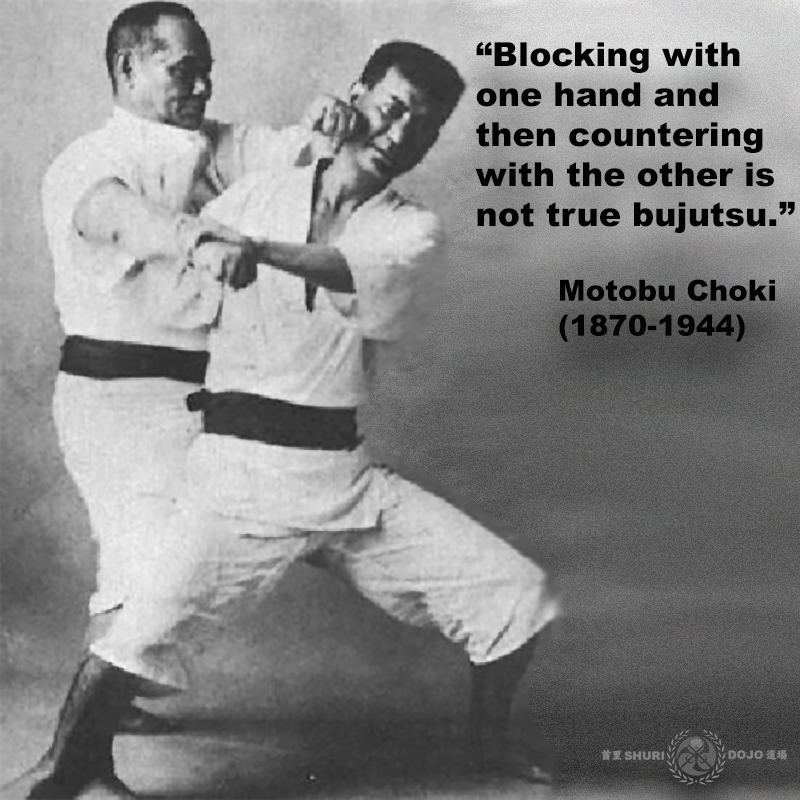
“Blocking with one hand and then countering with the other is not true bujutsu.”

Prior to karate’s Japanification and move to a more sport oriented system, Okinawan karate (Tode, Te) was created for self-defense, or self-protection. One of Okinawa’s greatest fighters, Motobu Choki stated that; “Nothing is more harmful to the world than a martial art that is not effective in actual self-defense.” . Today’s concept of blocking with

“Blocking with one hand and then countering with the other is not true bujutsu.” Read More »

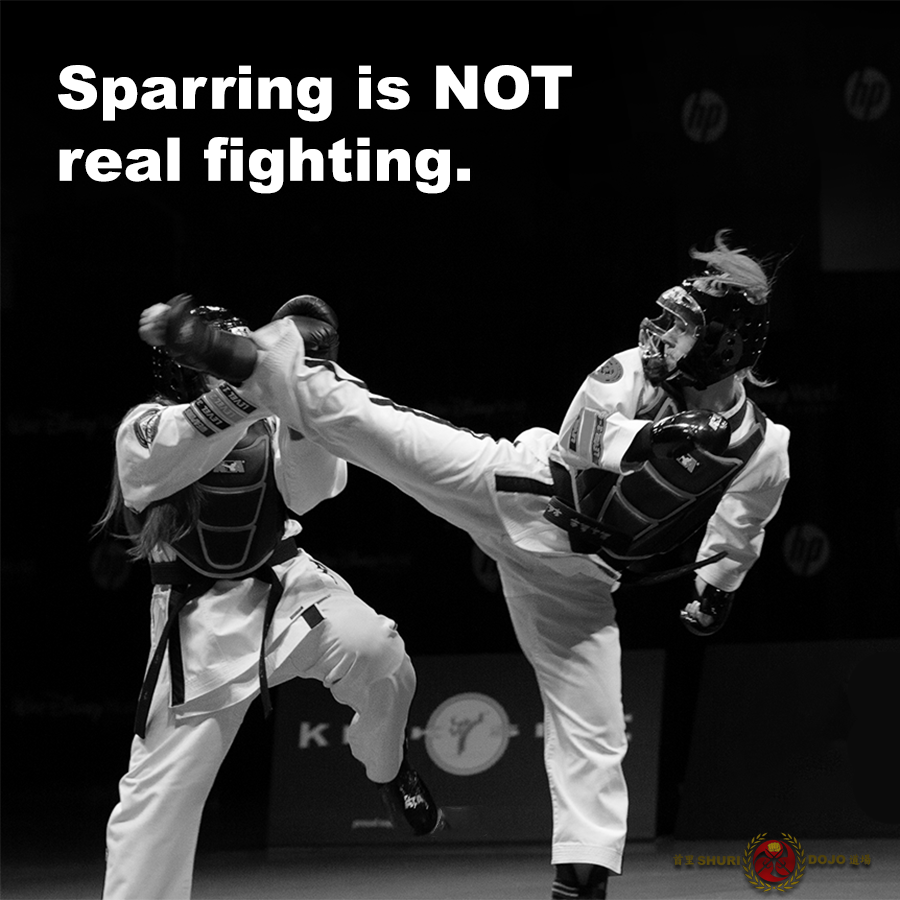
Sparring is NOT real fighting.

Sparring is a training activity frequently used in just about every martial art style or system. While there are many different approaches to martial arts sparring, generally all of them follow a predefined set of rules and unique customs. . Unfortunately, many martial artists think their sparring skills are a good indicator of their ability

Sparring is NOT real fighting. Read More »

“..it’s not just about doing techniques, it’s also about training your heart and character..”

“When you practice karate of course you train the body, but it’s not just about doing techniques, it’s also about training your heart and character to be kind to people.” – Takehiro Gaja 9th dan Uechi-ryu . . The practice of martial arts is deeply rooted in philosophy, tradition, and culture. It teaches not only

“..it’s not just about doing techniques, it’s also about training your heart and character..” Read More »

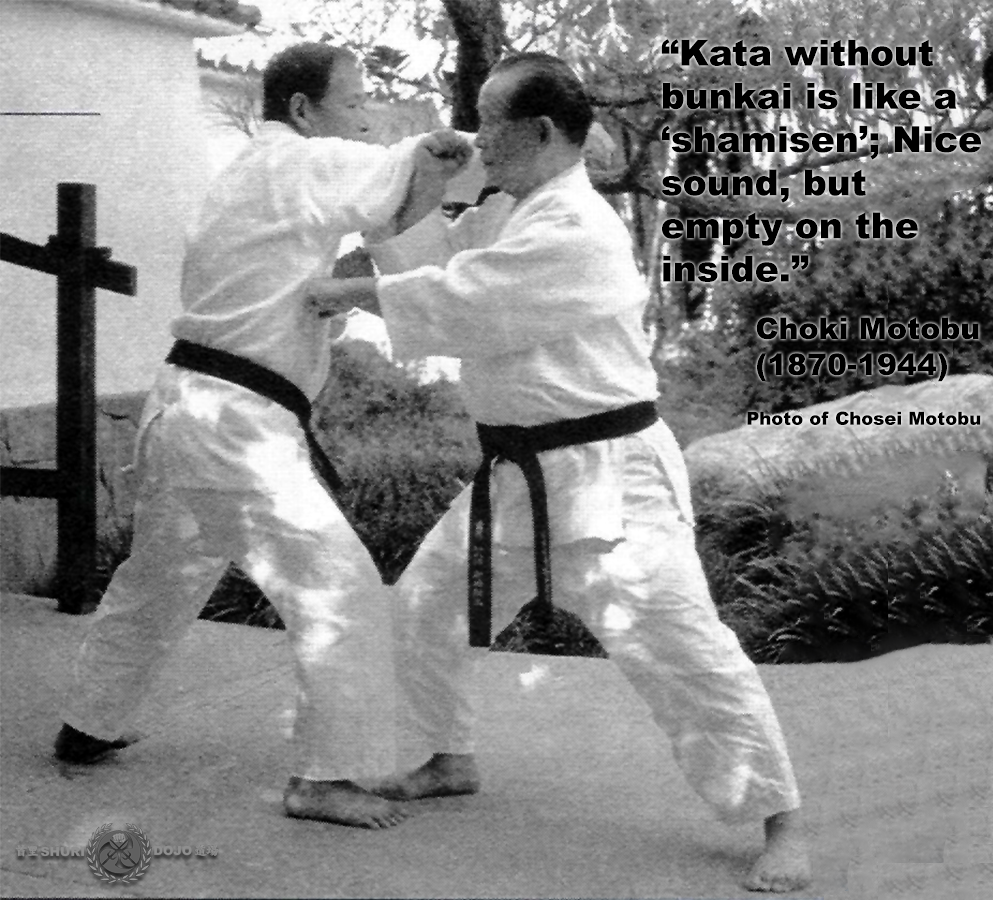
“Kata without bunkai is like a ‘shamisen’; Nice sound, but empty on the inside.”

This week we were asked if we could grade someone to “Shodan” (a non member), who was a fighting champion, won many awards and championships, but did not want to do kata. . Kata is a library of self-protection techniques in Karate. Each kata creator encoded their specific knowledge into the motion of the kata

“Kata without bunkai is like a ‘shamisen’; Nice sound, but empty on the inside.” Read More »