
In a previous article I wrote about the exaggerated movement you see in kata, the overuse of the shoulders and torso – that’s noise. If that’s the noise, then this is the signal.
To understand the difference, you have to look at how weight is being used. Most people focus on what they can see – the legs, the hips, the idea of driving from the floor. That’s fine, but even when it’s done well, it shouldn’t be big and it shouldn’t be obvious.
Years ago, Keiji Tomiyama showed me something he described as internal and external changing of weight. It sounds complicated, but it isn’t. Most people use what you’d call external changing of weight. You can see it straight away. The body shifts, the weight moves, and the technique comes after that movement. It often looks strong, because there’s effort behind it.
You’ll sometimes hear this explained in simple terms – mass and acceleration. That’s not wrong. Move more of your body and accelerate it, you’ll get force.
But where people go wrong is thinking more movement means more force. It doesn’t always. It usually just means it takes longer to get there, and if the body has to move first, there’s always a delay.
Internal changing of weight is different. The weight still changes, but you don’t see it in the same way. The body isn’t moving first and then striking, everything arrives at the same time.
Most people step or push their weight from one leg to the other. You can see it happen – and it takes time. But if that weight shifts without that visible movement, everything changes. There’s no build-up and no preparation, the technique just leaves.
You don’t need big shoulder movement and you don’t need to throw the body into it. In fact, the more you do that, the worse it gets.
But none of this works if the breathing is wrong. If you hold your breath everything tightens, and if you force it, it just becomes part of the performance. When it’s right, you don’t really notice it. It just lines up with what you’re doing.
From the outside it doesn’t look like much, but you can feel it. The whole body is there at the same time.
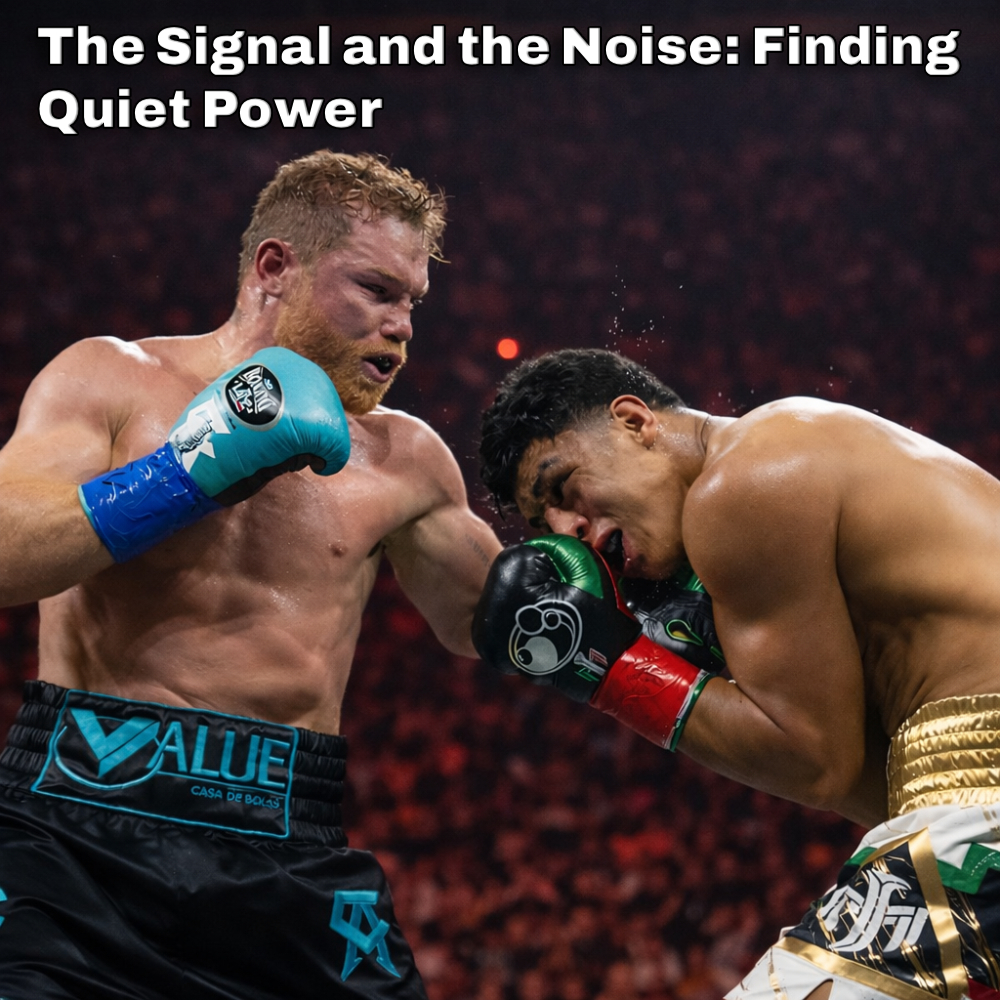
You can see this in boxing. Watch someone like Canelo Alvarez at close range. There’s almost nothing before the punch lands – no big movement, no obvious shift – and then it lands and everything is behind it. That’s not because he isn’t using his body, it’s because he doesn’t need to move it first.
This is what gets missed when people chase that “powerful” look. The big movements and the visible effort look convincing, but they fall apart as soon as the conditions change. External changing of weight isn’t wrong, but it’s often misunderstood, and internal changing of weight doesn’t replace it, it refines it.
If the weight has to move first, the technique is already late.
Someone said to me once, trying to excuse his excess bodyweight, “I will just put all my weight in to it.”
Weight is only part of the equation and when you can hit with power, real power, often you just don’t see it coming.
Real power is quieter. You’re not moving around the technique anymore, you’re moving through it.
Photo Credit: Canelo Alvarez vs Jaime Munguía.