Style

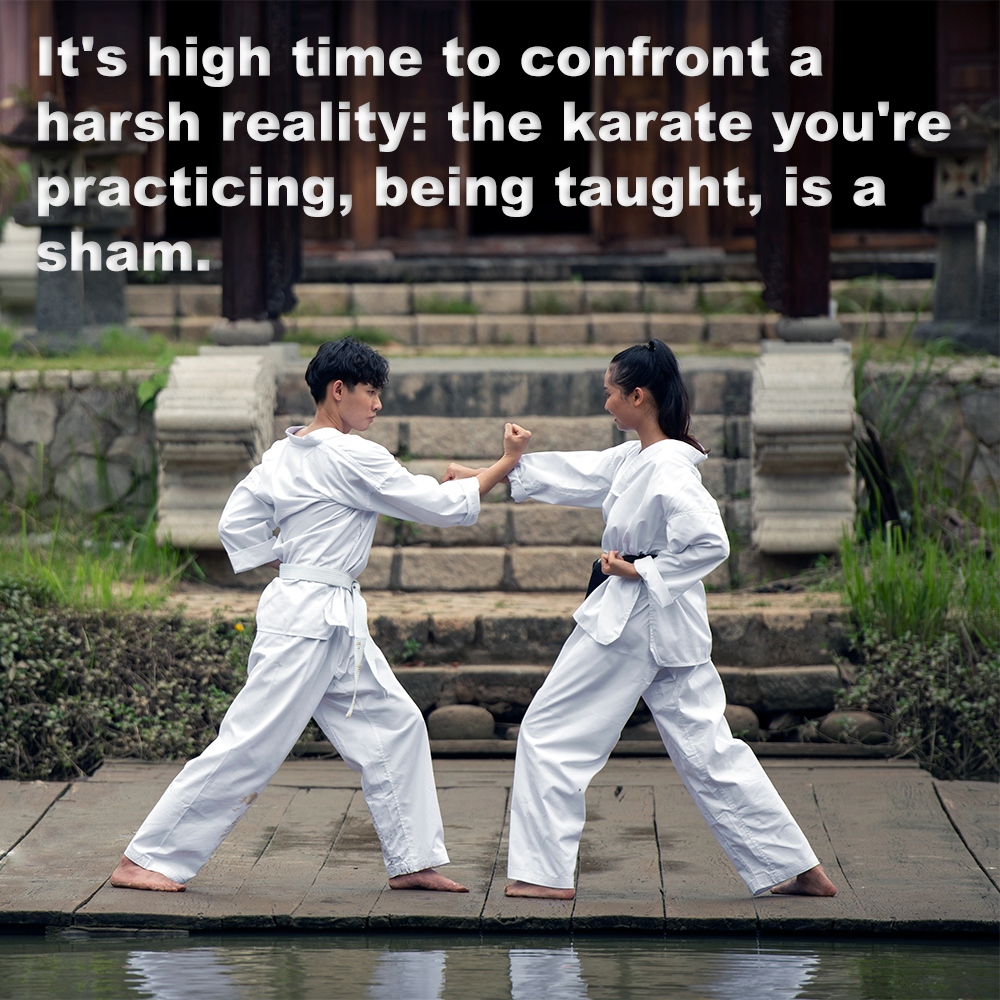
It’s high time to confront a harsh reality: the karate you’re practicing, being taught, is a sham.

(2 minute 14 second read) It’s high time to confront a harsh reality: the karate you’re practicing, being taught, is a sham. It’s utterly ineffective when it comes to actual real-world combat. . The crux of the issue lies in the fact that people are being duped into believing that traditional karate will protect you,

It’s high time to confront a harsh reality: the karate you’re practicing, being taught, is a sham. Read More »

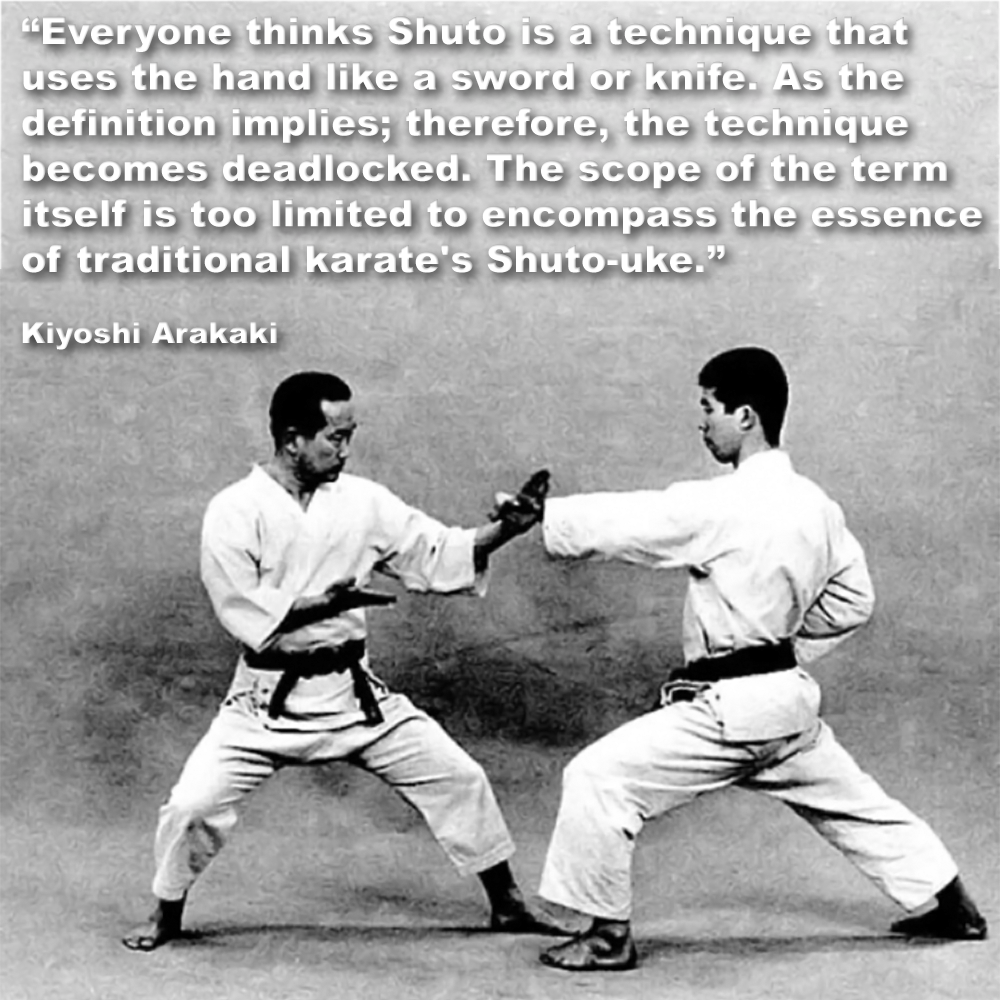
“Everyone thinks Shuto is a technique that uses the hand like a sword or knife. As the definition implies; therefore, the technique becomes deadlocked.”

(2 minute 3 second read) The effectiveness of karate for self-defense hinges on a fundamental principle: simplicity. . In the face of a sudden threat, clear, concise movements hold the key to an effective response, even if that response is simply to escape. . In the face of a sudden threat, you will experience a

“Everyone thinks Shuto is a technique that uses the hand like a sword or knife. As the definition implies; therefore, the technique becomes deadlocked.” Read More »

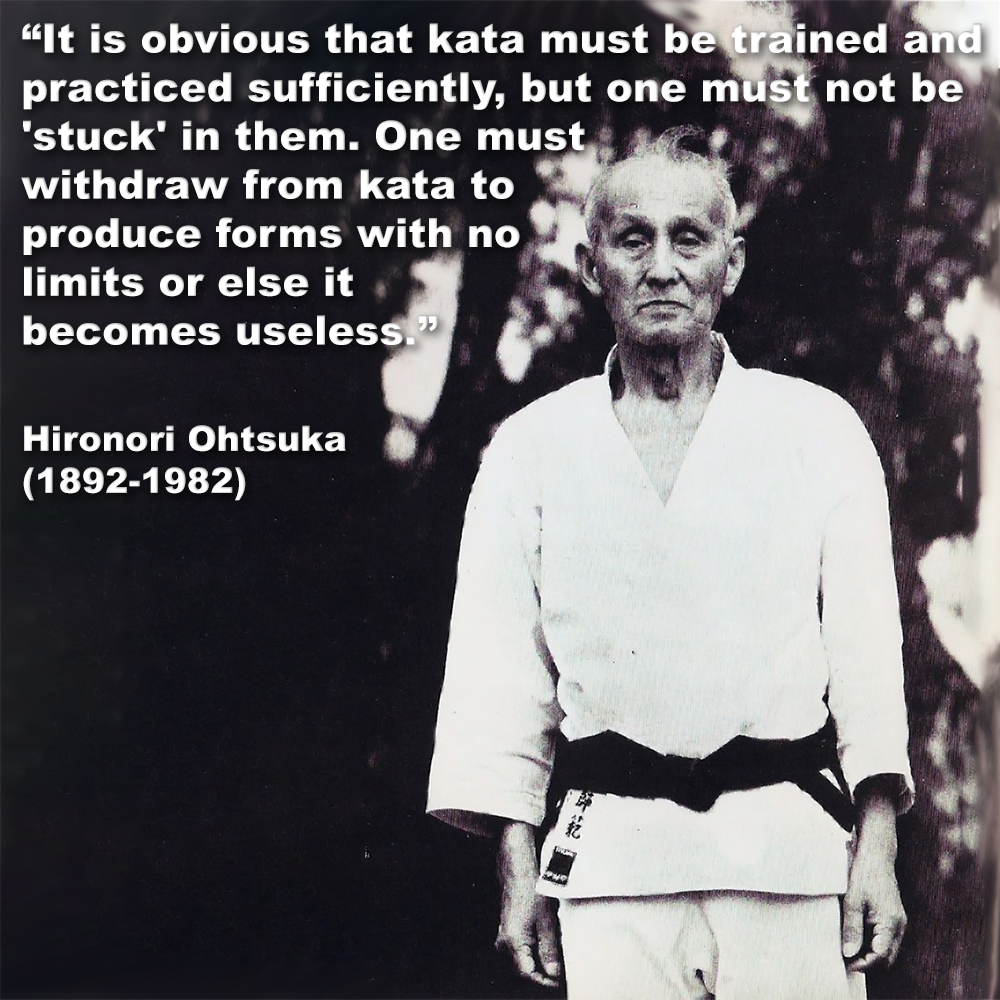
“It is obvious that kata must be trained and practiced sufficiently, but one must not be ‘stuck’ in them.”

(2 minute 26 second read) For me if you have a true interest in the martial arts, I believe it is important that practitioners have some understanding of the history of your art. . And while studying that history, the claim of practicing an “original” kata, as taught by a specific master, raises a crucial

“It is obvious that kata must be trained and practiced sufficiently, but one must not be ‘stuck’ in them.” Read More »

“Kata without bunkai is like a shamisen; Nice sound, but empty on the inside.”

(2 minute read) A comment on one of my articles stating, “I don’t believe in bunkai,” sparked a heated conversation and many comments, about its fundamental role in karate. . Such disregard reflects a misunderstanding of the art itself. . What is Bunkai and why is it necessary? . Bunkai (分解), literally translating to “analysis”

“Kata without bunkai is like a shamisen; Nice sound, but empty on the inside.” Read More »

“We frequently mistake persistence with a technique for its effectiveness, failing to acknowledge when it’s simply the wrong tool for the job.”

(1 minute 55 second read) Much of today’s martial arts training, often presents a romanticized image of combat. . You bow, assume stances, exchange strikes within a controlled environment, with padded hands and feet, possibly even head guards too. This structured approach fosters discipline, technique, protection, and respect – but does it truly prepare you

“We frequently mistake persistence with a technique for its effectiveness, failing to acknowledge when it’s simply the wrong tool for the job.” Read More »

The technical terms we readily use in traditional karate today, bear a surprising secret: they emerged long after the techniques themselves.

(2 minute read) The technical terms we readily use in traditional karate today, bear a surprising secret: they emerged long after the techniques themselves. . Imagine stepping into an early Okinawan karate dojo. Unlike today’s regimented classes, this environment was very different. . The teachers of the time passed down their knowledge to only a

The technical terms we readily use in traditional karate today, bear a surprising secret: they emerged long after the techniques themselves. Read More »

Don’t confuse tournament prowess with real-world combat.

(1 minute 7 second read) Do you consider yourself someone who rises to challenges head-on? . While strength and courage are valuable traits, it’s crucial to understand that fighting shouldn’t be the first resort in resolving conflict. . Street fights are unpredictable and fraught with dangers: hidden weapons, unexpected allies, and potentially fatal environmental hazards.

Don’t confuse tournament prowess with real-world combat. Read More »

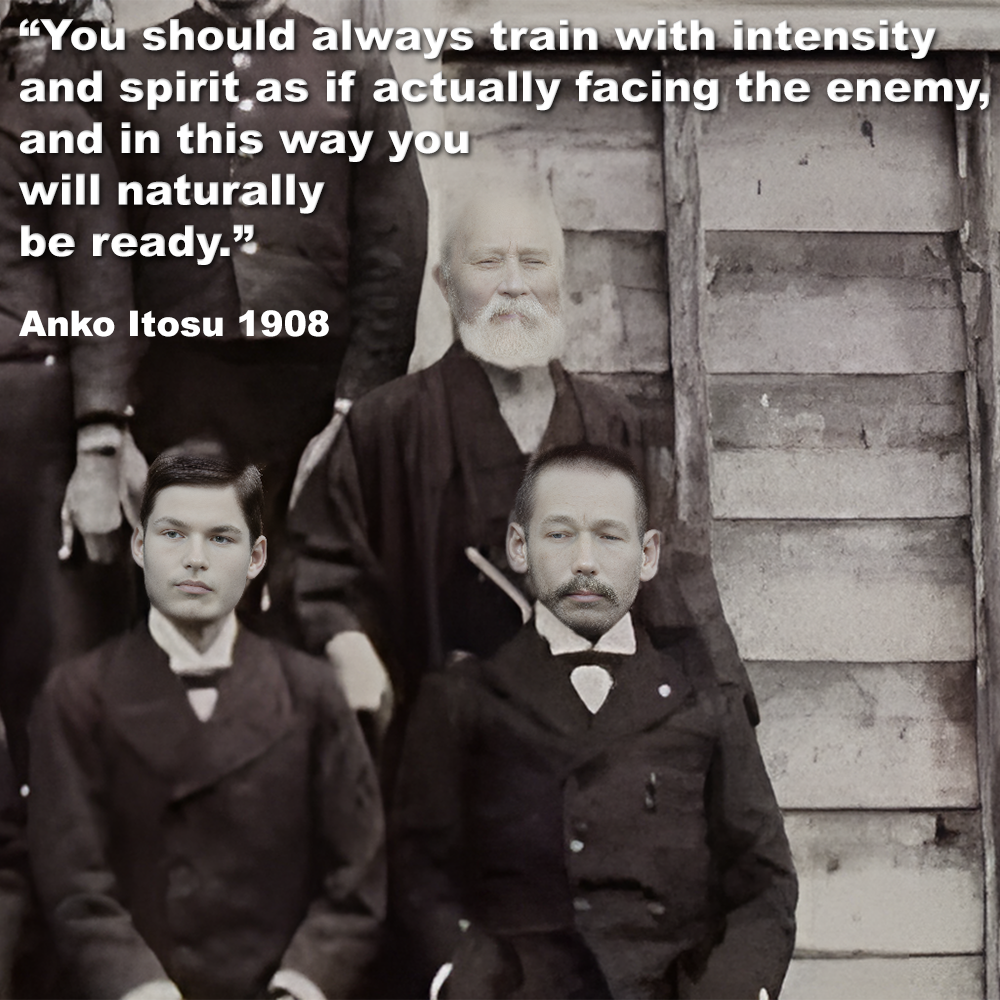
“You should always train with intensity and spirit as if actually facing the enemy, and in this way you will naturally be ready.”

(2 minute 15 second read) Anko Itosu, revered as the father (sometimes Grandfather) of modern karate, through his teachings, and writings, Itosu shaped the course of karate’s evolution. . Anko Itosu was born in 1831 in Shuri, the capital of the Ryukyu Kingdom, now Okinawa. Little is known about his childhood, but it is believed

“You should always train with intensity and spirit as if actually facing the enemy, and in this way you will naturally be ready.” Read More »

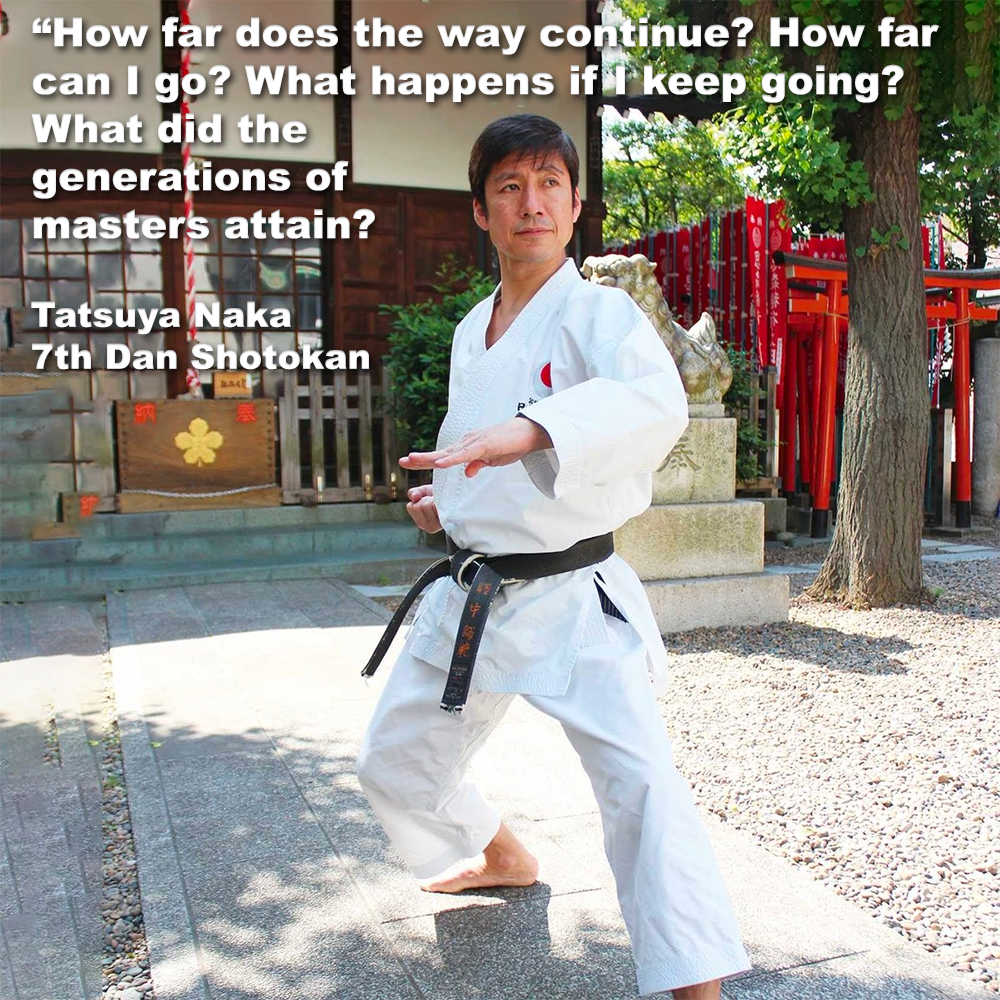
“How far does the way continue? How far can I go? What happens if I keep going? What did the generations of masters attain?”

(2 minute 5 second read) Karate-Do, the “way of the empty hand,” much more than the sum of its parts; a centuries-old tradition steeped in history, philosophy, and self-improvement. . Over generations, countless karate masters, including well-known figures such as Itosu, Higaonna, Funakoshi, Hanashiro, Kyan, Uechi, Miyagi, Toyama, Mabuni, Arakkaki, and many others, have dedicated

“How far does the way continue? How far can I go? What happens if I keep going? What did the generations of masters attain?” Read More »