Style

Purpose-Driven Practice: Cut Through the Unnecessary, Focus on Function.

(Approx 2 minute 40 second read) Over the years, karate has been modified to fit a non-combative formula such as competition, athleticism, style, and aesthetics. However, traditionally, karate – and its kata – were designed as records of practical fighting methods for civilian self-defense. . Now, I understand that not everyone trains for self-defense or […]

Purpose-Driven Practice: Cut Through the Unnecessary, Focus on Function. Read More »

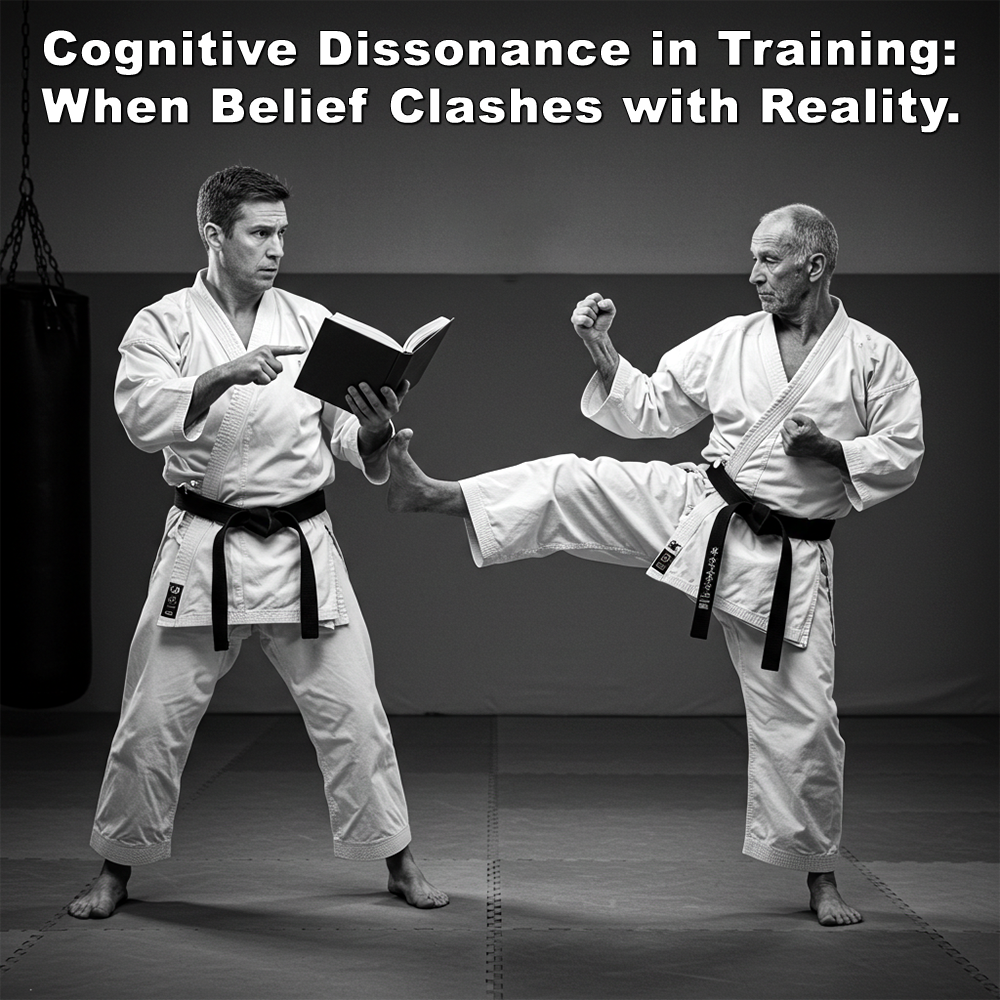
Cognitive Dissonance in Training: When Belief Clashes with Reality.

(Approx 1 minute 50 second read) A friend of mine reminded me, in relation to an article I wrote about keeping karate grounded in reality when approaching self-defense, about cognitive dissonance in the martial arts. . Ever feel that discomfort when two ideas just don’t sit right? . That’s cognitive dissonance. . We dedicate years

Cognitive Dissonance in Training: When Belief Clashes with Reality. Read More »

No One Size Fits All: Are You Training for the Wrong Fight? Finding Your Path in Martial Arts.

(Approx 2 minute 50 second read) Whenever I write an article about real-world self-defense, the comments seem to explode into “my style is the best”. . I don’t think a lot of these people actually train themselves – maybe keyboard warriors, maybe just inexperienced – but these comments usually revolve around one style in particular:

No One Size Fits All: Are You Training for the Wrong Fight? Finding Your Path in Martial Arts. Read More »

Not All Grades Are Equal: A True Grading Tests Understanding, Not Just Memory.

(Approx 2 minute 20 second read) In an ideal world, a grading should reflect genuine progress in understanding and skill. A student advancing in rank should be able to demonstrate not just physical ability but a deeper comprehension of their art. . They should be able to apply what they’ve learned, adapt techniques under pressure,

Not All Grades Are Equal: A True Grading Tests Understanding, Not Just Memory. Read More »

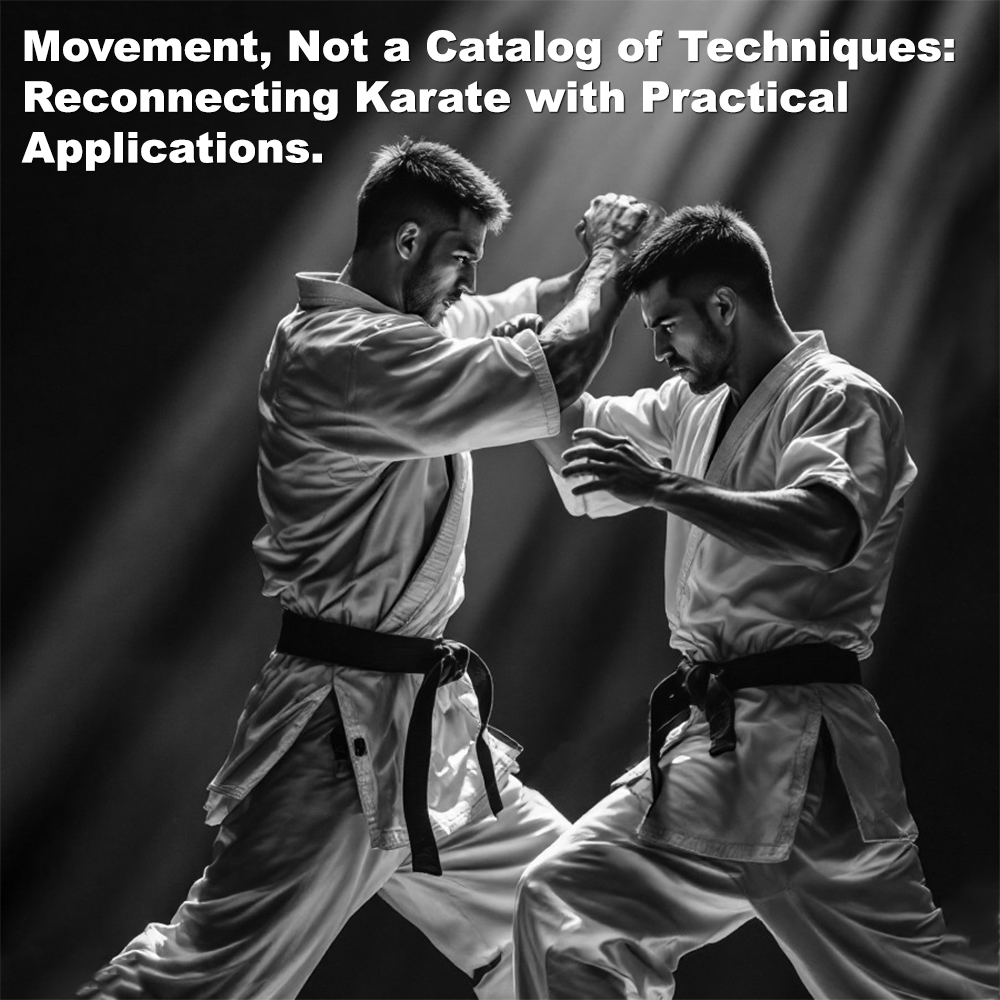
Movement, Not a Catalog of Techniques: Reconnecting Karate with Practical Applications.

(Approx 2 minute 45 second read) Can you think of another pastime, hobby, sport, or functional defensive practice where there is so much ambiguity? . If I was teaching you advanced ‘blue-lights and siren’ driving skills (I used to), and I answered a question that was so plainly incorrect it would put your life and

Movement, Not a Catalog of Techniques: Reconnecting Karate with Practical Applications. Read More »

Karate should be simple. That’s what makes it so difficult.

Simplicity in karate doesn’t mean it’s easy – it means stripping away the unnecessary, refining movements until nothing is wasted, and ensuring every action has purpose. . But getting to that level takes years of self-discipline and understanding. Then, with that understanding, comes refined repetition. . The emphasis isn’t merely on countless repetitions, but on

Karate should be simple. That’s what makes it so difficult. Read More »

“Keiko Saki, Rikai Wa Ato” (稽古先,理解 後) – Practice First, Understanding Later.

(Approx 2 minute 40 second read) I’m sure you have heard the term, ‘renshū’ (練習) – practice through repetition. It’s about ingraining a skill by doing it over and over again until it becomes second nature. . In many Western dojos, when a new technique, drill, or application is introduced, students will often carefully mimic

“Keiko Saki, Rikai Wa Ato” (稽古先,理解 後) – Practice First, Understanding Later. Read More »