July 2021

The common origin of technique.

The common origin of technique. . The commonality of a technique is that they all make use of biomechanics and weaknesses of the human anatomy. Where the various arts differ is in the rules, the goal, and the context that they are trained for. . In competitions you try to win. In consensual fights you […]

The common origin of technique. Read More »
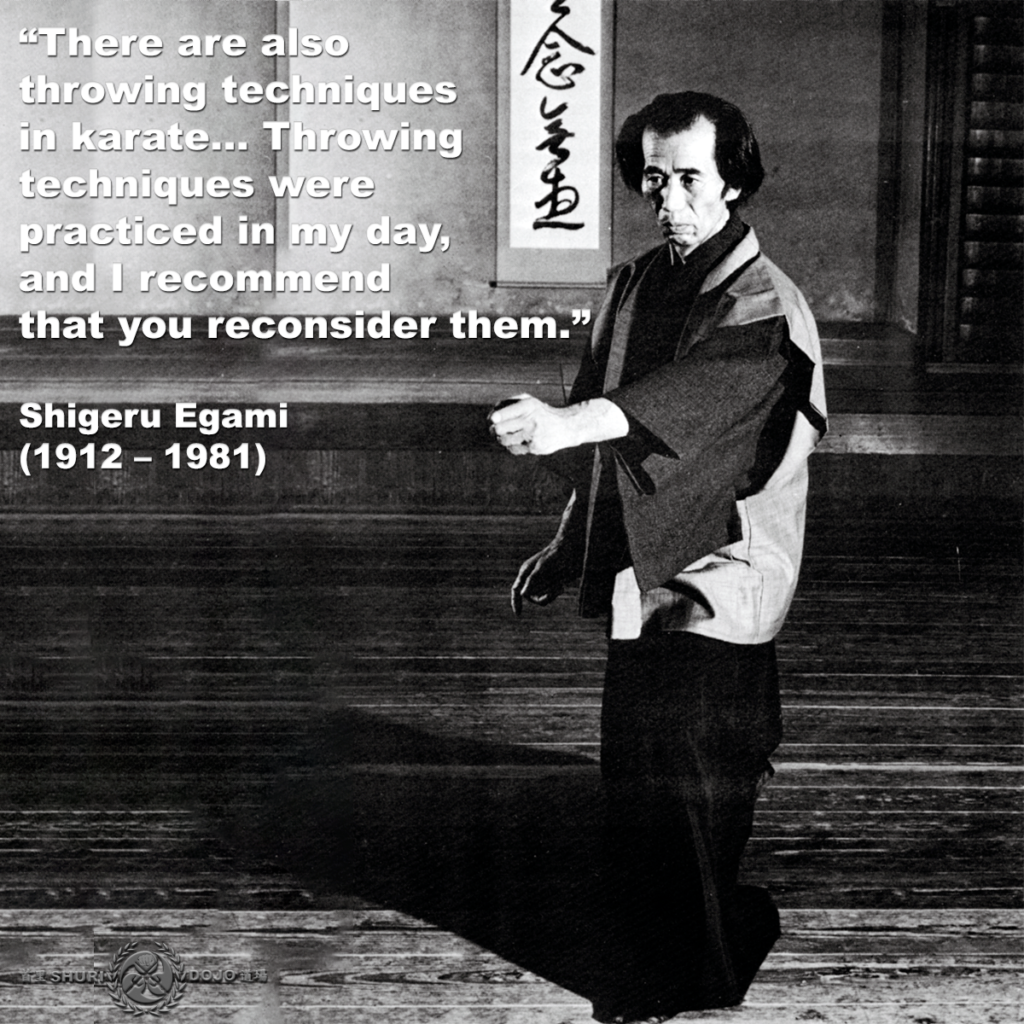
Techniques that are effective for kumite and sparring in the dojo, are not necessarily sensible choices for self-protection.

The grappling of karate is not comparable to the highly skilled grappling exhibited by MMA or Judo practitioners. It is, by design, very crude by comparison. But karate’s grappling methods did exist long before the rise of MMA. . There are those that believe only Judo or BJJ can provide grappling and throws, and the

Techniques that are effective for kumite and sparring in the dojo, are not necessarily sensible choices for self-protection. Read More »

What is conditioning?

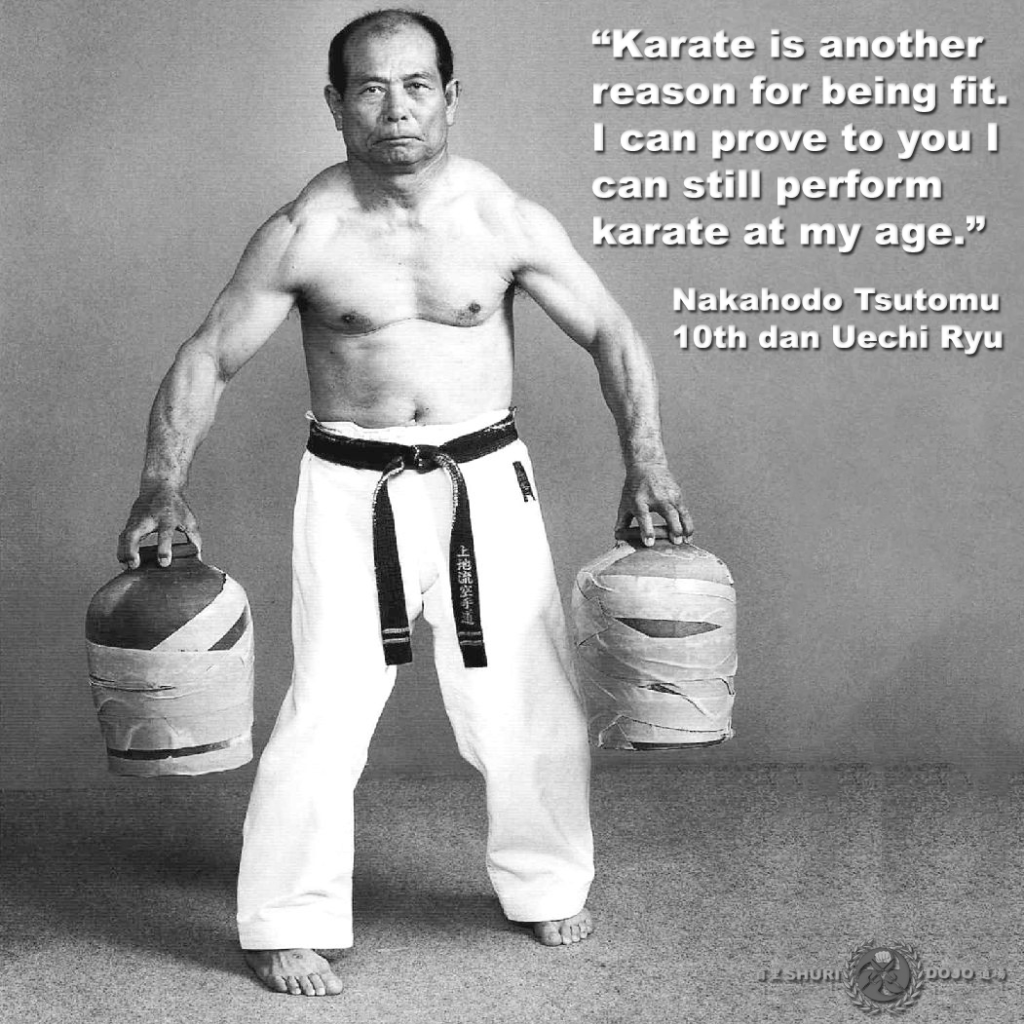
“Karate is another reason for being fit. I can prove to you I can still perform karate at my age.” – Nakahodo Tsutomu 10th dan Uechi Ryu, born 1933. . What is conditioning? . Conditioning training is a ‘keyword’ that is often interchanged with the word ‘fitness.’ You’ll often hear martial artists talk about what

What is conditioning? Read More »

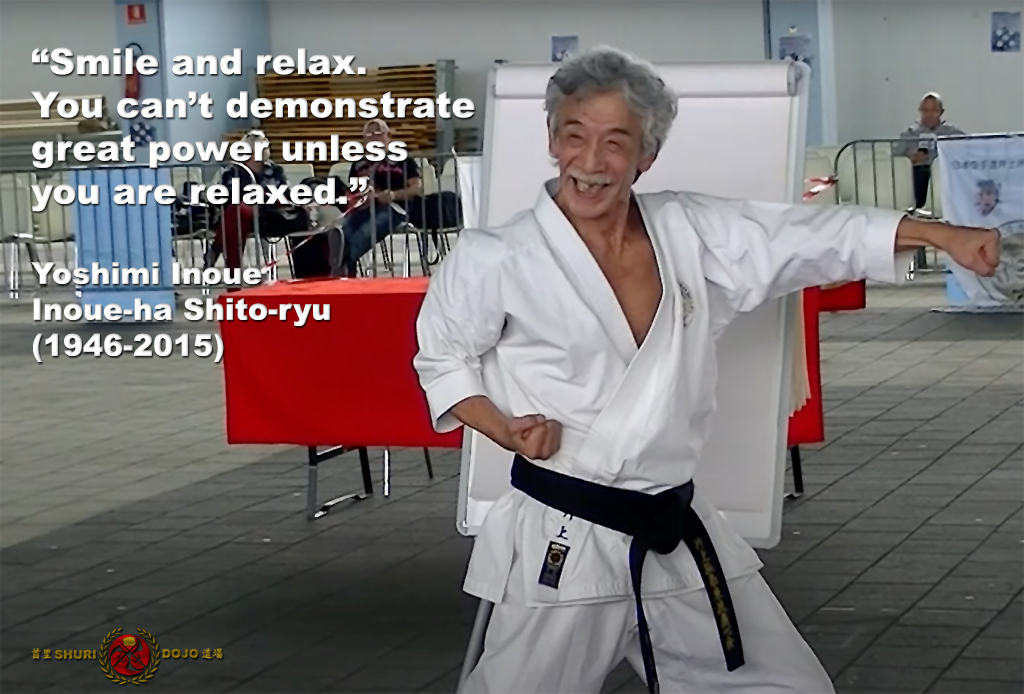
“Smile and relax.”

“Smile and relax. You can’t demonstrate great power unless you are relaxed.” – Yoshimi Inoue Soke – Inoue-ha Shito-ryu (1946-2015) . “Smile!” When Inoue sensei thinks you are tense, he never says “relax!“. Instead, he says “smile!” – which is a psychological trick to make you relax. It’s hard to be tense when you’re smiling!

“Smile and relax.” Read More »