
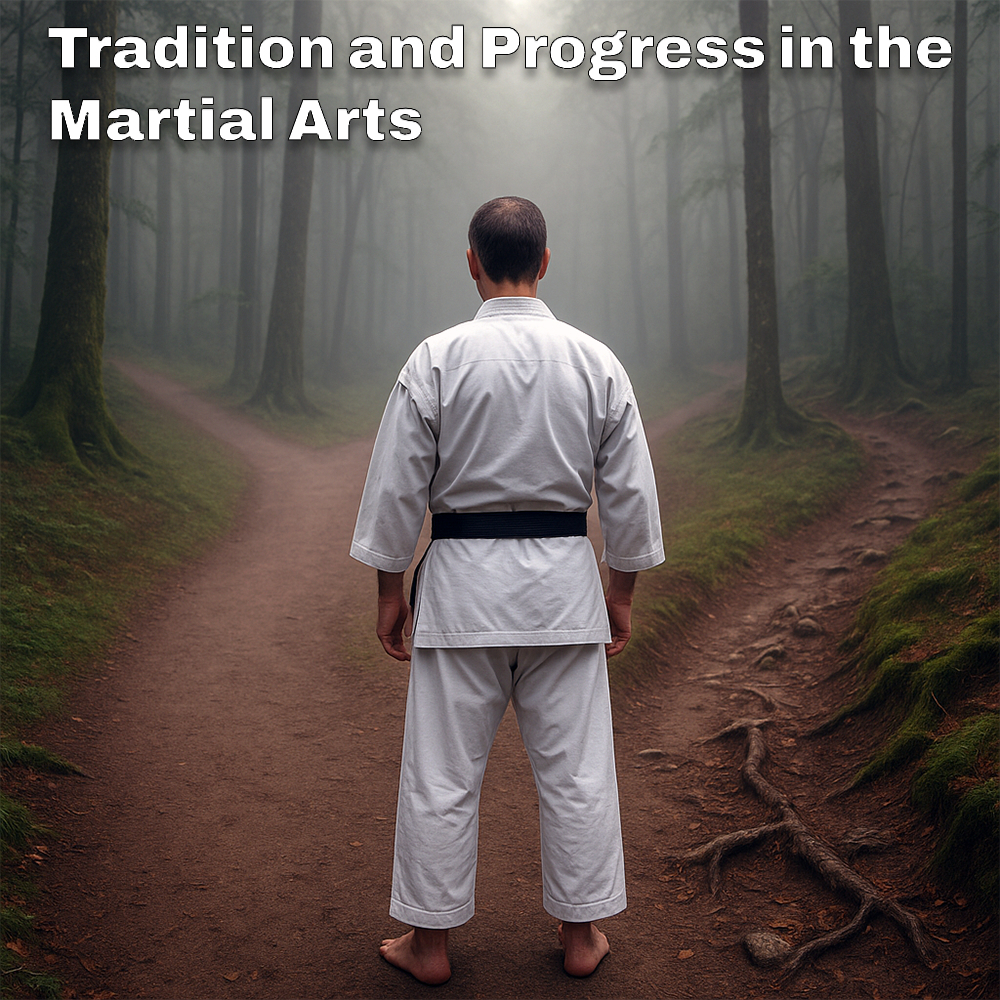
The martial arts are full of variety. Different systems, different traditions, different ways of doing things, all shaped by history and the people who carried them forward.
Most practitioners are looking for the same thing in the end: a sense of progress in their own training. But it is not unusual to find strong resistance when something unfamiliar is introduced or when long-held methods are questioned.
Part of that resistance comes from respect for tradition. These arts have been passed down through generations, and each style carries its own identity, values, and way of doing things. For many, staying faithful to that lineage feels important. Changing anything can feel like a loss of authenticity, almost like weakening what was handed down.
The problem is that transmission is never perfect. Over time, details shift. Techniques are misunderstood, adjusted, or simplified until the original intent becomes unclear or even lost entirely.
I once read a comment that summed this up quite clearly:
“I practice an old, traditional style, and I will not change it.”
There is nothing wrong with respecting tradition. Change for its own sake rarely leads anywhere useful. But when new information, better understanding, or clearer explanations are available, it seems reasonable to at least look at them honestly. History is full of things that were once accepted as correct that we now understand differently.
Another reason people resist change is more personal. Years of training build confidence and identity. When you have invested deeply in a method, questioning it can feel like questioning your own judgement. That can make even small adjustments feel uncomfortable.
We all settle into habits. In martial arts, those habits become familiar systems of movement, timing, and thinking. That familiarity creates comfort. Stepping outside of it means returning to a place of uncertainty, where nothing feels automatic anymore.
I have seen this directly. When I have written about step-kumite or the use of hikite, the responses often defend those practices strongly. Sometimes the arguments are less about the detail itself and more about protecting what feels familiar.
Even when alternative explanations are offered, not everyone is willing to reconsider. And that is understandable. For many people, their martial art is not just something they practice. It’s part of how they see themselves.
It carries identity, discipline, and meaning. When something becomes tied to identity, even small challenges can feel larger than they are.
The difficulty is not usually the technique itself, but the identity attached to it.
But if there is any value in training at all, it’s in the ability to refine understanding over time. Not by abandoning tradition, but by testing it against reality and experience. Holding onto what still makes sense, and letting go of what no longer does.
As Epictetus put it:
“It is impossible for a man to learn what he thinks he already knows.”
In the end, it is not about rejecting the past. It is about making sure the past is still serving you in the present.
Respect tradition, but do not let it close the door on understanding.