Self-Protection

“The true science of martial arts means practicing them in such a way that they will be useful at any time.”

The realm of martial arts is vast and diverse, encompassing various styles and techniques, each with its unique history and purpose. While tournaments serve as platforms for martial artists to showcase their skills and compete, the line between tournament techniques and self-defense is often blurred. Incorrectly teaching tournament techniques as self-defense can have serious consequences […]

“The true science of martial arts means practicing them in such a way that they will be useful at any time.” Read More »

“It is not how much you have learned, but how much you have absorbed in what you have learned.”

The importance of basics, or foundational knowledge, cannot be overstated in almost any field or aspect of life. . Basics serve as the building blocks upon which more complex knowledge is constructed. Without a solid foundation, it becomes increasingly difficult to understand and work with advanced concepts. . Most karate practitioners come to understand that

“It is not how much you have learned, but how much you have absorbed in what you have learned.” Read More »

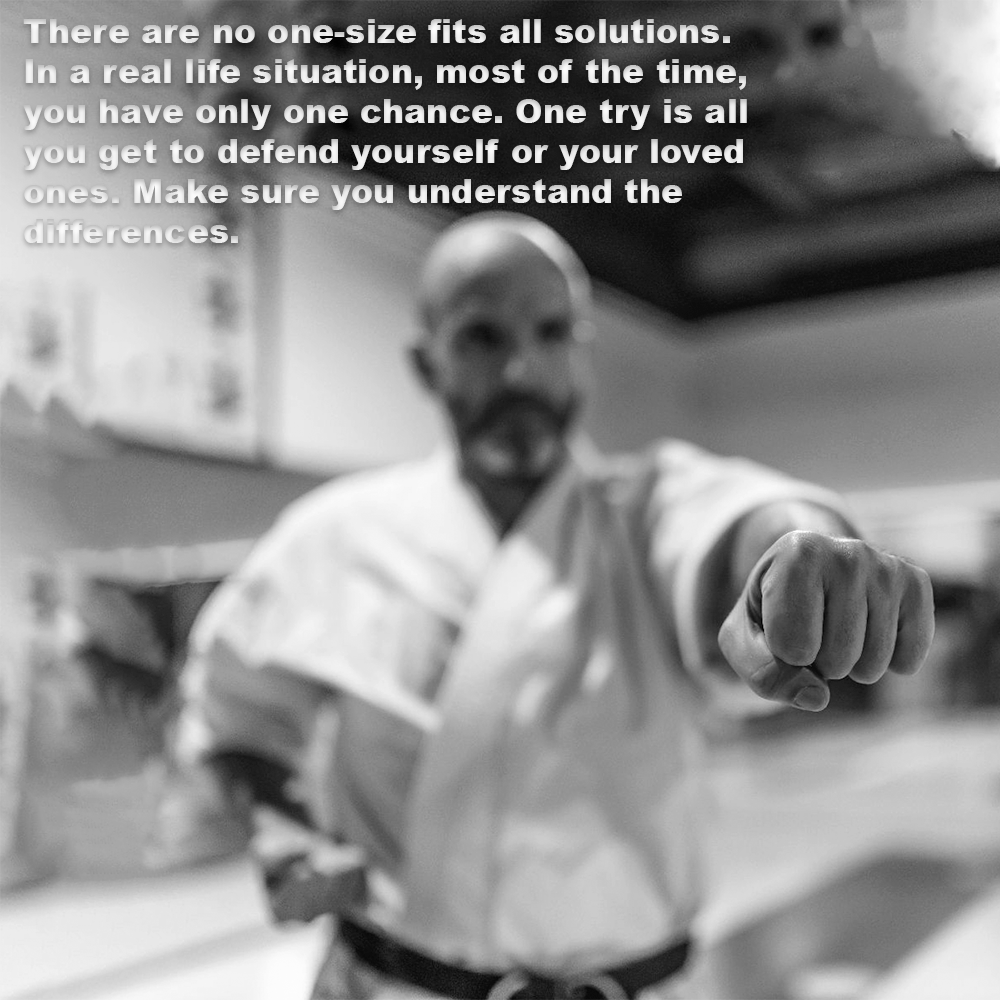
In a real life situation, most of the time, you have only one chance. One try is all you get to defend yourself or your loved ones.

What constitutes as personal protection today falls outside the scope of most martial arts classes. Irrespective of whether you think your martial art is perfect for the “street” (whatever that means) or not. Most martial arts only deal with the fighting aspect of personal protection. . In most cases, the student is actually only learning

In a real life situation, most of the time, you have only one chance. One try is all you get to defend yourself or your loved ones. Read More »

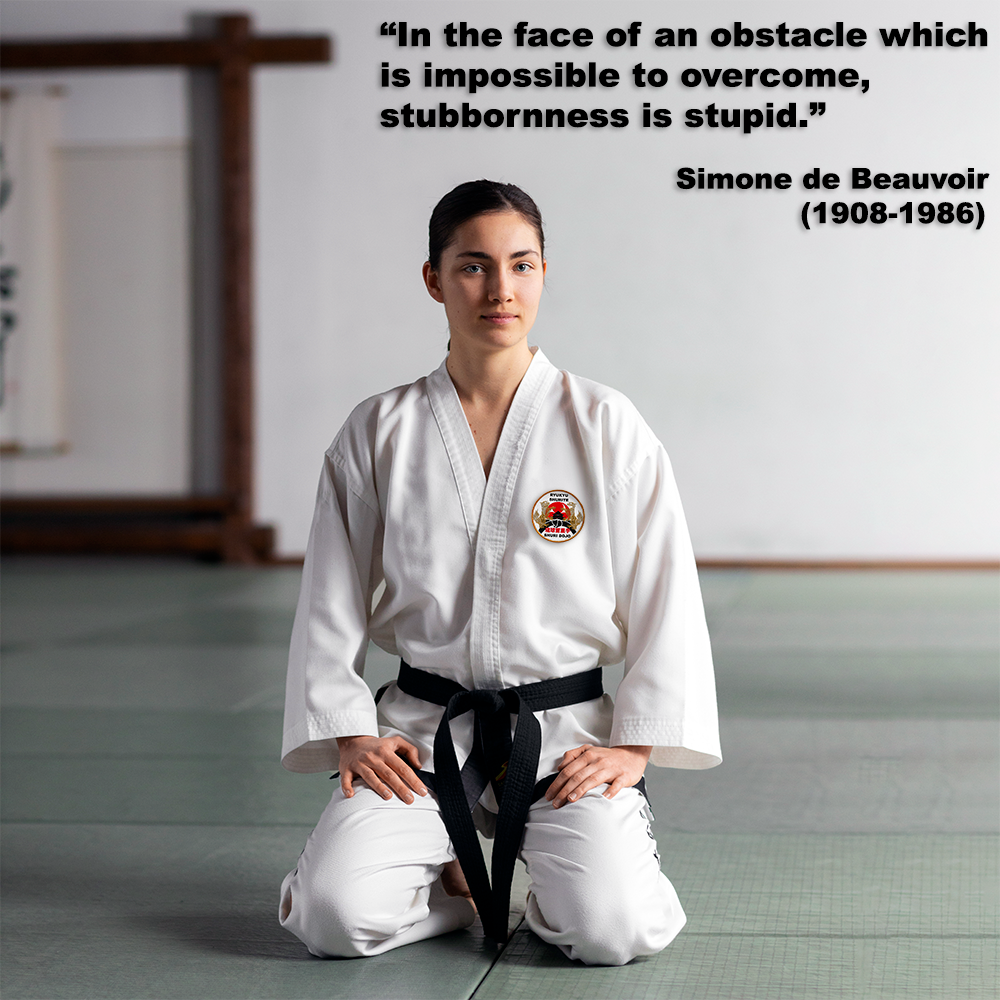
“In the face of an obstacle which is impossible to overcome, stubbornness is stupid.”

We often encounter practitioners who cling unwaveringly to their beliefs, resisting any attempt to persuade or alter their opinions. . How many times have you heard karate doesn’t work; that wouldn’t work in the ‘street’; kata is just a dance? . While it may be tempting to engage in debates or discussions with the hope

“In the face of an obstacle which is impossible to overcome, stubbornness is stupid.” Read More »

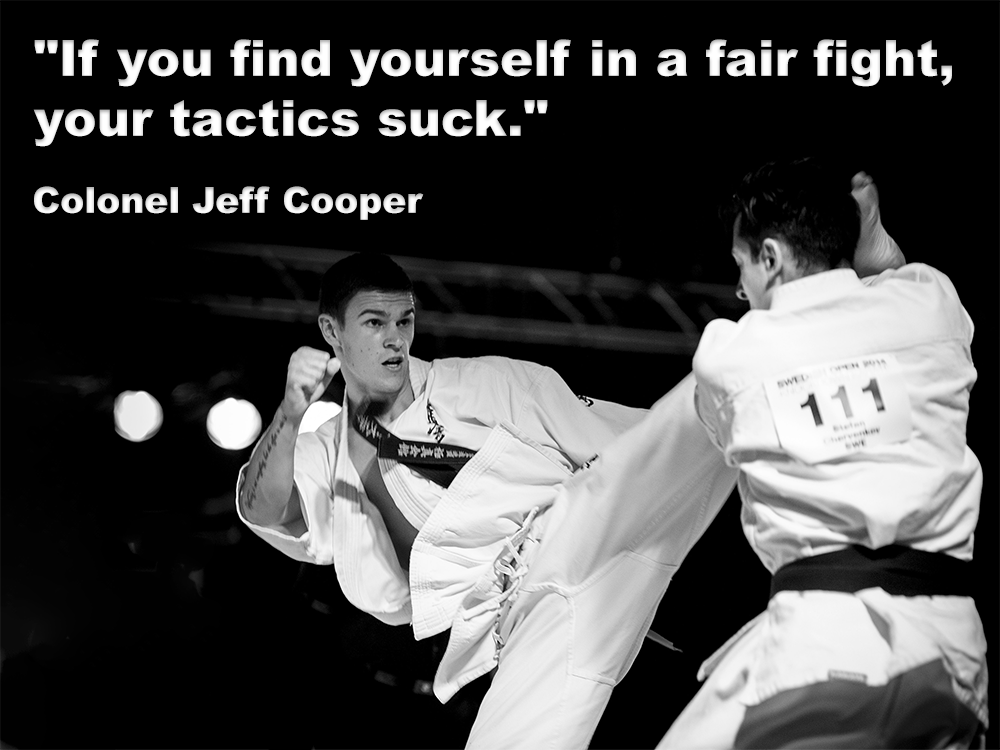
“If you find yourself in a fair fight, your tactics suck.”

Sport karate, offers numerous benefits, physical fitness, aesthetics, discipline, and sportsmanship. However, it is important to recognize that sport karate is not the ideal choice for individuals seeking practical self-defense skills. . Now before the comments start, in the 1970’s and ’80’s, sport karate was my main interest, I’m just trying to help some practitioners

“If you find yourself in a fair fight, your tactics suck.” Read More »

“We should open karate to the public and receive criticism, opinions and studies from other prominent fighting artists.”

The modern interpretation of karate, and its many variations, has evolved in to something quite different to which the original pioneers had in mind when it was first developed. . Many of the techniques of karate have become completely unrealistic in application, which unfortunately, are often passed off as real-world practical self-defense techniques. . What

“We should open karate to the public and receive criticism, opinions and studies from other prominent fighting artists.” Read More »

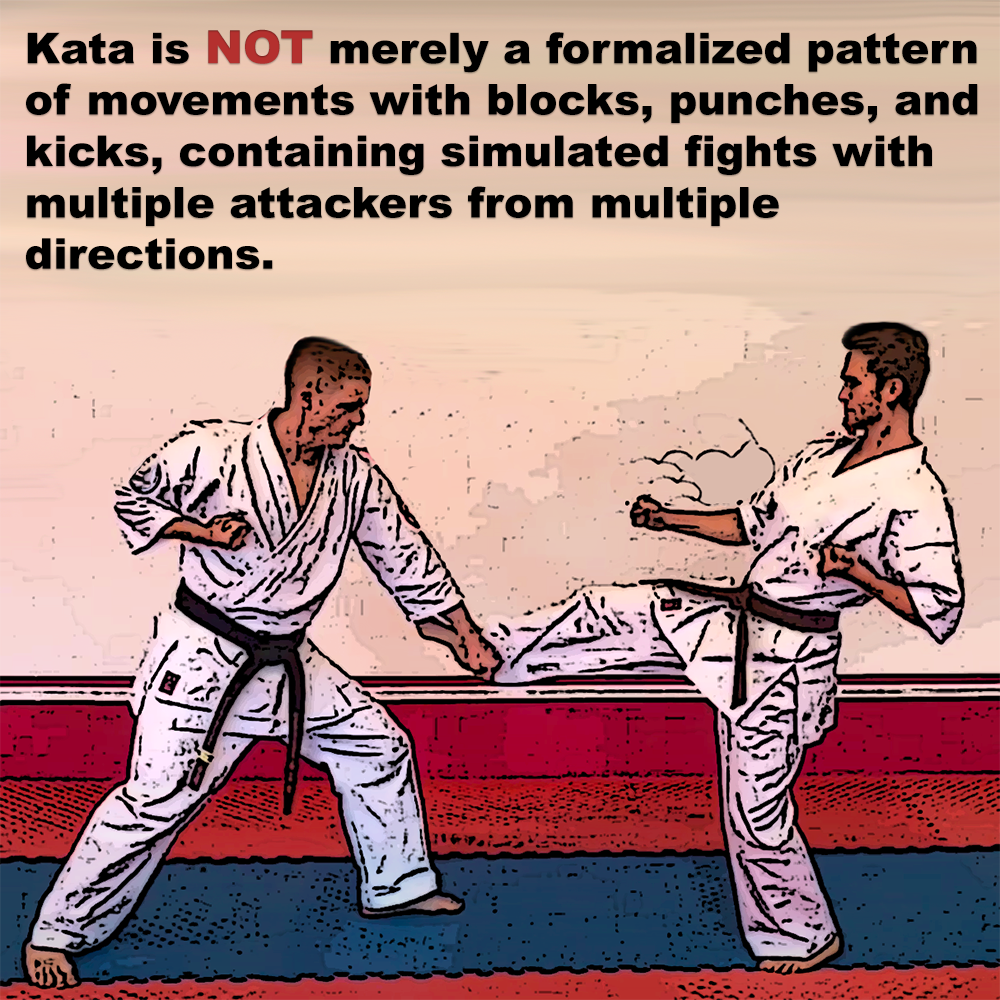
Kata is NOT merely a formalized pattern of movements with blocks, punches, and kicks, containing simulated fights with multiple attackers from multiple directions.

What is karate? Originating on the small island of Okinawa, created for its effectiveness in self-defense. But today, is it sport, self-defense, a way to improve character, a martial art? . It can be many or all those things, but for me there has to be a distinction between them all and an understanding which

Kata is NOT merely a formalized pattern of movements with blocks, punches, and kicks, containing simulated fights with multiple attackers from multiple directions. Read More »