
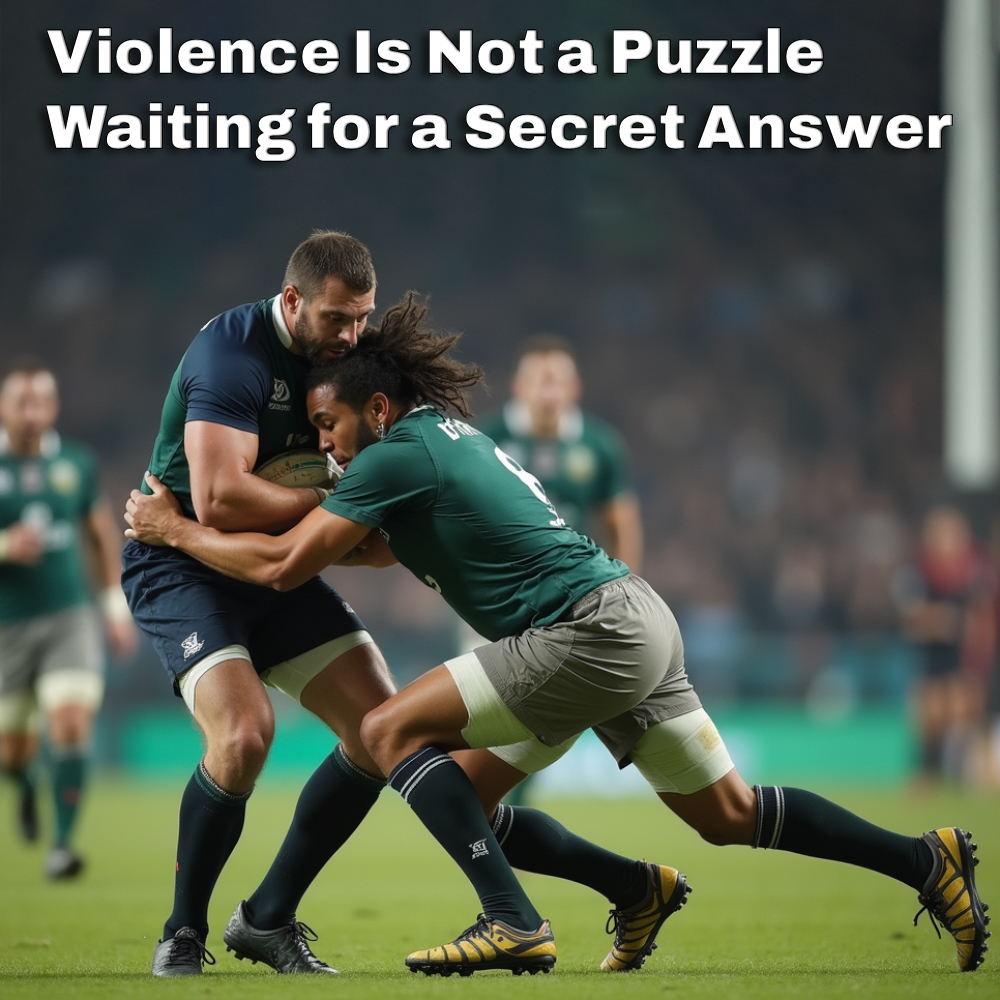
One of the biggest problems in martial arts is that many people discuss violence without ever having experienced what genuine violence actually feels like. I don’t mean sparring in the dojo under pressure, demonstrations, or competitive exchanges. I mean the kind of violence that is sudden, emotionally charged, physically overwhelming, and nothing like theory.
There is a tendency for some people to search for hidden answers. They talk about secret methods, advanced psychology, ancient systems, or principles that supposedly make everything work. The reality is usually far less romantic than that.
When somebody larger and stronger grabs you violently, drives you backwards with aggression, or attacks with full commitment, things simplify very quickly.
Humans have two arms and two legs. There are no secrets hidden inside that.
One of the hardest truths to accept is that physical attributes and intent matter. Size matters. Weight matters. Strength matters. Aggression matters. Experience matters. None of that disappears because somebody has memorized a hundred techniques or believes they possess hidden knowledge. A smaller and more skilled person can absolutely prevail, but there is no mysticism involved – only timing, positioning, commitment, and often a great deal of luck.
People who have never dealt with genuine aggression often imagine violence as a technical problem that can be solved cleanly. Real violence rarely behaves that way. Somebody who is intoxicated, emotionally unstable, or high on drugs may not react to pain the way people expect. They may continue driving forward long after a dojo partner would have stopped. They may grab, cling, crash into you, or simply keep coming under sheer momentum.
That gap between theory and reality is something you only understand when you’ve felt it.
I remember being attacked while out for a run one evening. It was dark, but I was under streetlights and focused on my rhythm. The encounter was completely unexpected. Two men came at me suddenly, forcing me into traffic. There was no time to interpret anything. It was pressure, collision, and control being attempted through force.
What stays with me was the impact. The weight of a body driving into you, the shoulder shove, the feeling of being physically redirected by sheer aggression. I was used to playing rugby, and even that did not fully prepare me for the shock of that kind of sudden force arriving without warning. It is not something most dojo training reproduces in a meaningful way. It is not clean, it is not structured, and it does not arrive in a way you can comfortably interpret.
That is one reason why so much martial arts mythology collapses under pressure. Many systems are built around ideal reactions and structured exchanges, but real assaults are messy collisions between frightened, angry, adrenalized human beings. Technical ideas disappear quickly once chaos enters the equation.
None of this means training is pointless. Quite the opposite. But it means training should be honest about what violence actually is rather than what people wish it was. There is enormous value in learning how to remain functional under pressure, how to maintain awareness when startled, how to manage fear and emotional shock, and how to keep operating when things don’t go according to plan.
It’s not a puzzle waiting for a secret answer. It’s a physical and psychological collision between imperfect human beings. That reality may not sound mystical or exciting, but it is far closer to truth than many of the fantasies surrounding martial arts today. Too much discussion has drifted into performance, mythology, and the selling of certainty.
In reality, violence is unpredictable, chaotic, and often brutally simple.
The problem begins when teaching becomes separated from human reality. Once that happens, martial arts slowly drift away from understanding violence and toward performing ideas about violence instead.
For most people, the real value of training is not becoming superhuman. It is learning to function a little better inside difficult human realities.
Photo Credit: Robin Seagger Consultant Orthopedic Surgeon