
Whenever people ask me about karate or inquire about joining our dojo, a question that occasionally comes up is, “What style of karate do you practice?”
But what does that really tell anyone? Does a style actually give insight into a practitioner’s skill or an instructor’s understanding of karate?
There are those who place a strong emphasis on style, sometimes even to the point of saying, “my style is the best.” It’s understandable to feel attached to what you practice. But in reality, all karate styles are built on similar principles, just expressed and interpreted in different ways.
That’s why, in casual conversation, I often simply say, “I practice karate.” It keeps things simple for those who are not really interested in the detail. When someone is genuinely looking to join the dojo, I will be more specific and explain that it is Okinawan-based karate.
While those fundamentals remain consistent, each style places emphasis on different aspects depending on its origins and purpose. The method changes, but the underlying principles remain closely related.
This is not about having a league table of styles or dismissing their value. It is simply an observation that the underlying principles are shared, while emphasis and context differ.
This is where things become important. If you remove context, techniques lose meaning. What works in one environment may not translate directly into another. Understanding that context shapes application which allows you to train with more clarity and purpose. Without that understanding, people often end up training the label rather than the art.
The problem comes when people become overly attached to the label of a style. It can quietly turn into division, where methods are judged as better or worse rather than simply different responses to different needs.
But every style has something to offer if you look closely enough. The value is not in defending the label. It is in understanding what the training is trying to develop in you.
In the end, it is not the style that defines you. It is what you can actually do, and how well you can apply it when it matters.
So when someone asks me what style I practice, I simply answer: “I practice karate.” Because in the end, karate is karate.
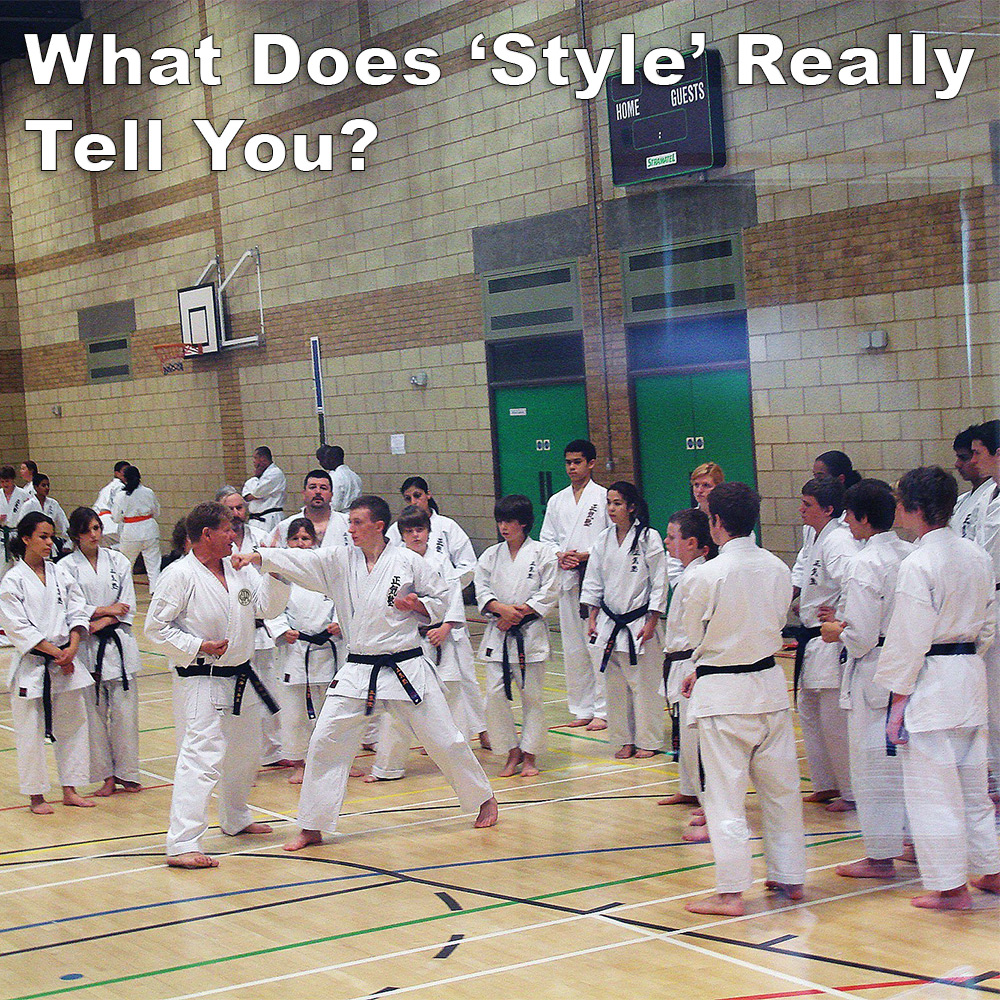
Photo Credit: Seiki-Juku Karate Organization seminar UK