Self-Protection

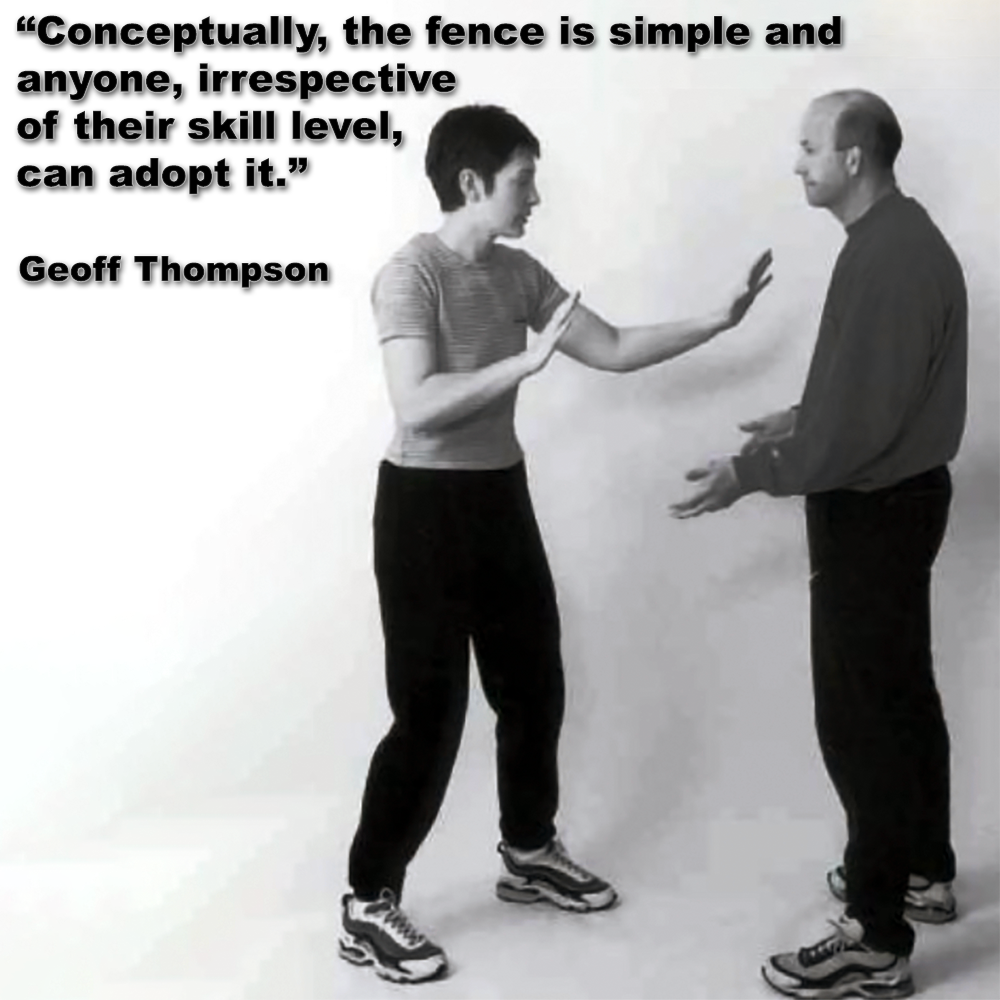
“Conceptually, the fence is simple and anyone, irrespective of their skill level, can adopt it.”

Let’s be clear, self-defense is NOT about brawling. It’s about preventing confrontation and staying safe. There’s nothing to gain and everything to lose by getting pulled into unnecessary fights. So remember this; avoidance is your best self-defense tool. . We know from previous articles that having a static high guard doesn’t translate well to real-world […]

“Conceptually, the fence is simple and anyone, irrespective of their skill level, can adopt it.” Read More »

Most people are not really prepared or trained, physically or psychologically, for a physical encounter, it’s best to concentrate on something that will work – beginning with avoidance.

My recent article about keeping your hands up in a guard in self-defense situations, featured several responses, some stating it works in MMA, or other sports. . You’re missing the point. . A guard IS applicable in consensual fights. . In self-protection, either, you are so close that BOTH HANDS SHOULD BE WORKING, or you

Most people are not really prepared or trained, physically or psychologically, for a physical encounter, it’s best to concentrate on something that will work – beginning with avoidance. Read More »

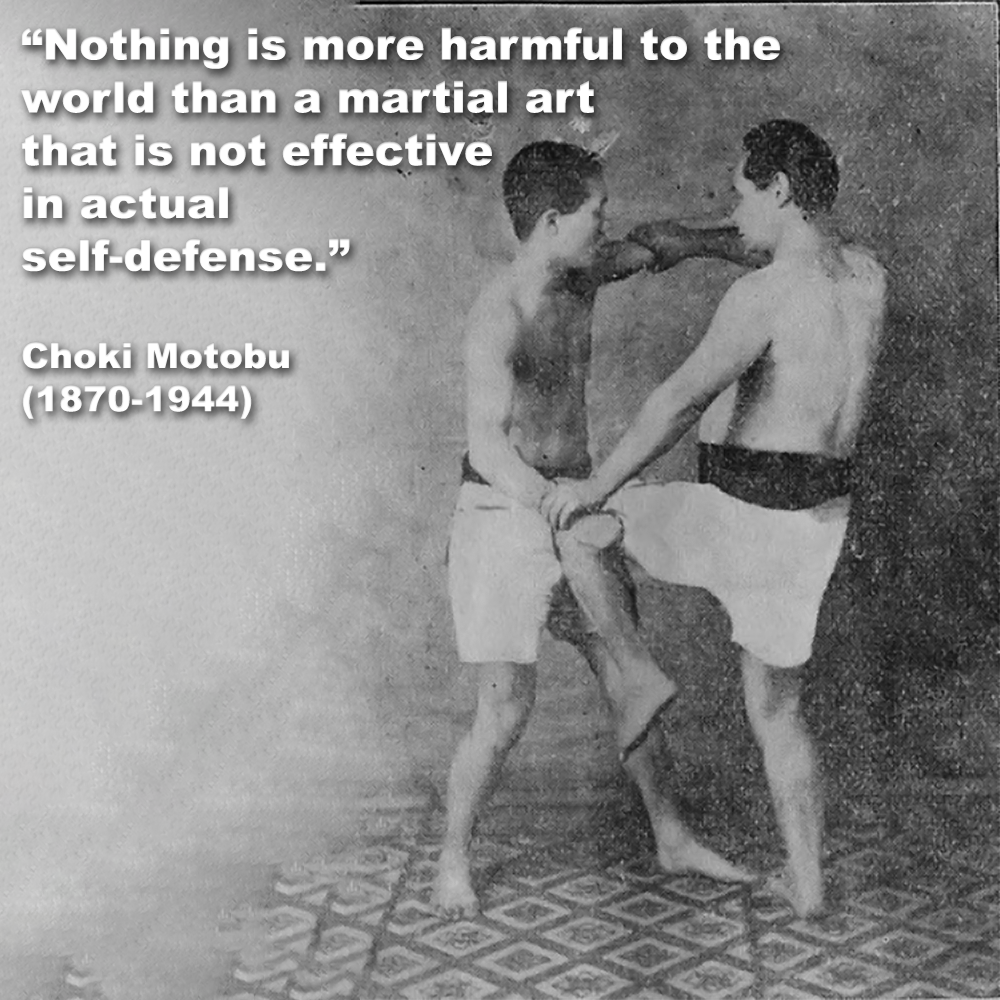
“Nothing is more harmful to the world than a martial art that is not effective in actual self-defense.”

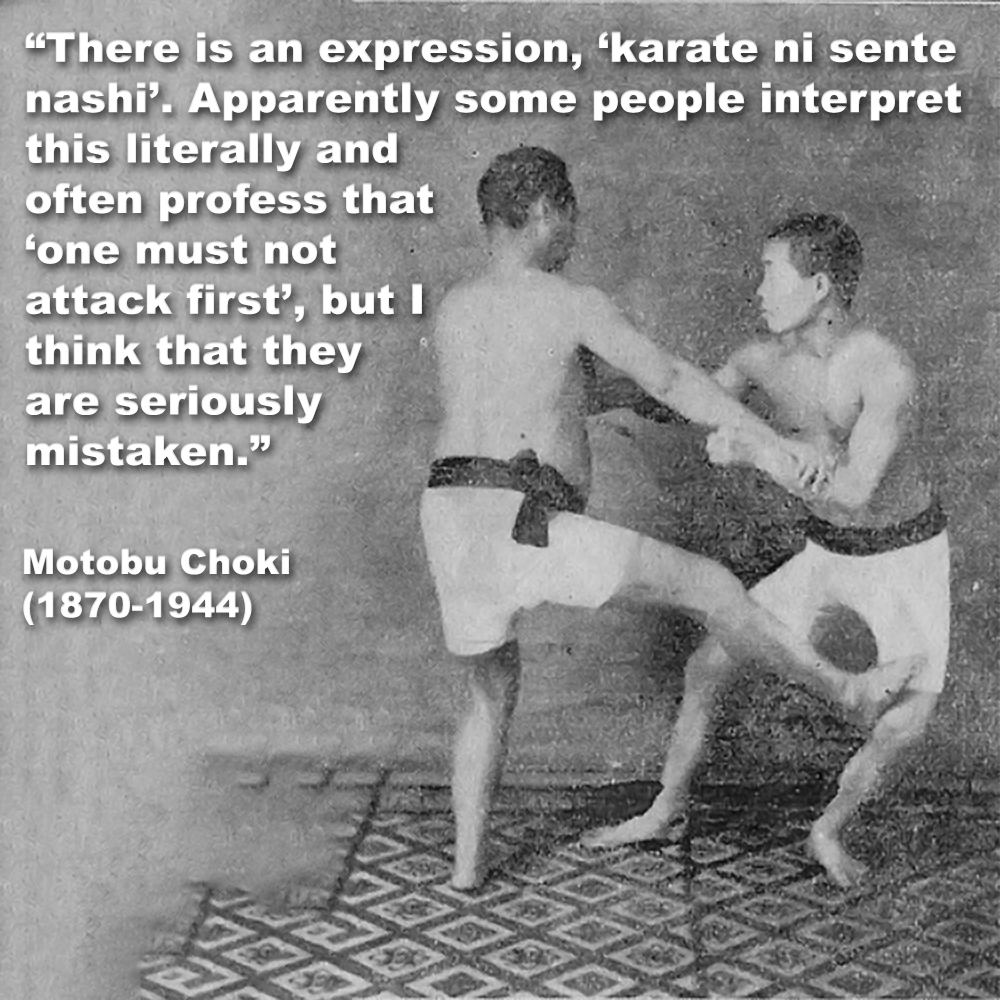
It is said that the Okinawan karate pioneers, Gichin Funakoshi (1868-1957) and Choki Motobu (1870-1944), did not agree on many things and openly disliked each other. . Funakoshi became an advocate of Karate-do, while Motobu, an advocate of Karate-jutsu. . Motobu in his criticism of Funakoshi, stated that; “Nothing is more harmful to the world

“Nothing is more harmful to the world than a martial art that is not effective in actual self-defense.” Read More »

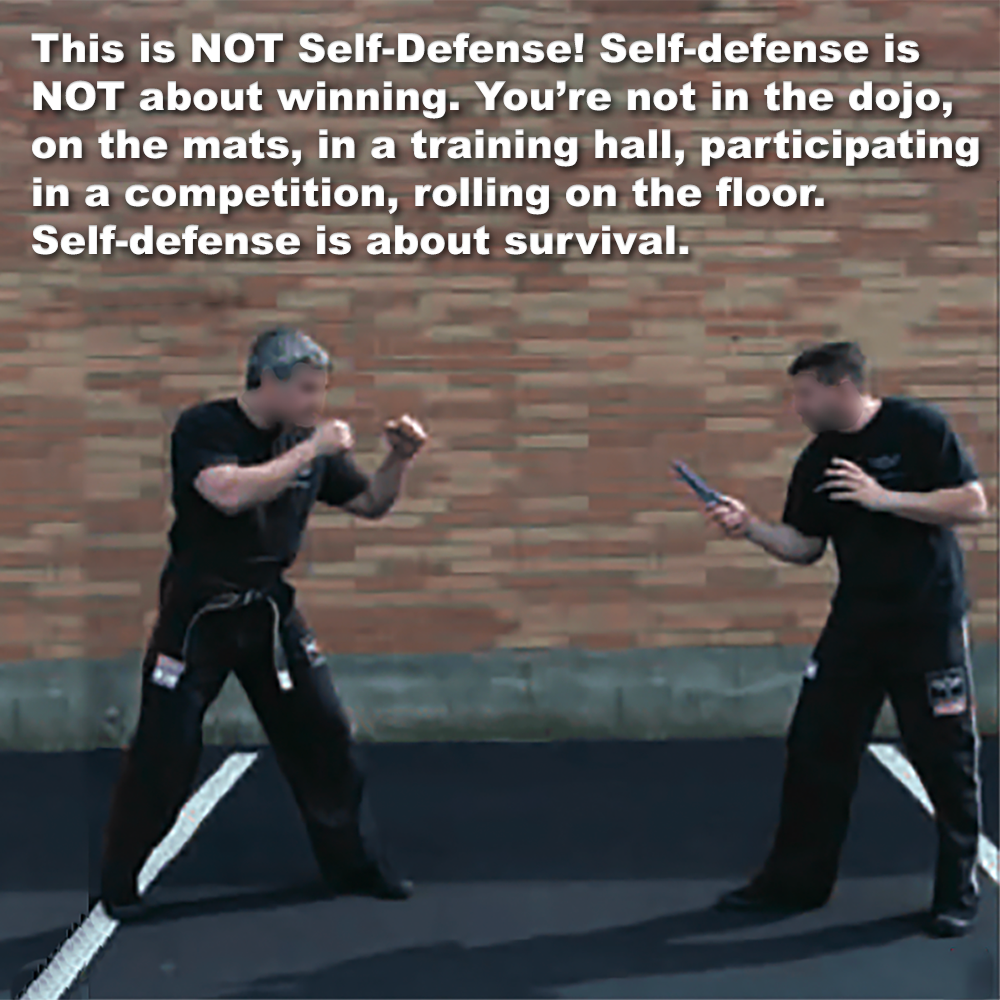
Self-defense is NOT about winning. You’re not in the dojo, on the mats, in a training hall, participating in a competition, rolling on the floor. Self-defense is about survival.

I have been writing articles for several years now and a misconception about self-defense continuously runs through the comments I receive. . Let’s attempt to clarify things. . Self-defense is NOT about winning. You’re not in the dojo, on the mats, in a training hall, participating in a competition, rolling on the floor. . Self-defense

Self-defense is NOT about winning. You’re not in the dojo, on the mats, in a training hall, participating in a competition, rolling on the floor. Self-defense is about survival. Read More »

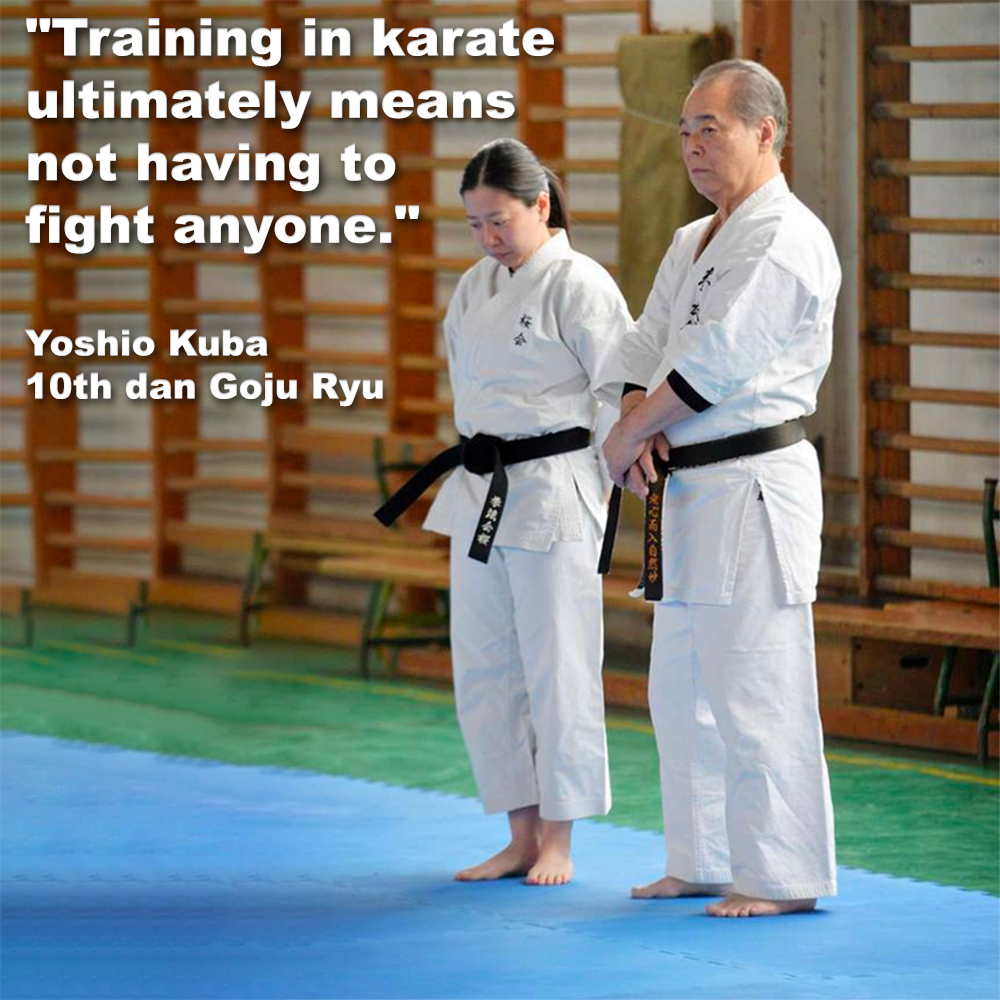
“Training in karate ultimately means not having to fight anyone.”

Yoshio Kuba, 10th dan Goju-Ryu karate, once said, “Training in karate ultimately means not having to fight anyone.” This profound statement challenges the popular perception of martial arts as solely about physical combat. Instead, it highlights a deeper principle: true control lies in not needing to use force. . Forget the street-brawler mentality. True strength

“Training in karate ultimately means not having to fight anyone.” Read More »

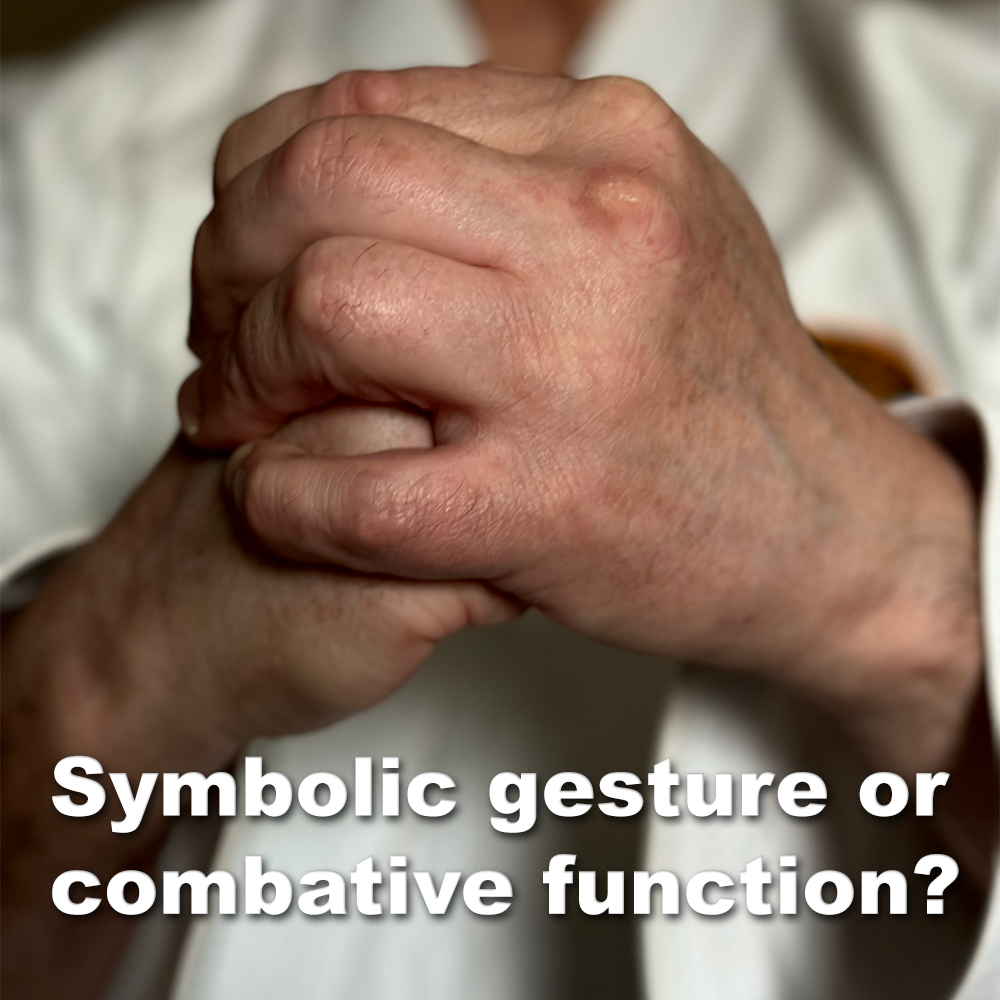
Symbolic gesture or combative function?

The martial arts world can be a tapestry woven with intricate traditions and practices. . One intriguing thread that runs through the practice of kata, specifically, the enigmatic movements often interpreted as “salutations.” . These seemingly ritualistic gestures have some practitioners attributing them to hidden meanings and even ancient Chinese symbolism. . However, perhaps a

Symbolic gesture or combative function? Read More »

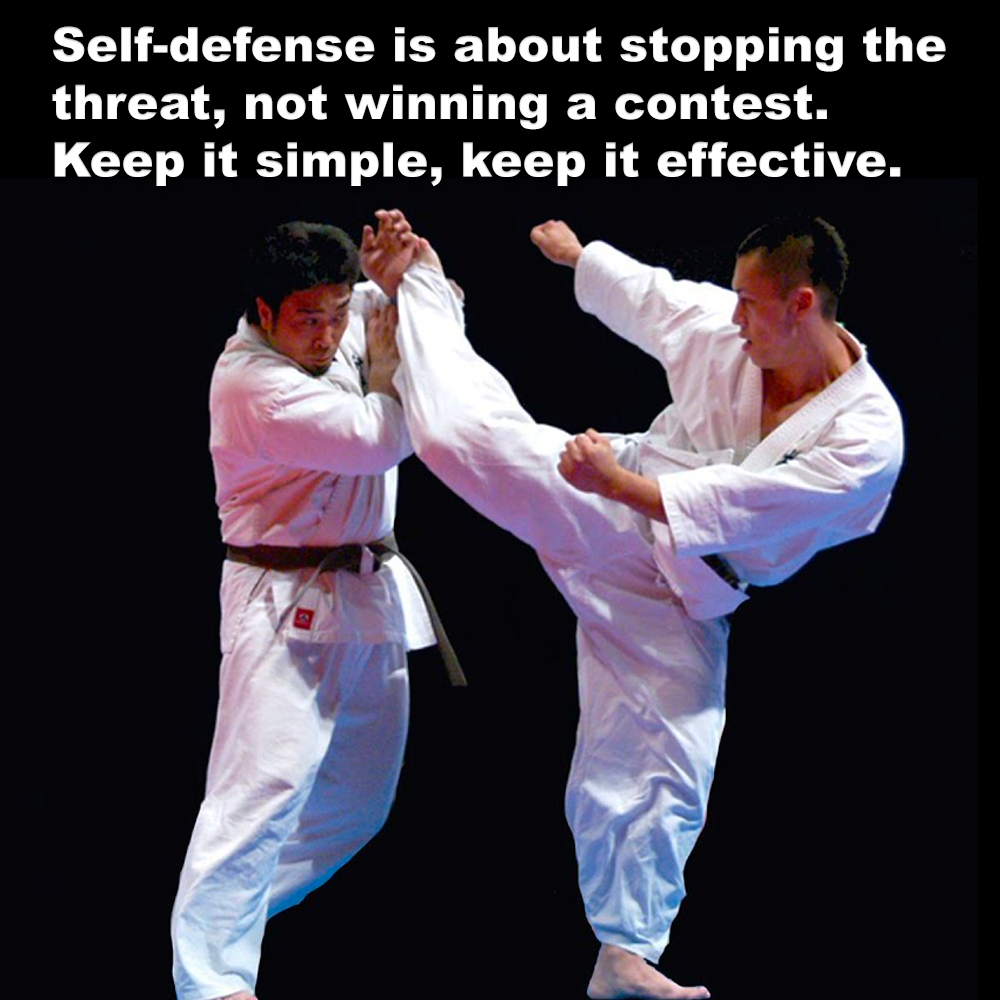
Self-defense is about stopping the threat, not winning a contest. Keep it simple, keep it effective.

In my younger days, high kicks were a speciality of mine. I was very flexible, often using different high kicks to success in the dojo and in competition. And if you had told me high kicks didn’t work for self-defense, I would have strongly disagreed with you. I know several karate-ka who worked on the

Self-defense is about stopping the threat, not winning a contest. Keep it simple, keep it effective. Read More »

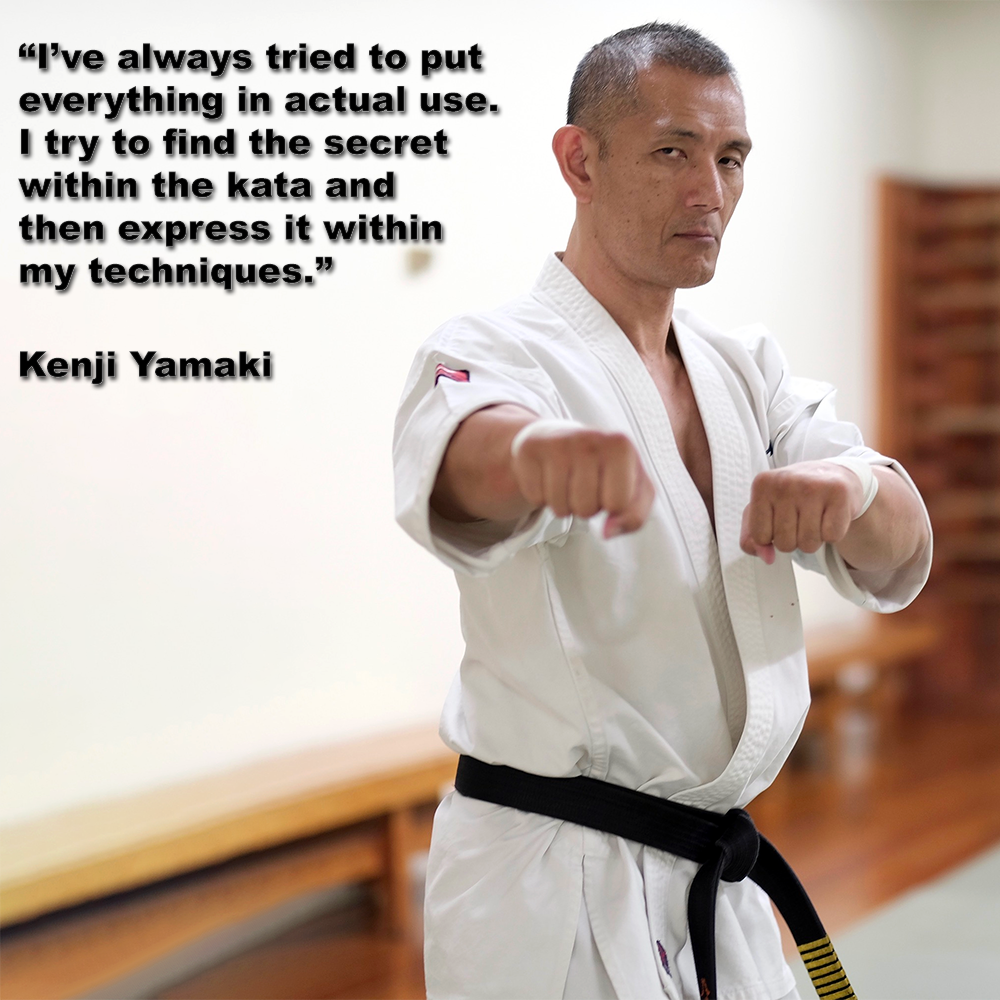
“I’ve always tried to put everything in actual use. I try to find the secret within the kata and then express it within my techniques.”

“Every day, there is a new discovery. Rather than merely hitting this way or hitting that way, i’m interested now in trying to evolve the foundations of my practice.” – Kenji Yamaki . You can learn all the technical skills you want, all the theories and concepts down to the core. But what’s the point

“I’ve always tried to put everything in actual use. I try to find the secret within the kata and then express it within my techniques.” Read More »

How many kata is “enough”?

How many kata is “enough”? . Of course this is very subjective. What are your goals in training? What are your goals in teaching? How many are contained in your syllabus? Etc. etc. . If you want your students to quickly learn self-defense skills, then a smaller amount is obviously going to be more efficient,

How many kata is “enough”? Read More »

Practice each of the skills of karate repeatedly. Attentively devote yourself to the meaning of each individual technique.

A comment on one of my articles stated that; ”kata and bunkai are useless”, accusing me of not understanding their non-self-defense design, including a “bullshido” label. . You know what? If you think the movements within kata are ineffective, then for you, that’s true. It just shows a complete lack of understanding. . “Why practice

Practice each of the skills of karate repeatedly. Attentively devote yourself to the meaning of each individual technique. Read More »