“Self-praise and over-confidence is a sickness that corrupts training.”

The martial arts are more than just physical techniques used for self-defense, or competition. It is a way of life that involves self-discipline, respect, self-awareness and more. . One of the most important aspects of martial arts is understanding the role of ego and its impact on both personal development and martial arts practice. ….

“Walk a single path, becoming neither cocky with victory nor broken with defeat, without forgetting caution when all is quiet or becoming frightened when danger threatens.”

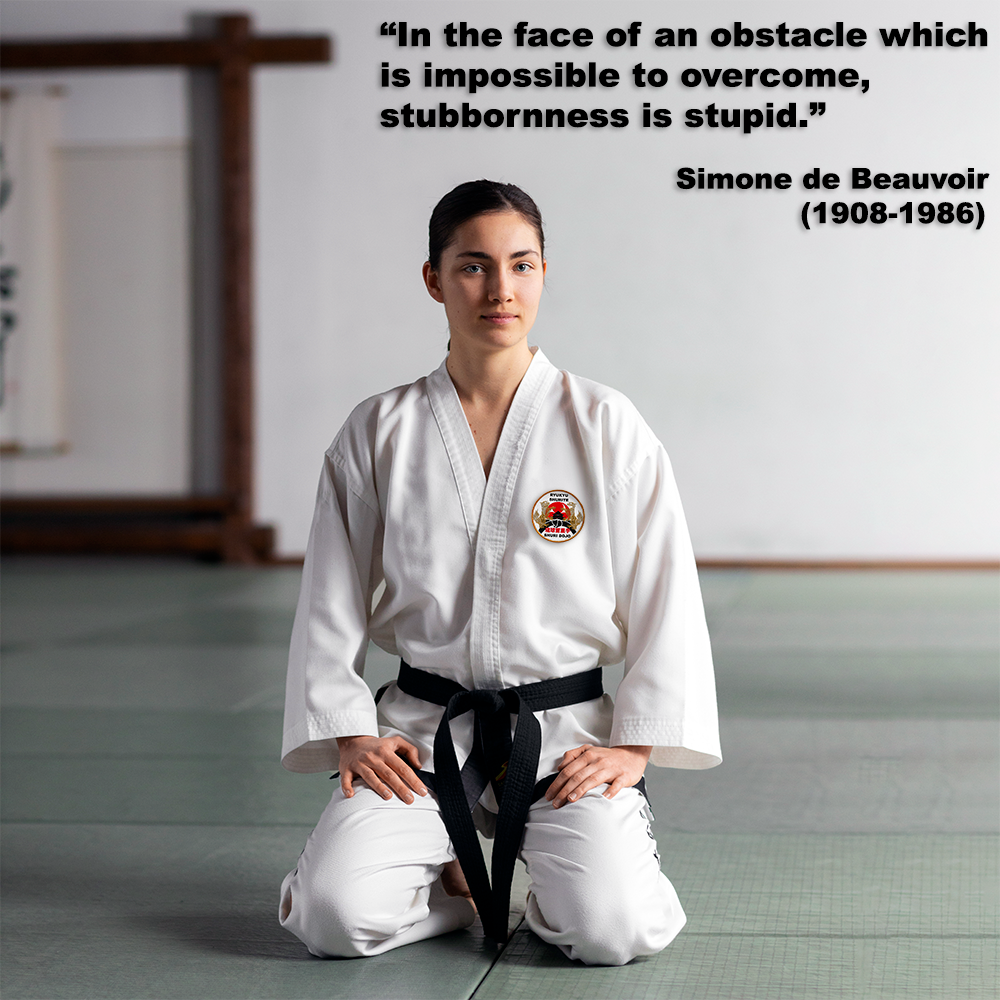
One of the most recognizable aspects of karate is the black-belt, which is awarded to those who have achieved a high level of proficiency in the art. But the black-belt is more than just a physical accessory or a symbol of skill; it represents a journey of personal growth and development. Another beginning, not the…

“Many Karate teachers teach a watered down style – no hip action and no depth of punching – so it is easy to say that these teachers have no depth to their knowledge.”

The proverb “Teachers open the door, but you must enter by yourself”, is a powerful reminder of the role that teachers play in our lives. Teachers are there to provide us with knowledge, guidance, and support, but ultimately, it is up to you to take responsibility for your own learning and growth. . In today’s…

“The quieter you become, the more you are able to hear.”

‘Mokuso’ (黙想) is a Japanese term that is commonly used in the martial arts. The term refers to a period of silent meditation that is practiced at the beginning and end of a training session. . Commonly translated as “meditation”, the literal translation means “silence/still” (moku 黙) and “think/focus” (so 想). . Mokuso is often…

What makes one person commit their life toward a specific goal, while another person quickly gives up pursuing a goal the first moment they experience adversity? . In the martial arts, what makes one practitioner continue to persevere against all odds, while another quits the moment he/she begins to feel pain and discomfort? Why do…