Fighting

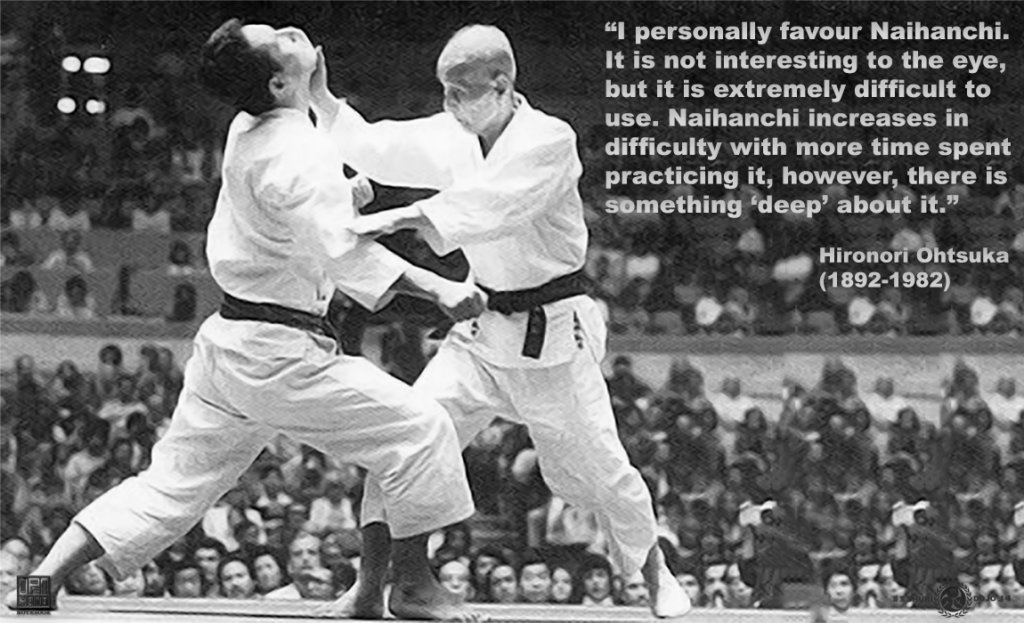
Naihanchi (ナイハンチ) Kata

Naihanchi (ナイハンチ) . The kata Naihanchi is said to mean ‘sideways fighting’ due to the kata’s distinctive embusen (floor pattern), but is also translated as ‘internal divided conflict’, it is practiced in many styles of karate today. . Gichin Funakoshi renamed the kata Tekki (Iron Horse) in reference to his old teacher, Anko Itosu, and […]

Naihanchi (ナイハンチ) Kata Read More »
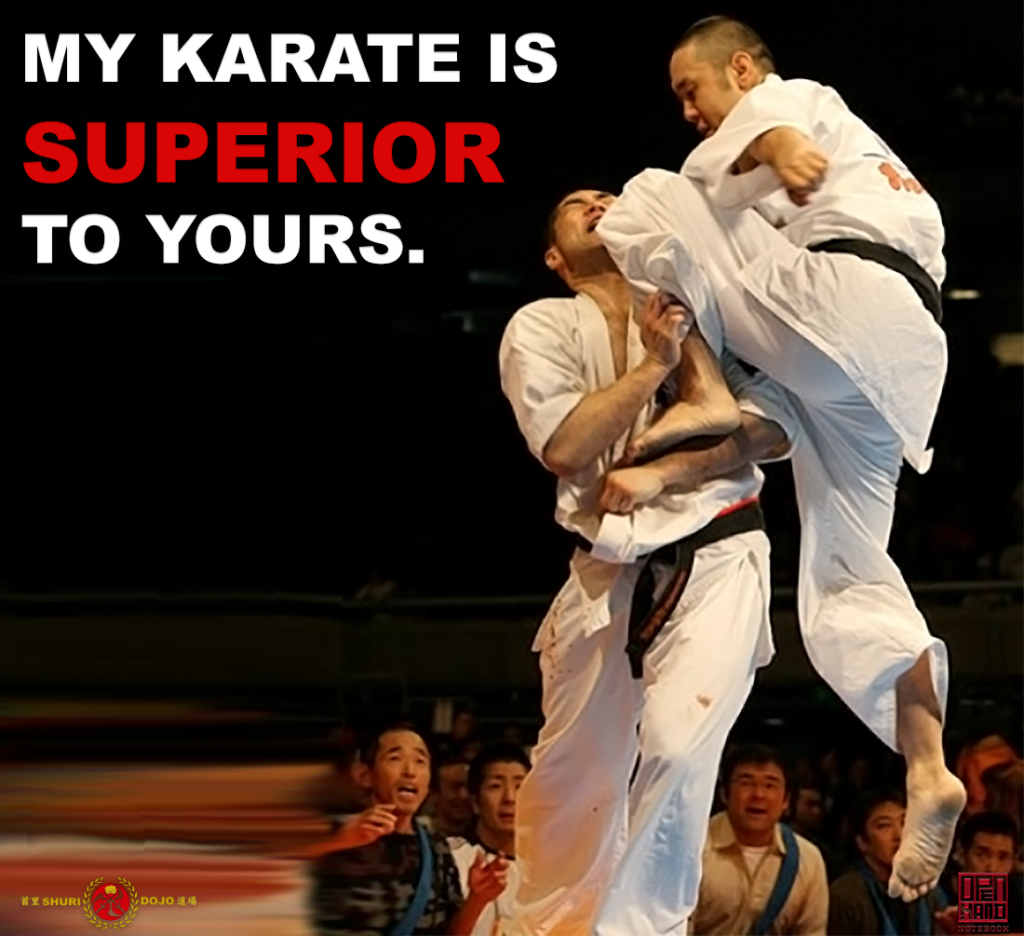
My karate is SUPERIOR to yours.

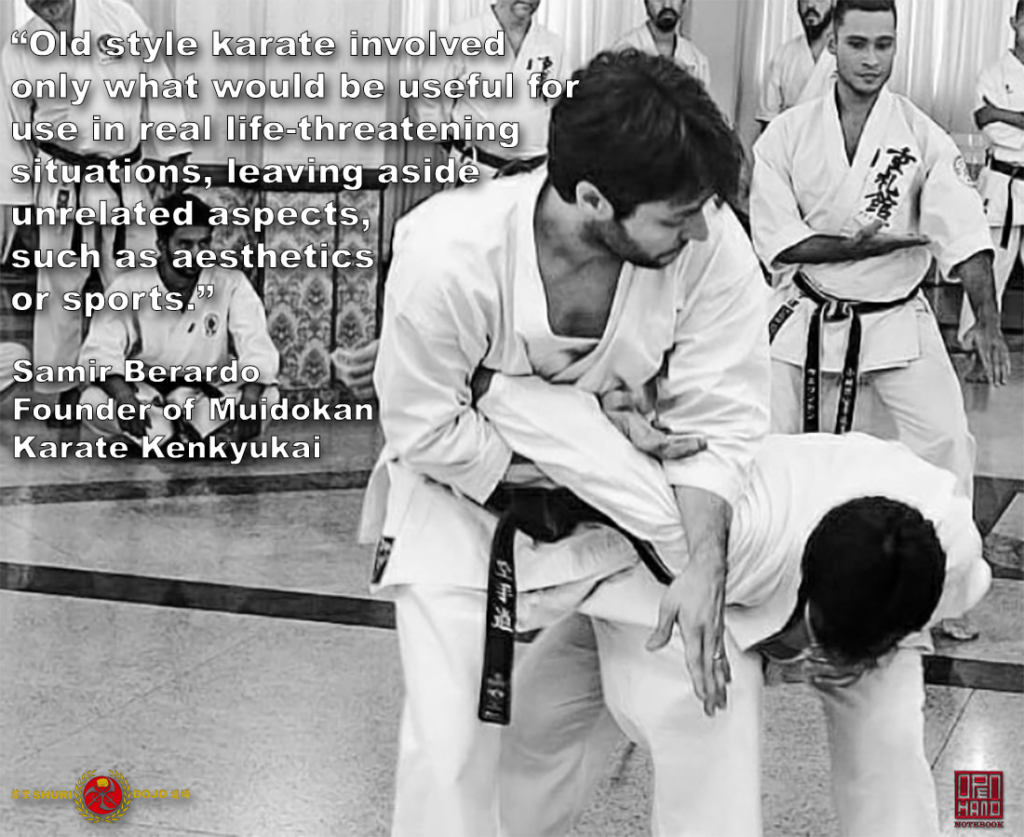
My karate is stronger, tougher, more athletic…. it’s superior to yours! . Really? It’s superior in all things?….. . You have to define what you mean by “superior”. I’m assuming that when people say a “superior karate style”, they mean the best in terms of effectiveness and practicality…… But superior, WHERE? In the dojo? In

My karate is SUPERIOR to yours. Read More »

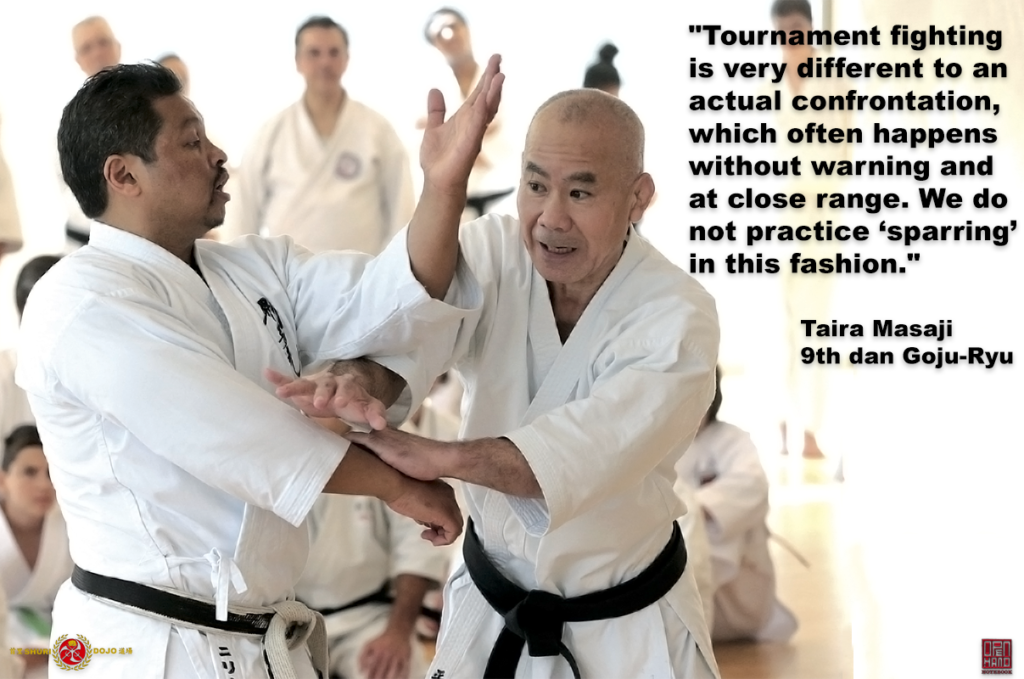
“Tournament fighting is very different to an actual confrontation.”

“Tournament fighting is very different to an actual confrontation, which often happens without warning and at close range. We do not practice ‘sparring’ in this fashion.” (End quote) – Taira Masaji 9th dan Goju Ryu . A technique might work very well against another practitioner in the dojo, using only passive resistance against you. However,

“Tournament fighting is very different to an actual confrontation.” Read More »

Kuzushi

Balance and stability is just as important as strength and endurance in the martial arts. Good balance and stability can be the difference in landing a good punch or kick, evading a strike, or ultimately avoiding being forced to the ground, where you don’t want to be. . Good balance also increases your striking ability,

Kuzushi Read More »

Just Relax!

Many martial artists don’t know (or can’t admit) that they’re wasting energy. They make excuses like; “Oh I just need to relax more.” or “I need to work on my cardio.” No..… you’re getting tired because you have poor technique. . And they blame poor conditioning, but the reality is, that conditioning will never compensate

Just Relax! Read More »

Kata, the management of failure.

“We learned karate that was to be used in real-life situations. If you don’t continue to train with that sense of there being a real opponent, you won’t be able to respond in that kind of situation.” – Takeshi Tamaki 10th dan Shorin-ryu . Kata, the management of failure. . What does this mean?…… In

Kata, the management of failure. Read More »

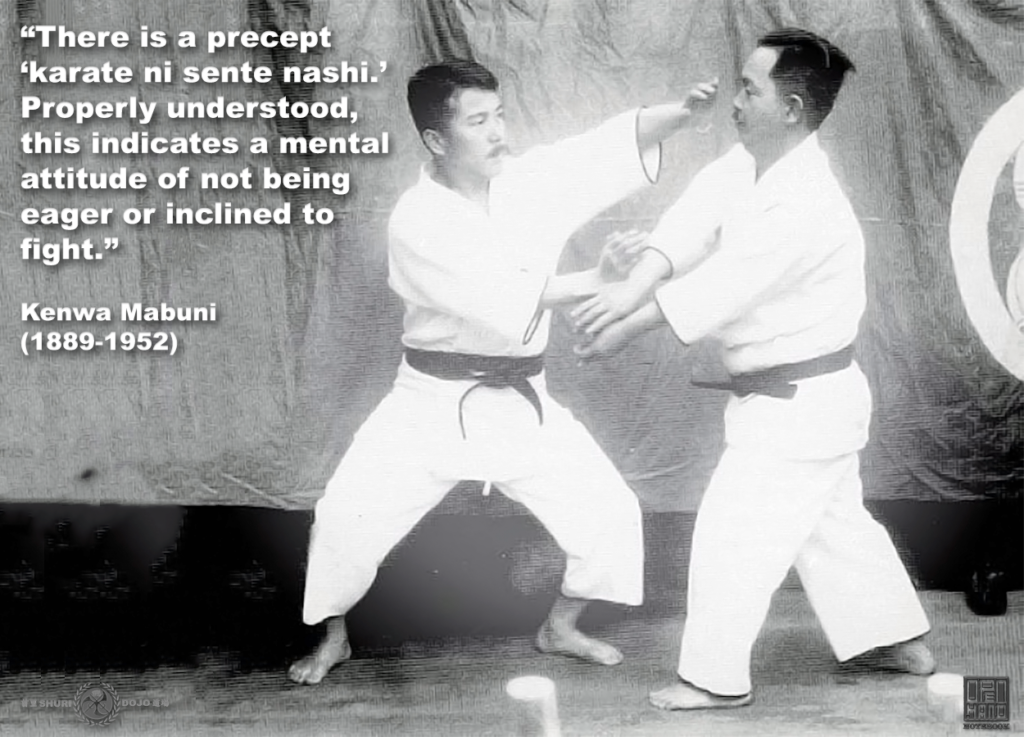
“Karate ni sente nashi” (空手に先手なし)

“Karate ni sente nashi” (空手に先手なし), typically translated as, “There is no first attack in karate.” . Gichin Funakoshi made this principle the second of his “Niju Kun” (Twenty Precepts), reminding us that “karate begins and ends with courtesy”. . Karate and particularly kata, often suffers a bad name for being outdated and unrealistic. In my

“Karate ni sente nashi” (空手に先手なし) Read More »

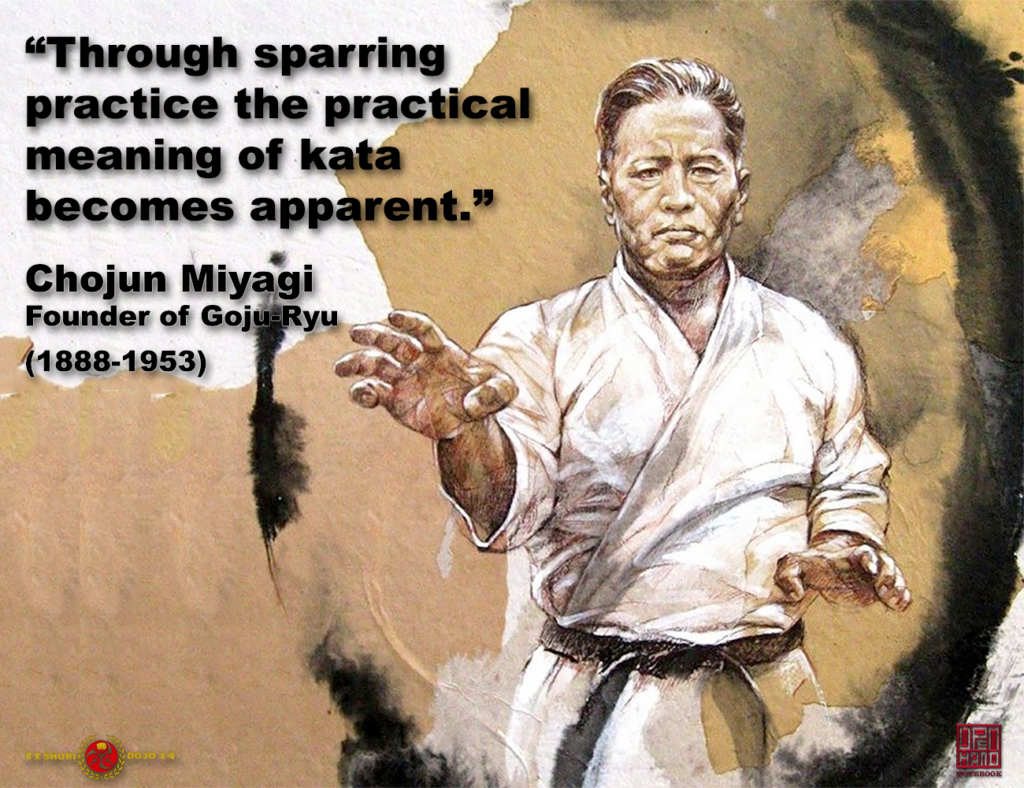
“Through sparring practice the practical meaning of kata becomes apparent.”

Many practitioners talk about kata interpretation, or bunkai as an element of their karate practice. And many of these practitioners say the movements aren’t practical, they wouldn’t work for real, kata is useless, no-one comes to my dojo to learn kata, etc, etc……. and you know what? That’s true, for the way most people practice

“Through sparring practice the practical meaning of kata becomes apparent.” Read More »

The warrior mindset.

A warrior is not the one who seeks out fights. A warrior is the one who stands between the fight and the ones we love. A true warrior isn’t hateful or malicious. They are caring and aware of the needs of others. A warrior understands that not every fight is fought with hands and feet,

The warrior mindset. Read More »