
A little while back, a nidan instructor contacted us after his instructor passed away and asked if we could grade him to sandan.
From the outset, I had reservations. Even though I knew his instructor, I didn’t know this person. He had never joined us for a session, and I had never seen him train.
To give him the benefit of the doubt, we agreed to meet, but as he lived some distance away, we received videos of him teaching and training in the meantime.
Oh dear, not a good start – the performances were subpar and well below any standard that I would have required for a dan grade, let alone nidan or sandan.
However, I try not to turn anyone away, so I offered to teach him and bring him up to our standards. You can guess what happened next? He refused.
Instead, he decided to join another association and grade with them. No problem – that’s his prerogative.
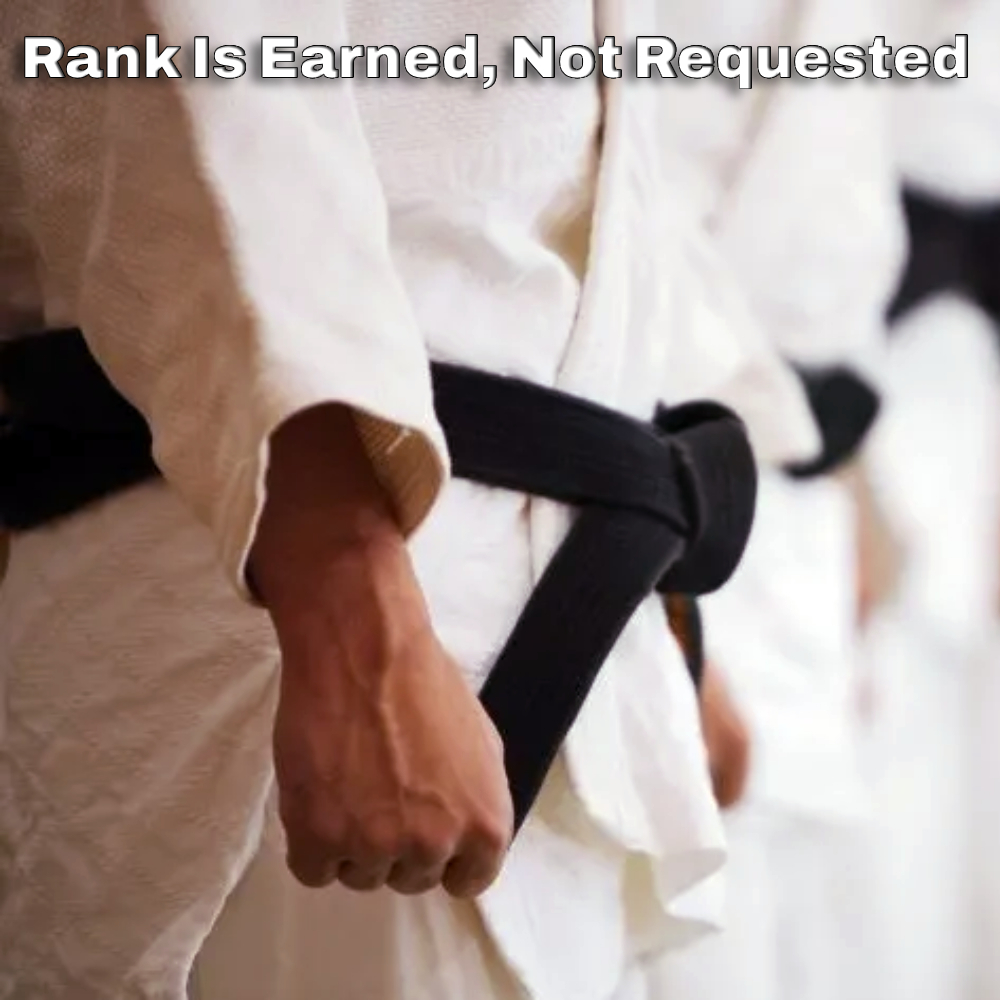
People need to understand that any grade is not an entitlement. It’s awarded because your sensei believes you can represent their art, and the dojo or association, to a definable standard.
Joining a new dojo or group, learning their system, training hard over an extended period, and legitimately grading is one thing. Expecting an automatic right to a grading? I don’t believe any reputable instructor would entertain that. Of course any prior training will be taken into account, but you still have to earn it.
If you didn’t work for it, then it is meaningless.
The bottom line is that you can’t demand or expect a grade just because you asked.
A practitioner with several years in training – especially a nidan aiming for sandan – should be showing humility. He should not only be proficient in the basics but should have internalized them – meaning he can perform techniques spontaneously, with speed, power, and mobility, appropriate to his age and experience.
By the time you’re aiming for sandan, you should know better. You are expected to have a clear understanding of the underlying principles and be well on your way to connecting the dots.
It’s not just about performing another kata. At this level, students are required to demonstrate the application of their techniques in varied circumstances and conditions.
We are all different – I get that – and some practitioners are able to instruct well before this grade. But at this level, you’re often seen as an instructor proper, with a good knowledge and understanding, able to answer students’ questions extensively and in detail.
Some people need to roll up their sleeves and put in the effort. There are no shortcuts. Everyone has to practice diligently and consistently.
You need to be able to demonstrate that you’ve reached the required standard by training with a qualified instructor, learning from them, and accepting their corrections and guidance. It’s not just about showing up, doing some sparring and walking through your techniques, drills, or kata.
There isn’t an automatic promotion, you should be working for it, and if you’re ready, you may be promoted. When to grade is not up to you.
It goes without saying that good skills should be present – knowing less than what is required for the grade you already hold isn’t going to fly. At this level, it’s not just about being able to perform the technique – you need to understand what’s behind it.
So, show some respect. Make yourself proud of who you are.
Your students sometimes have great respect for their instructor – make sure you deserve it.
If you value these insights, you can support my work here: buymeacoffee.com/shuridojo – Thank you – every contribution is appreciated.