Dojo

Practitioners who are interested in self-protection, should show a keen interest in bunkai.

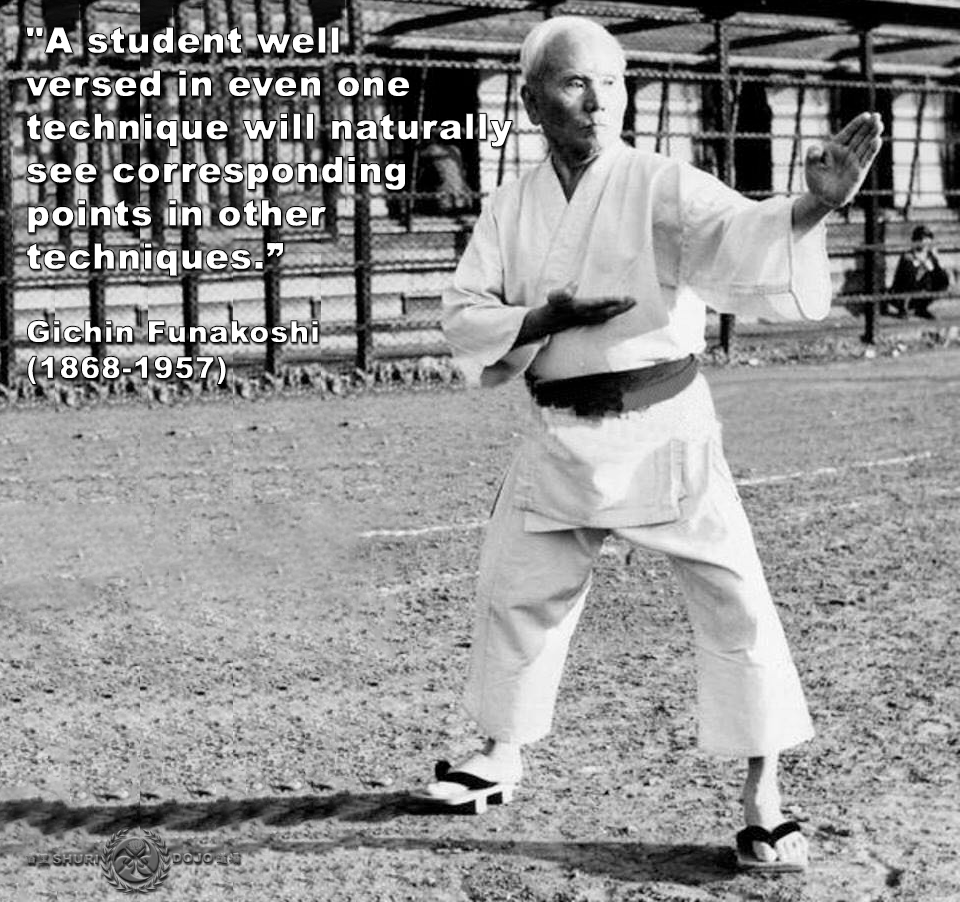
Funakoshi wrote; “A student well versed in even one technique will naturally see corresponding points in other techniques. A upper level punch, a lower punch, a front punch, and a reverse punch, are all essentially the same. Looking over thirty-odd kata, he should be able to see that they are essentially variations on just a […]
Practitioners who are interested in self-protection, should show a keen interest in bunkai. Read More »

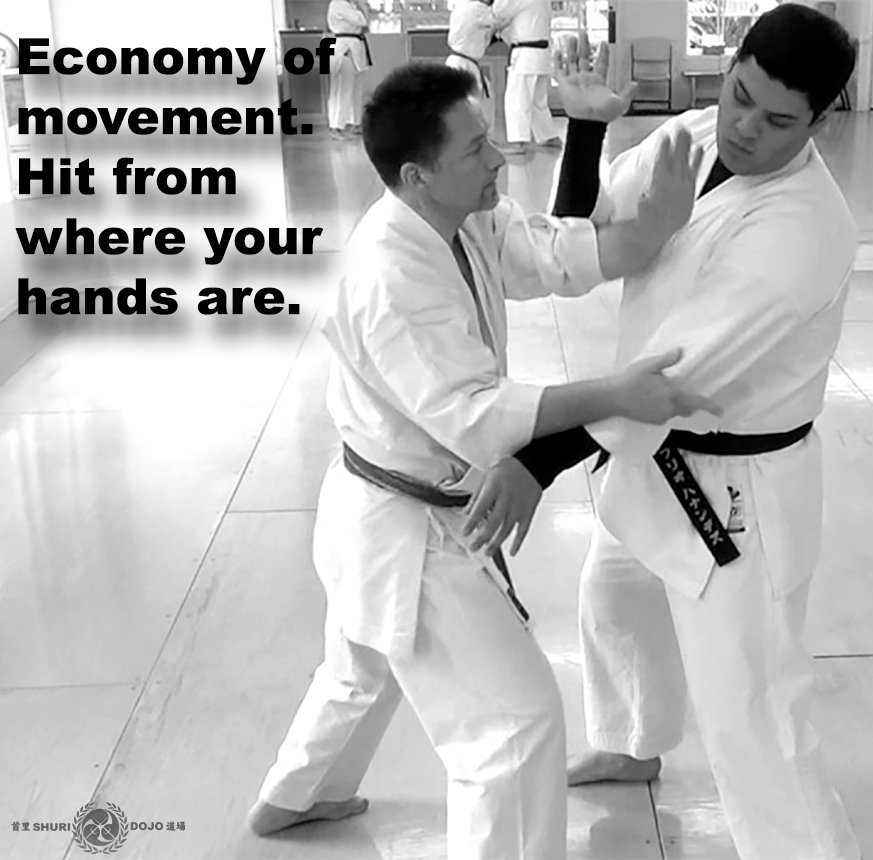
Hit from where your hands are.

In the dojo recently we talked about “momentum” in a strike, punch or similar technique. Momentum can simply be defined as; “mass in motion.” All objects have mass; so if an object is moving, then it has momentum. . Our discussion was based upon moving our hands in an opposite direction to our target (moving

Hit from where your hands are. Read More »

The common origin of technique.

The common origin of technique. . The commonality of a technique is that they all make use of biomechanics and weaknesses of the human anatomy. Where the various arts differ is in the rules, the goal, and the context that they are trained for. . In competitions you try to win. In consensual fights you

The common origin of technique. Read More »

Techniques that are effective for kumite and sparring in the dojo, are not necessarily sensible choices for self-protection.

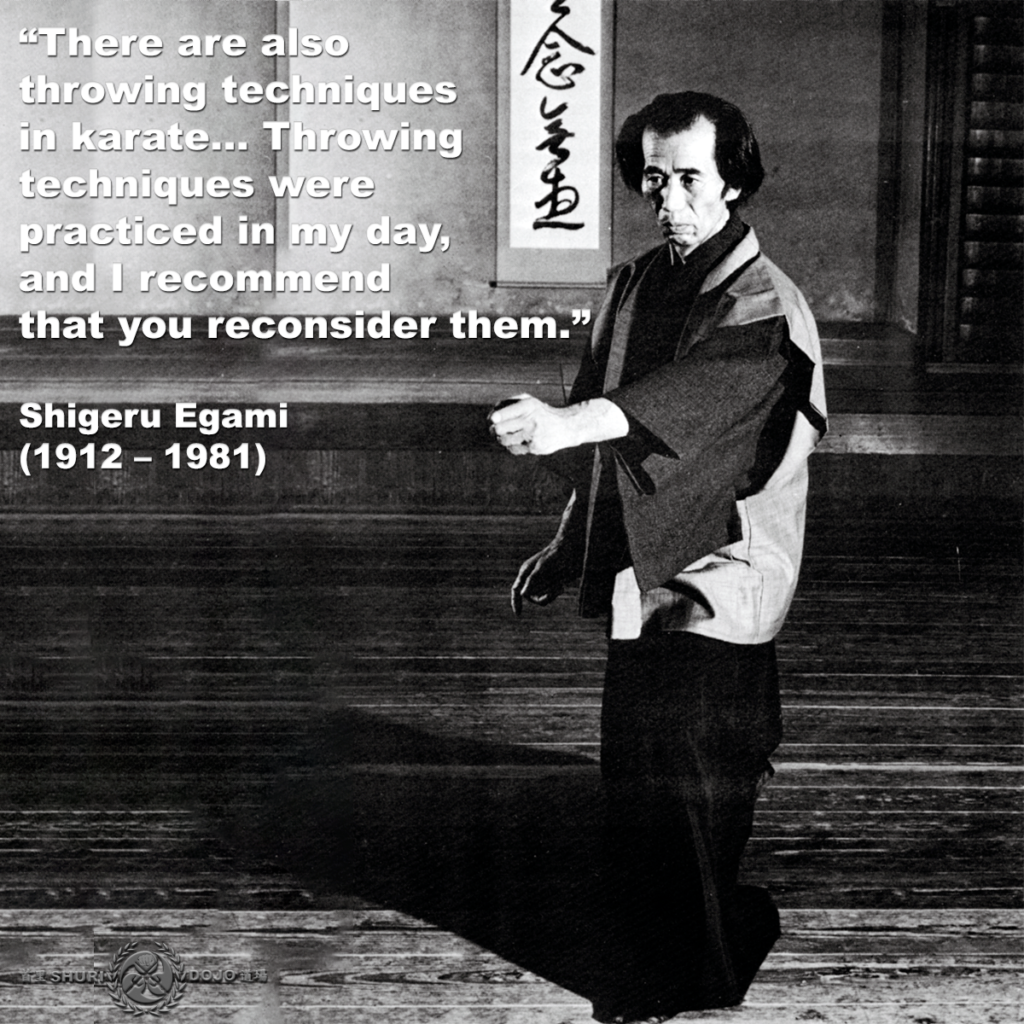
The grappling of karate is not comparable to the highly skilled grappling exhibited by MMA or Judo practitioners. It is, by design, very crude by comparison. But karate’s grappling methods did exist long before the rise of MMA. . There are those that believe only Judo or BJJ can provide grappling and throws, and the

Techniques that are effective for kumite and sparring in the dojo, are not necessarily sensible choices for self-protection. Read More »