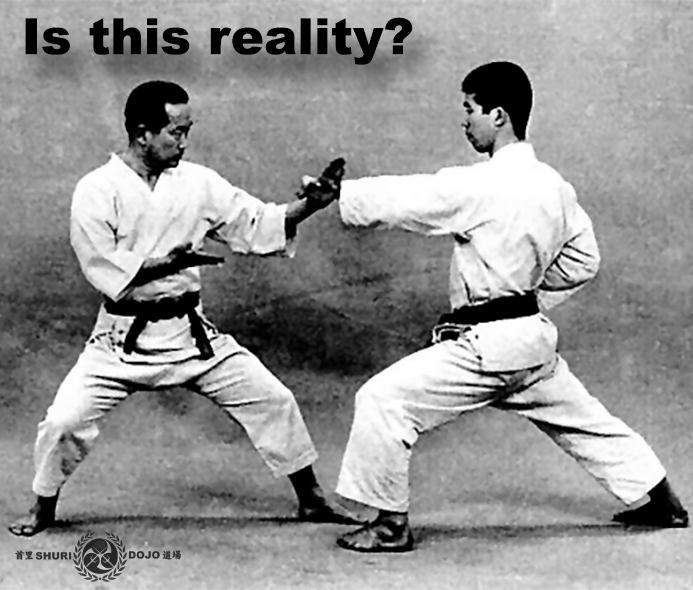
“Does this work?” is a meaningless question without the qualifier of “works for what?”

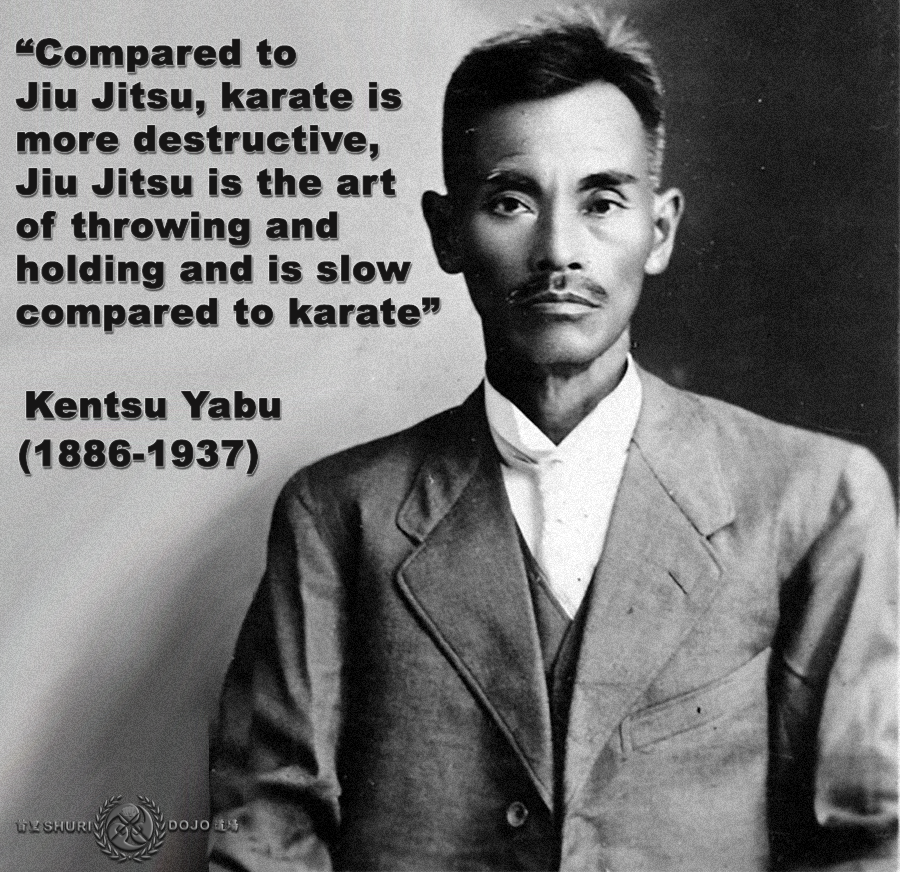
“Compared to Jiu Jitsu, karate is more destructive, Jiu Jitsu is the art of throwing and holding and is slow compared to karate” – Kentsu Yabu from the Honolulu Advertiser July 9, 1927 . “Does this work?” is a meaningless question without the qualifier of “works for what?” . There is a huge difference between […]

“Does this work?” is a meaningless question without the qualifier of “works for what?” Read More »
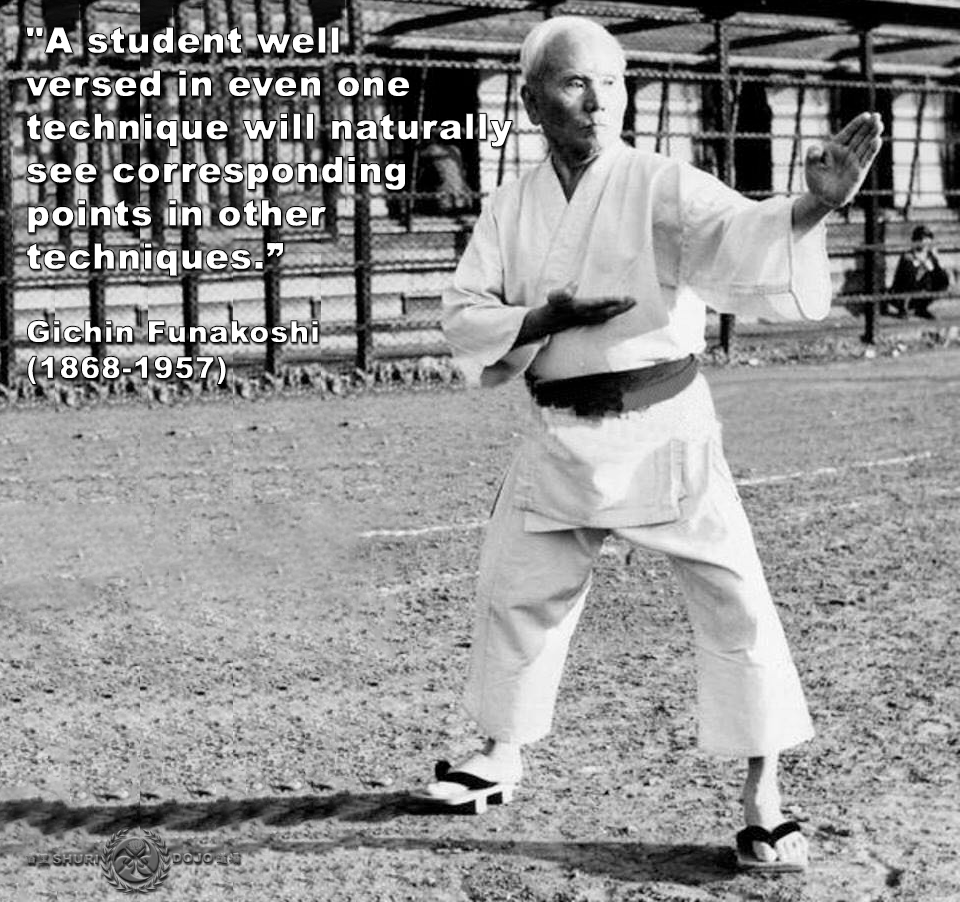
Practitioners who are interested in self-protection, should show a keen interest in bunkai.

Funakoshi wrote; “A student well versed in even one technique will naturally see corresponding points in other techniques. A upper level punch, a lower punch, a front punch, and a reverse punch, are all essentially the same. Looking over thirty-odd kata, he should be able to see that they are essentially variations on just a

Practitioners who are interested in self-protection, should show a keen interest in bunkai. Read More »

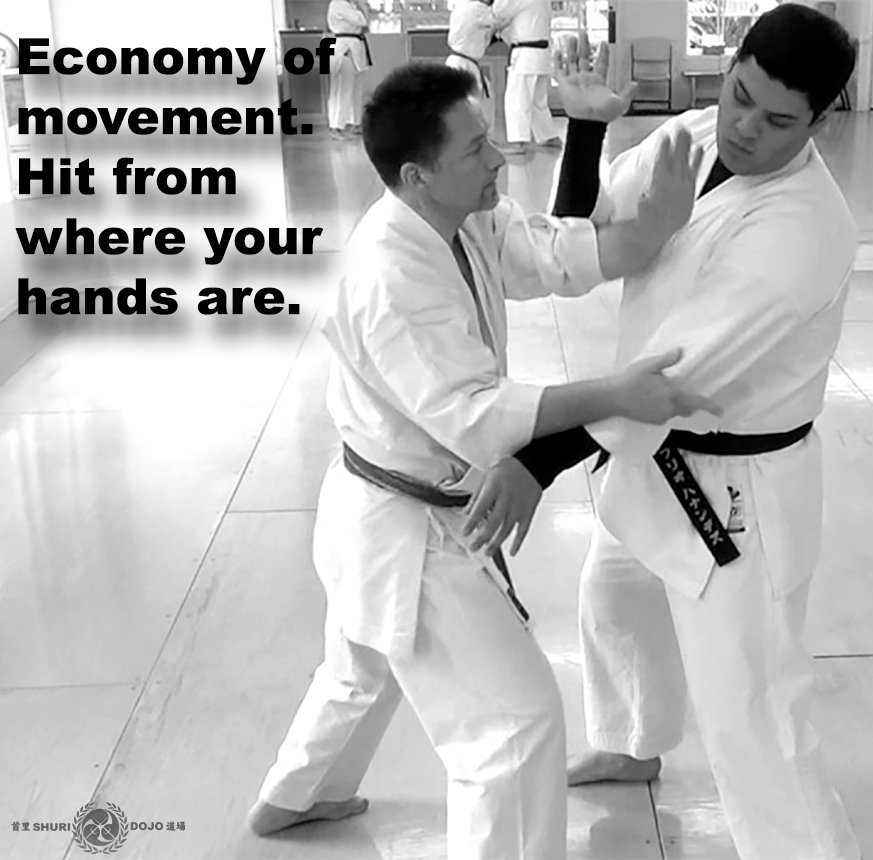
Hit from where your hands are.

In the dojo recently we talked about “momentum” in a strike, punch or similar technique. Momentum can simply be defined as; “mass in motion.” All objects have mass; so if an object is moving, then it has momentum. . Our discussion was based upon moving our hands in an opposite direction to our target (moving

Hit from where your hands are. Read More »

The common origin of technique.

The common origin of technique. . The commonality of a technique is that they all make use of biomechanics and weaknesses of the human anatomy. Where the various arts differ is in the rules, the goal, and the context that they are trained for. . In competitions you try to win. In consensual fights you

The common origin of technique. Read More »